
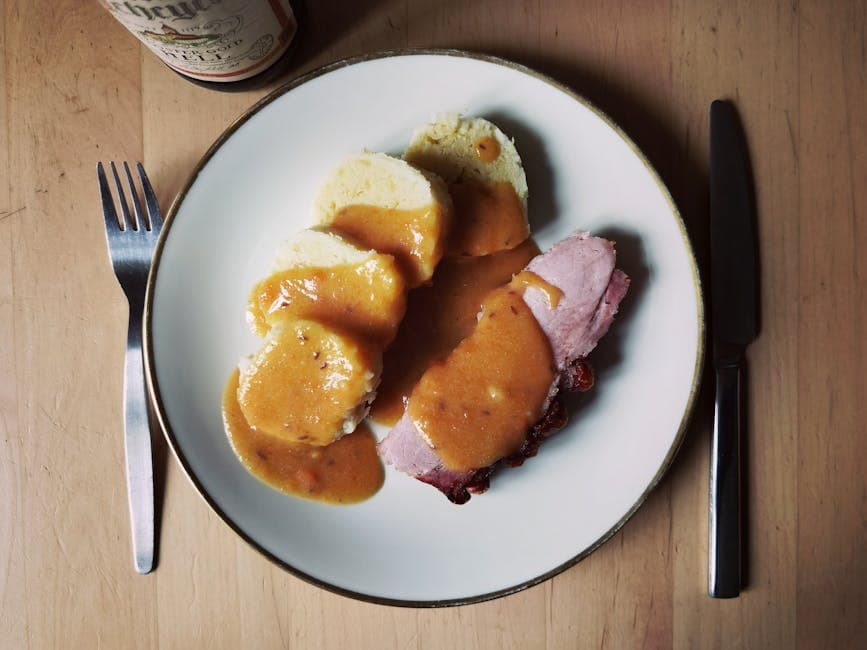
Svíčková na Smetaně (Mährisches Rindfleisch in Sahnesauce)
Tschechisch-mährisches Nationalgericht — langsam geschmortes Rinderfilet mit Wurzelgemüse, zu einer samtigen Sahnesauce püriert, mit Brotknödeln serviert.
Über dieses Rezept
Svíčková na smetaně ist laut nationaler Umfrage das Lieblingsessen der Tschechischen Republik — und der mährische Stil (mehr Sahne, längere Gewürzzeit) gilt weithin als die maßgebliche Version. Ein ganzes Stück Rinderfilet oder Oberschale wird mit Speck gespickt und langsam mit einer Fülle aus geriebenen Karotten, Pastinaken und Sellerie geschmort, aromatisiert mit Lorbeer, Piment und Wacholder, dann werden das Gemüse und die Schmorfond zu einer dicken, seidigen Sahnesauce mit Doppelrahm und einem Spritzer Zitronensaft püriert. Das aufgeschnittene Rindfleisch wird mit der darüber gegossenen Sauce angerichtet, Knedlíky (tschechische gedämpfte Brotknödel) daneben zum Auftunken, und die klassische Garnitur — ein Klecks Schlagsahne, eine Zitronenscheibe, ein Löffel Preiselbeersauce — verleiht in einem Bissen Süße, Säure und Reichhaltigkeit. Sonntagsmittagessen in Brünn, Olmütz und ganz Mähren.
Zutaten
Dient 6
- 1.2 kgRinderfilet oder Oberschale, am Stück
- 100 ggeräucherter Speck (Slanina), in dünne Streifen geschnitten
- 3 großeKarotten, grob gerieben
- 1 mittlerePastinake, gerieben
- 0.5 kleineSellerie, gerieben (ca. 150 g)
- 1 großegelbe Zwiebel, fein gehackt
- 3 ELSchmalz oder Butter
- 2 ELWeizenmehl
- 500 mlRinderbrühe
- 100 mltrockener Weißwein
- 3Lorbeerblätter
- 8ganze Pimentkörner
- 5Wacholderbeeren, leicht zerdrückt
- 10ganze schwarze Pfefferkörner
- 1 TLgetrockneter Thymian
- 3 ELZucker (kurz karamellisiert)
- 2 ELWeißweinessig
- 250 mlDoppelrahm
- 1Zitrone, nur Saft
- feines Salz nach Geschmack
- Knedlíky (Brotknödel), Schlagsahne, Zitronenscheiben, Preiselbeersauce zum Servieren
Anleitung
- 1
Rindfleisch spicken
Mit einem kleinen Messer kleine Einschnitte über die Oberfläche des Rindfleischs machen und geräucherte Speckstreifen einlegen — das ist die mährische Note, die das Fleisch von innen begießt. Großzügig mit Salz und Pfeffer würzen.
- 2
Anbraten
Schmalz in einem schweren Schmortopf bei hoher Hitze erhitzen. Das Rindfleisch von allen Seiten tief mahagonibraun anbraten — insgesamt 10 Minuten. Auf einen Teller legen.
- 3
Aromaten anschwitzen
Hitze auf mittlere Stufe reduzieren. Gehackte Zwiebel und eine Prise Salz zugeben; 8 Minuten anschwitzen. Geriebene Karotten, Pastinake und Sellerie zugeben. Unter Rühren 10 Minuten kochen, bis weich und leicht golden.
- 4
Zucker karamellisieren
Gemüse zur Seite schieben. Auf der freien Stelle Zucker streuen; schmelzen lassen und bernsteinfarben werden lassen, dann ins Gemüse rühren. Essig zum Ablöschen zugeben — er wird zischen und stocken, sich dann in ein süß-saures Glasur auflösen.
- 5
Gewürze und Brühe
Lorbeer, Piment, Wacholder, Pfefferkörner und Thymian zugeben. Wein angießen; 2 Minuten köcheln lassen. Brühe zugeben und zum Köcheln bringen.
- 6
Schmoren
Rindfleisch zurück in den Topf legen, im Gemüse eingebettet. Die Flüssigkeit sollte bis zur Hälfte des Fleisches reichen; bei Bedarf mit Wasser auffüllen. Abdecken und im 150 °C heißen Ofen 2,5 bis 3 Stunden schmoren, das Fleisch einmal auf halbem Weg wenden. Das Rindfleisch sollte gabelzart sein.
- 7
Ruhen lassen und sieben
Rindfleisch herausnehmen und unter Alufolie ruhen lassen. Die ganzen Gewürze herausfischen (Lorbeer, Piment, Wacholder, Pfefferkörner) — sie haben ihre Aufgabe erfüllt. Das Gemüse im Topf lassen.
- 8
Sauce zubereiten
In einer kleinen Schüssel Mehl mit 4 EL kaltem Wasser zu einer glatten Aufschlämmung verrühren. Diese in den Gemüse-Brühe-Topf einrühren. 5 Minuten köcheln lassen zum Eindicken, dann mit einem Stabmixer zu einer völlig glatten, samtigen Sauce pürieren. Für Restaurantglätte durch ein feines Sieb streichen.
- 9
Vollenden
Durchgesiebte Sauce zurück in den Topf geben. Doppelrahm und Zitronensaft einrühren. 5 Minuten köcheln lassen; nicht stark aufkochen, da sonst die Sahne gerinnen kann. Abschmecken und Salz anpassen; die Sauce sollte süß-sauer-cremig und leicht aromatisch sein.
- 10
Mährisch servieren
Das Rindfleisch quer zur Faser in 1 cm dicke Scheiben schneiden. Scheiben auf einem Saucenspiegel auf jedem Teller anrichten. 3 Knedlíky-Scheiben daneben legen. Jede Portion mit einem kleinen Klecks Schlagsahne krönen, eine dünne Zitronenscheibe darauf legen und einen Löffel Preiselbeersauce daneben setzen.
Haben Sie das gekocht?
Bewerte es und hilf anderen, die Rezepte zu finden, die wirklich funktionieren.
Einmal anmelden, und wir speichern die Bewertung, die Sie gerade gewählt haben.
Alles, was Sie für Ihre Wochenplanung brauchen — kostenlos
- Essensplaner
- Einkaufsliste
- KI-Rezeptideen
Behalten Sie im Blick, was Sie essen
Fotografieren Sie Ihre Mahlzeit, um Kalorien und Makros zu erfassen, nutzen Sie Fasten-Timer und tracken Sie Ihr Wasser – in der kostenlosen SnapCal-App.
Profi-Tipps
- →
Die Zitronen-Sahne-Preiselbeere-Garnitur ist nicht optional — diese drei Aromen mit der Sauce machen die Svíčková aus.
- →
Die Sauce am Ende durch ein feines Sieb streichen — Gemüsefasern ruinieren die Samttextur.
- →
Die mit Sahne fertiggestellte Sauce nicht stark aufkochen, sonst trennt sie sich; nach Zugabe der Sahne nur sanft köcheln lassen.
Variationen
- •
Prager Stil — etwas weniger Zucker und Essig für eine zartere Sauce.
- •
Wildversion — Rindfleisch durch Wildfilet ersetzen, 2 zusätzliche Wacholderbeeren zugeben.
- •
Moderne Präsentation — Rindfleisch sous-vide bei 56 °C für 36 Stunden garen, dann kurz anbraten und mit der klassischen Sauce servieren.
Lagerung
4 Tage im Kühlschrank haltbar; 2 Monate einfrierbar (Sauce getrennt vom Fleisch). Sauce vorsichtig mit einem Schuss Sahne erwärmen.
Geschichte und Herkunft
Svíčková entstand im tschechischen Bürgertum des 19. Jahrhunderts als Abwandlung des österreichischen Sauerbraten, mit Sahne verfeinert. Die mährische Variante entwickelte sich in den Kaffeehäusern und Sonntagsmittagskultur Brünns und wurde zum Gericht, das tschechische Auswanderer weltweit mit Heimat verbinden — und in modernen Umfragen beständig als Lieblingsessen des Landes gelistet wird.
Häufig gestellte Fragen
Was ist der Unterschied zwischen tschechischer und mährischer Svíčková?
Der mährische Stil verwendet mehr Sahne, etwas kräftigere Gewürze (besonders Piment und Wacholder), und das Fleisch wird immer mit Speck gespickt. Böhmische (Prager) Versionen sind leichter und weniger aromatisch.
Warum schmeckt meine Sauce fade?
Entweder fehlt das süß-saure Gleichgewicht (nach Geschmack mehr Zucker und Essig zusammen zugeben) oder die Sahne wurde nicht zugegeben — ohne Sahne ist Svíčková nur Bratensauce. Die 250 ml Doppelrahm sind unverzichtbar.
Kann ich das ohne Knedlíky machen?
Man kann Svíčková mit Kartoffelpüree oder Reis kombinieren, aber dann fehlt die Seele des Gerichts — die weichen, leicht schwammigen Brotknödel existieren genau dafür, diese besondere Sauce aufzusaugen. Im Tiefkühlregal jedes tschechischen oder polnischen Feinkostgeschäfts erhältlich, wenn man sie nicht selbst macht.
Nährwertangaben
Pro Portion (360g) · 6 Portionen insgesamt
Zeitzusammenfassung
Haben Sie Fragen?
Fragen Sie unseren KI-Kochassistenten zu diesem Rezept – Ersetzungen, Techniken, Skalierung.
Chatten Sie mit AI Chef →In Reiseführern vorgestellt
Dieses Rezept ist in den folgenden kuratierten Leitfäden enthalten:
Weitere Tschechische Rezepte
Das könnte Ihnen auch gefallen
Ähnliche Gerichte aus anderen Küchen der Welt.
Nach Zutat stöbern
Weitere Rezepte rund um dieselben Hauptzutaten.
Kostenlose Küchen-Tools
Rechner und Umrechner, die zu dieser Seite passen — ohne Anmeldung.
Rezept-Umrechner
Halbieren oder verdoppeln Sie jede Menge in diesem Rezept – ganz ohne Kopfrechnen.
Maßeinheiten-Umrechner
Rechnen Sie Cups, Gramm, Unzen und Milliliter in beide Richtungen um.
Heißluftfritteusen-Umrechner
Rechnen Sie Backofenzeit und -temperatur in Einstellungen für die Heißluftfritteuse um.
Daraus einen Plan machen
Einplanen, einkaufen und im Blick behalten, was schon da ist.
Weiterlesen
Ausführliche Artikel zu den Ideen hinter diesem Gericht.
Der britische Sonntagsbraten: Eine vollständige Geschichte, Wissenschaft und der perfekte Teller
14 Min.
Meal Prep Sunday: Ein kompletter Arbeitsablauf für Anfänger für die ganze Woche
13 Min.
Was bricht ein Fasten? Kaffee, Nahrungsergänzungsmittel, Sahne und die Wahrheit über mehr als 35 gängige Lebensmittel
10 Min.
Gemeinschaft
Beteiligen Sie sich an der Unterhaltung
Melden Sie sich an, um einen Kommentar zu hinterlassen und Ihre Lieblingsrezepte zu speichern