
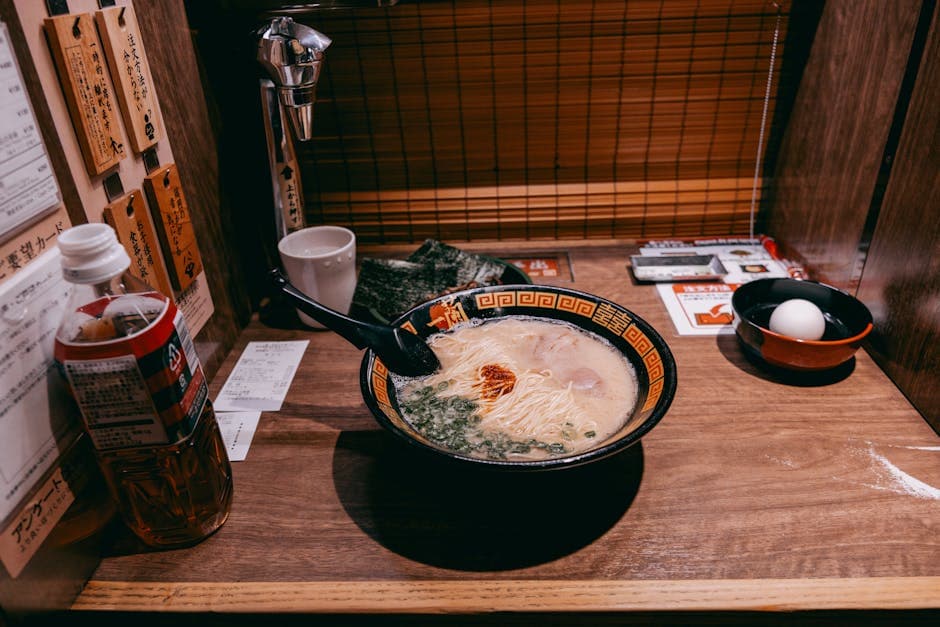
Tonkotsu Ramen (Hakata-Stil)
Trübe, milchige Schweineknochenbrühe 12+ Stunden geschmort, Hakata-Stil über dünne gerade Nudeln mit Chashu, Frühlingszwiebel und weichgekochtem Ei serviert.
Über dieses Rezept
Tonkotsu Ramen ist die Seele von Fukuoka, die reichhaltige, undurchsichtige Schweineknochenbrühe, die Kyushus kulinarischen Ruf begründete und japanische Ramen für immer veränderte. Der Hakata-Stil – die berühmteste regionale Variante – wird durch drei Dinge definiert: eine milchig-weiße Brühe aus Schweineknochen, die 12 Stunden oder länger stark gekocht wird, bis Kollagen und Knochenmark im Wasser emulgieren, ultradünne gerade Nudeln (Hosomen), al dente in Barikata (besonders fest) oder Harigane (drahtfest) gekocht, und ein Kaedama-Brauch, bei dem eine zweite Portion Nudeln in den Rest gegeben wird Brühe. Die Brühe besteht aus Schweinefüßen, der Länge nach gespaltenen Oberschenkeln, um das Mark freizulegen, und manchmal aus Schweineköpfen, die bei stürmischem Kochen gekocht werden, wodurch das Kollagen in die trübe, fast milchartige Konsistenz pulverisiert wird, die der Suppe ihren Namen gibt (Tonkotsu bedeutet wörtlich „Schweineknochen“). Das Tara – das Gewürzkonzentrat, das vor der Brühe in die Schüssel gegeben wird – ist in Hakata normalerweise Shio auf Salzbasis, in nahegelegenen Varianten manchmal Shoyu. Die Beläge sind zurückhaltend: dünne Scheiben Chashu, die auf der Zunge zergehen, ein halbiertes, mit Nitamago mariniertes Ei mit marmeladiger Mitte, Kikurage-Waldohrpilze, Frühlingszwiebeln, manchmal rot eingelegter Ingwer (Beni Shoga). Die ganze Schüssel ist eine Studie aus Fett, Salz, Umami und Schlürfen – und sobald Sie die Nudeln aufgegessen haben, winken Sie nach Kaedama.
Zutaten
Dient 6
- 2 kgSchweineknochen (Mischung aus Trabern, längsgespaltenen Oberschenkelknochen und Halsknochen)
- 500 gSchweinerückenfett (für mehr Sättigung)
- 1 ganzgelbe Zwiebel, halbiert
- 1 KopfKnoblauch, über den Äquator halbiert
- 1 Daumenfrischer Ingwer, in Scheiben geschnitten
- 500 gdünne gerade Ramen-Nudeln (Sun Noodle Hakata-Stil, falls Sie welche finden können)
- 4 ELShio Tare (Meersalz, Mirin, Sake und ein Quadrat Kombu mischen, 5 Minuten köcheln lassen und dann abseihen)
- 12 ScheibenChashu (geschmorter Schweinebauch), im Voraus zubereitet
- 6Nitamago (mit Soja marinierte weichgekochte Eier)
- 6 StängelFrühlingszwiebel, in dünne Scheiben geschnitten
- 30 gKikurage (Waldohrpilz), eingeweicht und zerkleinert
- 2 ELBeni Shoga (rot eingelegter Ingwer), optional
Anleitung
- 1
Die Knochen blanchieren
Alle Schweineknochen in einen großen Suppentopf geben, mit kaltem Wasser bedecken und 10 Minuten lang kochen lassen. Das Wasser füllt sich mit braunem Schaum und Blut – das führt zu Fehlaromen. Lassen Sie die Knochen abtropfen und spülen Sie sie gründlich unter fließendem kaltem Wasser ab. Entfernen Sie dabei alle anhaftenden dunklen Rückstände.
- 2
Beginnen Sie mit dem langen Kochen
Geben Sie die gereinigten Knochen zusammen mit dem Rückenfett in den Topf zurück. Mit 6 Liter kaltem Wasser bedecken und kräftig aufkochen. Im Gegensatz zu den meisten Brühen erfordert Tonkotsu ein ständiges, starkes Kochen – kein Sieden –, um das Kollagen und das Knochenmark im Wasser zu emulgieren. Dies ist der Unterschied zwischen trübem weißem Tonkotsu und klarer Schweinebrühe.
- 3
8–12 Stunden kochen lassen, auffüllen
Lassen Sie das Ganze mindestens 8 Stunden lang kräftig kochen, idealerweise 12 Stunden. Füllen Sie alle 90 Minuten kochendes Wasser nach, damit die Knochen unter Wasser bleiben – fügen Sie niemals kaltes Wasser hinzu (dadurch setzt sich das Fett fest). Nach 6 Stunden Zwiebel, Knoblauch und Ingwer hinzufügen. Alle paar Stunden kräftig umrühren und dabei den Boden abkratzen, um das Mark freizusetzen.
- 4
Abseihen und reduzieren
Durch ein feines Sieb in einen sauberen Topf abseihen und dabei auf die Feststoffe drücken, um jeden Tropfen herauszufiltern. Die Brühe sollte undurchsichtig und milchig weiß sein und einen Löffel dick bedecken. Wenn es dünn aussieht, erneut zum Kochen bringen und um ein Drittel reduzieren. Sie benötigen etwa 2 Liter fertige Brühe aus 6 Litern Ausgangswasser.
- 5
Nudeln kochen
Bringen Sie einen separaten großen Topf mit Wasser zum Kochen. Kochen Sie die dünnen Hakata-Nudeln nur 60–90 Sekunden lang – Hakata-Nudeln werden bewusst zu wenig gekocht, bei der „Harigane“-Art manchmal nur 30 Sekunden. In einem Sieb hart abtropfen lassen, alles Wasser abschütteln.
- 6
Die Schüssel anrichten
In jede vorgewärmte tiefe Schüssel 4 Esslöffel Brühe und 2 Teelöffel Shio Tare geben. Geben Sie die abgetropften Nudeln hinzu und schöpfen Sie dann 350 ml kochende Brühe darüber, damit sich die Masse verteilt. Chashu-Scheiben, ein halbes Ei, Kikurage, Frühlingszwiebeln und eine Prise Beni Shoga darauf anrichten.
- 7
Sofort servieren und schlürfen
Tonkotsu-Ramen müssen sofort nach der Zubereitung serviert werden – die Nudeln nehmen weiterhin Brühe auf und werden innerhalb von 5 Minuten weich. Stellen Sie die Schüssel mit Stäbchen und einem flachen Löffel auf den Tisch. Schlürfen ist Pflicht; Es belüftet und kühlt jeden Bissen Nudeln und Brühe gleichzeitig.
Haben Sie das gekocht?
Bewerte es und hilf anderen, die Rezepte zu finden, die wirklich funktionieren.
Einmal anmelden, und wir speichern die Bewertung, die Sie gerade gewählt haben.
Alles, was Sie für Ihre Wochenplanung brauchen — kostenlos
- Essensplaner
- Einkaufsliste
- KI-Rezeptideen
Behalten Sie im Blick, was Sie essen
Fotografieren Sie Ihre Mahlzeit, um Kalorien und Makros zu erfassen, nutzen Sie Fasten-Timer und tracken Sie Ihr Wasser – in der kostenlosen SnapCal-App.
Profi-Tipps
- →
Aggressives Kochen – nicht Köcheln – ist die gesamte Technik. Wenn Ihre Brühe braun und klar bleibt, haben Sie nicht stark genug gekocht.
- →
Verwenden Sie echte, dünne, gerade Nudeln nach Hakata-Art. Dicke, wellige Nudeln passen zu Sapporo- oder Tokio-Ramen, sind aber falsch für Tonkotsu; In der reichhaltigen Brühe werden sie gummiartig.
- →
Bereiten Sie Chashu und Nitamago am Vortag zu. Der Tonkotsu-Tag ist der Tag der Brühe – versuchen Sie nicht, alles auf einmal zu machen.
- →
Wenn Ihre Küche 12 Stunden Kochen nicht verträgt, ergibt ein großer Schnellkochtopf bei hohem Druck für 4 Stunden ein respektables Short-Tonkotsu.
Variationen
- •
Tonkotsu Shoyu – Ersetzen Sie Shio Tare durch ein Soja-Tara für eine dunklere, herzhaftere Schüssel, die in Kanto beliebt ist.
- •
Schwarzes Knoblauch-Mayu – für den Kumamoto-Stil 1 TL gebranntes Knoblauchöl über jede Schüssel träufeln.
- •
Tonkotsu Tsukemen – kalte Nudeln separat servieren und in eine konzentrierte, reduzierte Brühe eintauchen.
- •
Vegetarisches „Tonkotsu“ – emulgierte geröstete Sojamilch mit Miso, Sesampaste und weißem Pfeffer sorgt für ein cremiges Mundgefühl.
Lagerung
Die abgesiebte Brühe bleibt in luftdichten Gläsern gekühlt 4 Tage haltbar und lässt sich 3 Monate einfrieren. Das Fett geht auf und wird im Kühlschrank fest – beim Aufwärmen erneut unterrühren. Gekochte Nudeln dürfen niemals gelagert werden; pro Schüssel frisch kochen. Chashu und Nitamago sind gekühlt 4 Tage haltbar.
Geschichte und Herkunft
Tonkotsu Ramen wurde 1937 in Kurume, einer kleinen Stadt in der Nähe von Fukuoka, an einem Yatai-Stand von Miyamoto Tokio hergestellt, der versehentlich seine Schweinebrühe zu stark kochen ließ, als er nicht an seinem Einkaufswagen war – und dabei die milchige Emulsion entdeckte, die den Stil heute definiert. Die Technik verbreitete sich nach dem Zweiten Weltkrieg im nahegelegenen Hakata und wurde zu Kyushus charakteristischem Ramen.
Häufig gestellte Fragen
Kann ich die 12-Stunden-Kochzeit verkürzen?
Druckkochen bei hohem Druck für 4 Stunden kommt dem nahe, es fehlt jedoch die vollständige Kollagenextraktion. Es gibt keine wirkliche Abkürzung für authentisches Tonkotsu – es ist eine Brühe, die aus Liebe entsteht.
Warum wird meine Brühe nicht milchig weiß?
Sie köcheln, nicht kochen. Erhöhen Sie die Hitze, bis ein wahrer Siedepunkt entsteht, der die Oberfläche kontinuierlich aufbricht. Eine Trübung entsteht erst, wenn Fett und Kollagen durch die Kochbewegung mechanisch emulgiert werden.
Ist es in Ordnung, wenn meine Brühe beim Kochen stark nach Schweinefleisch riecht?
Ja – deshalb arbeiten die meisten Tonkotsu-Köche in speziellen Nebengebäuden. Belüftung ist wichtig. Öffnen Sie die Fenster, lassen Sie die Haube auf Maximum laufen oder nutzen Sie einen Außenbrenner.
Was ist Barikata vs. Harigane?
Bei beiden handelt es sich um Hakata-Nudelfestigkeitsvorschriften. Barikata ist fest (ca. 45 Sekunden gekocht), Harigane ist drahthart (ca. 15 Sekunden), Futsuu ist Standard (1 Minute). Die meisten Außenstehenden sollten mit Futsuu oder Barikata beginnen.
Nährwertangaben
Pro Portion (580g) · 6 Portionen insgesamt
Zeitzusammenfassung
Haben Sie Fragen?
Fragen Sie unseren KI-Kochassistenten zu diesem Rezept – Ersetzungen, Techniken, Skalierung.
Chatten Sie mit AI Chef →In Reiseführern vorgestellt
Dieses Rezept ist in den folgenden kuratierten Leitfäden enthalten:
Weitere Japanische Rezepte
Das könnte Ihnen auch gefallen
Ähnliche Gerichte aus anderen Küchen der Welt.
Nach Zutat stöbern
Weitere Rezepte rund um dieselben Hauptzutaten.
Kostenlose Küchen-Tools
Rechner und Umrechner, die zu dieser Seite passen — ohne Anmeldung.
Daraus einen Plan machen
Einplanen, einkaufen und im Blick behalten, was schon da ist.
Weiterlesen
Ausführliche Artikel zu den Ideen hinter diesem Gericht.
Japanische Hausmannskost: Grundlegende Gerichte, Techniken und Grundnahrungsmittel für die Speisekammer, die jeder Koch beherrschen sollte
14 Min.
Japanische Speisekammer-Grundlagen: Komplette 15 Zutaten, die die japanische Küche erschließen
15 Min.
Ernährung in der Perimenopause: Eine umfassende Ernährungsweise zur Bewältigung von Hitzewallungen, Schlaf und Gewicht
16 Min.
Gemeinschaft
Beteiligen Sie sich an der Unterhaltung
Melden Sie sich an, um einen Kommentar zu hinterlassen und Ihre Lieblingsrezepte zu speichern