
Ajvar (Relish de Poivron Rouge Rôti Serbe)
Rituel d'automne serbe — piments rouges rôtis à la flamme cuits avec aubergine et huile en une préserve fumée et profonde, spoonable.
À propos de cette recette
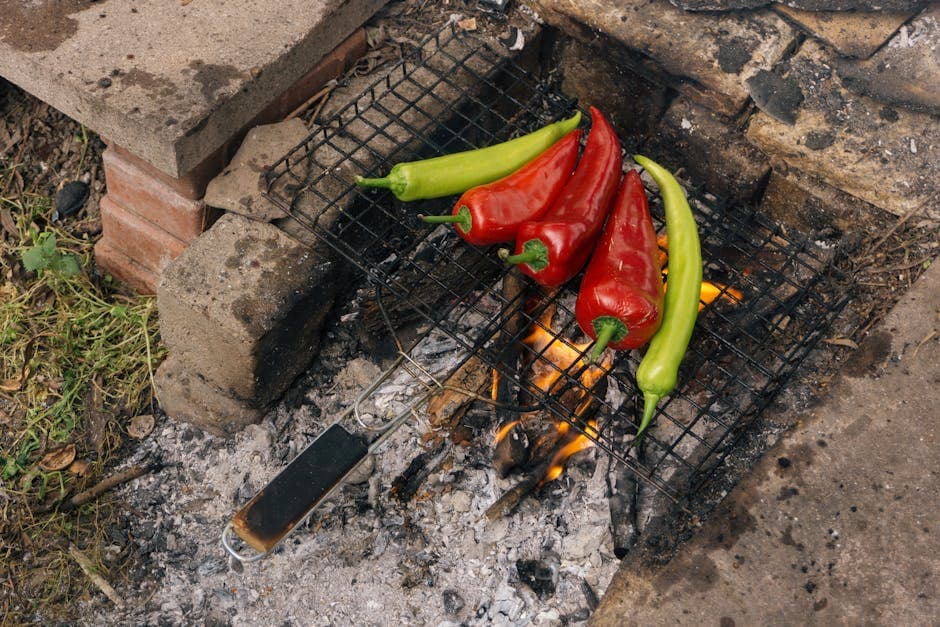
Ajvar est le roi des conserves serbes, faite chaque automne quand les longs piments rouges en corne (paprika roga) mûrissent sur les fermes de Vojvodina. Les piments entiers sont brûlés sur les flammes ouvertes jusqu'à cloques noirs, pelés, vidés de leur jus, puis hachés et lentement cuits avec de l'aubergine rôtie, de l'huile de tournesol, de l'ail, du sel et une touche de vinaigre pendant deux à trois heures de patient remuer jusqu'à ce que le mélange s'assombrisse en brique-rouge profond et une cuillère traînée dedans révèle le fond de la casserole. L'ajvar serbe réel est lourd, brillant et presque charnu dans la texture — jamais aqueux, jamais orange vif (c'est l'imposteur du supermarché). Étaler épais sur du pain chaud, cuillérée aux côtés des viandes grillées, stratifiée avec le kajmak dans un sandwich ou remué dans les soupes. Chaque famille serbe a la recette de sa grand-mère et débat sur si l'aubergine appartient du tout.
Ingrédients
Sert 12
- 3 kglongs piments rouges en corne (paprika roga ou romano)
- 500 gaubergine (1 moyen)
- 200 mlhuile de tournesol
- 6 goussesail, finement haché
- 1.5 c. à s.sel fin, plus selon le goût
- 2 c. à s.vinaigre de vin blanc
- 1 c. à c.sucre (optionnel, équilibre l'acidité)
- 0.5 c. à c.flocons de piment (optionnel, pour ljuti ajvar)
Étapes
- 1
Charrer les piments
Chauffer un grill, brûleur de gaz ou broil du four au maximum. Charrer les piments entiers, tournant fréquemment, jusqu'à ce que les peaux soient noircies et cloques partout — environ 8 minutes sur un brûleur de gaz ou 20 dans un four à 250°C. Travailler en lots.
- 2
Vapeur et éplucher
Empiler les piments chauds dans un bol couvert ou un sac scellé. Laisser vapeur 20 minutes. Éplucher les peaux (elles glissent), retirer les tiges et les graines. Crucial : ne pas rincer — vous laveriez la saveur.
- 3
Égoutter
Placer les piments pelés dans une passoire doublée de mousseline, mise sur un bol. Laisser égoutter au moins 1 heure, appuyant doucement — éliminer ce jus est la différence entre l'ajvar réel et la bouillie aqueuse.
- 4
Rôtir l'aubergine
Piquer l'aubergine dans quelques endroits et rôtir à 220°C pendant 40 minutes jusqu'à complètement effondrée. Refroidir, cuillérée la chair, égoutter dans une passoire 30 minutes.
- 5
Hacher
Exécuter les piments égouttés et l'aubergine à travers un moulin à viande sur la plaque grossière, ou pulse dans un processeur alimentaire par brèves rafales — vous voulez la texture, pas la purée.
- 6
Cuire lentement — phase 1
Chauffer une large cocotte lourde ou une grande poêle à feu moyen-faible. Ajouter la moitié de l'huile, puis les piments et aubergine hachés. Remuer avec une cuillère en bois et laisser le mélange buller doucement pendant 1 heure, en remuant toutes les 5 minutes. Regarder pour le bâton.
- 7
Cuire lentement — phase 2
Verser en driblets l'huile restante peu à peu. Ajouter le sel et l'ail. Continuer la cuisson et le remuer 60–90 minutes supplémentaires jusqu'à ce que le mélange s'assombrisse en brique-rouge profond, l'huile brille sur le dessus, et une cuillère traînée à travers révèle le fond de la casserole pour un second propre.
- 8
Assaisonner et mettre en pot
Remuer dans le vinaigre, sucre si utiliser et le piment si faire la version épicée. Goûter ; ajuster le sel. Cuillérée tandis que brûlant à chaud dans les bocaux stérilisés, laissant 1 cm d'espace de tête. Dribble une couche mince d'huile sur le dessus pour sceller.
- 9
Sceller
Fermer les couvercles étroitement. Bocaux inverses 5 minutes, puis vers le haut. Pour le long stockage, le processus de bain-eau 20 minutes. Les bocaux non-traités se gardent réfrigérés 3 mois.
Vous l'avez cuisinée ?
Notez-la et aidez les autres à trouver les recettes qui fonctionnent vraiment.
Connectez-vous en un geste : nous enregistrons la note que vous venez de choisir.
Tout ce qu'il faut pour planifier votre semaine — gratuit
- Calendrier des repas
- Liste de courses
- Idées de recettes IA
Cuisinez les mains libres
Profitez de plans de repas IA, d'un mode cuisine pas à pas et de vos recettes enregistrées dans l'appli gratuite Bento.
Conseils de pro
- →
Les piments paprika roga sont non-négociables pour l'authenticité — les piments cloche font un ajvar doux et plat sans caractère.
- →
Le verser-de-poivre jus est de l'or liquide pour le bouillon de soupe ; le congeler au lieu de le jeter aux ordures.
- →
Remuer avec une cuillère en bois seulement ; le métal réagit avec les jus de poivre acides.
Variantes
- •
Ljuti ajvar — version chaud avec 2 piments frais brûlés ajoutés au moulin.
- •
Pindjur — version macédoine plus gros qui inclut la tomate.
- •
Kajmak-style végan — plier 100 g de crème de tofu fouettée dans l'ajvar fini pour un tartiner brunch de Belgrade.
Stockage
Bocaux scellés, traitement en bain-eau, se gardent 12 mois dans un garde-manger frais. Une fois ouvert, réfrigérer et utiliser dans les 2 semaines ; remplissage d'huile allonge la vie.
Histoire et origine
Le nom d'ajvar vient du turc « havyar » (caviar) — une référence à sa texture prisée, dense, spoonable. Il est devenu une cuisine ménage serbe stable au 19ème siècle quand le commerce de piments rouges de Vojvodina a booming, et chaque village tient toujours « ajvar weekends » chaque octobre pour garder assez de bocaux pour l'hiver.
Foire aux questions
Puis-je faire ajvar sans aubergine ?
Oui — de nombreuses grands-mères serbes l'omettent. Le résultat est un ajvar plus brillant, plus sucré, plus intensément poivron-en avant. L'aubergine ajoute le corps et un bord plus sombre, plus savoureux.
Pourquoi mon ajvar s'est-il avéré orange et aqueux ?
Trois coupables habituels — piments cloche au lieu de roga, piments non drainés assez longtemps ou pas assez cuit. L'ajvar réel doit réduire de moitié son volume.
Ajvar est-il servi chaud ou froid ?
Température ambiante, toujours. Froid du réfrigérateur amortit la saveur ; réchauffer caramélise désagréablement. Cuillérée c'est 30 minutes avant de servir.
Faits nutritionnels
Par portion (80g) · 12 portions totales
Résumé du temps
Vous avez des questions ?
Demandez quoi que ce soit à notre assistant culinaire IA sur cette recette : substitutions, techniques, mise à l'échelle.
Discutez avec AI Chef →Présenté dans les guides
Cette recette est présentée dans les guides sélectionnés suivants :
Plus de recettes Serbian
Vous Aimerez Aussi
Des plats similaires venus d'autres cuisines du monde.
Outils de Cuisine Gratuits
Calculateurs et convertisseurs qui accompagnent cette page — sans inscription.
Transformer en Plan
Programmez-le, faites les courses et suivez ce que vous avez déjà.
À Lire Ensuite
Des articles de fond sur les idées derrière ce plat.
Communauté
Rejoignez la conversation
Connectez-vous pour laisser un commentaire et enregistrer vos recettes préférées