
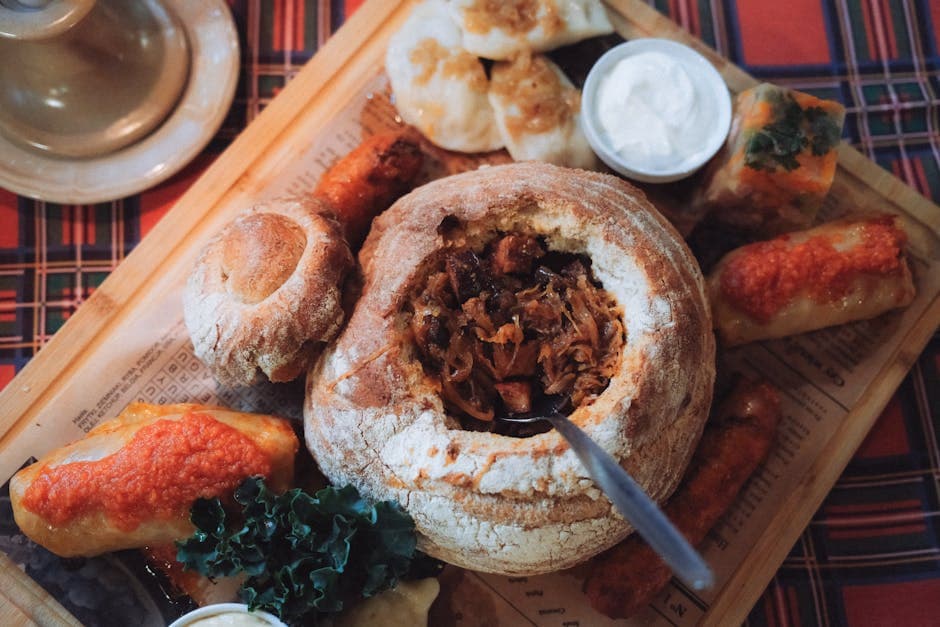
Székelygulyás (Gulásh de Chucrute Estilo Szeged)
Gulásh húngaro de chucrute e porco com creme de leite e carvi — o clássico quente de inverno do sudeste húngaro.
Sobre esta receita
Székelygulyás — também chamado de gulásh Szegedin — é a irmã chucrute do gulásh clássico de carne do Brasil. Ombro de porco é cozido lentamente com montanhas de cebola, pimenta doce húngara, carvi e louro até ficar macio, depois finalizado com chucrute enxaguado e um generoso redemoinho de creme de leite que dá ao ensopado sua cor rosa pálida característica. O resultado é rico, azedo, ligeiramente fumegante e quente — exatamente o que um inverno húngaro pede. Apesar do nome 'Székely' (que significa húngaro transilvano), o prato foi popularizado pelo escritor de Pest József Székely nos anos 1840, que supostamente o inventou a partir de restos em uma taverna. Servido com pão de centeio crocante ou nokedli com manteiga.
Ingredientes
Serve 6
- 900 gombro de porco, cortado em cubos de 3 cm
- 60 gbanha de porco ou óleo neutro
- 3 grandecebolas amarelas, finamente picadas
- 3 colher de sopapimenta doce húngara (Édesnemes)
- 1 colher de chápimenta doce húngara quente (opcional)
- 1 colher de sopasementes de carvi, ligeiramente amassadas
- 5 dentesalho, picado
- 2 colher de sopapasta de tomate
- 2folhas de louro
- 1 colher de chásal fino
- 1 colher de chápimenta-do-reino fresca moída
- 500 mlágua ou caldo de porco claro
- 700 gchucrute de boa qualidade, drenado e enxaguado uma vez
- 200 mlcreme de leite
- 1 colher de sopafarinha de trigo (para engrossar o creme de leite azedo)
- 1 pequeno maçoendro fresco, picado (guarnição)
- pão de centeio ou nokedli com manteiga para servir
Instruções
- 1
Doure a carne de porco
Aqueça a banha em uma panela pesada em fogo médio-alto. Doure cubos de porco em lotes até ficar profundamente dourado, 8 minutos por lote. Reserve.
- 2
Cozinhe lentamente as cebolas
Reduza o fogo para médio-baixo. Adicione cebolas picadas com uma pitada de sal. Cozinhe por 18 minutos, mexendo frequentemente, até ficar muito macia, dourada e ligeiramente geleia. Este é o coração do prato — não apresse.
- 3
Florescimento de pimenta FORA do fogo
Retire a panela do fogo. Polvilhe com pimenta doce (e quente se usar), carvi e alho. Mexa vigorosamente — a pimenta deve fazer barulho e ficar vermelho profundo, mas não queimar.
- 4
Construa o braseado
Retorne ao fogo. Mexa em pasta de tomate, cozinhe por 2 minutos. Retorne porco assado e quaisquer sucos. Adicione folhas de louro, sal, pimenta e água/caldo. Leve a um simples fervido.
- 5
Ferva lentamente
Cubra e ferva em fogo baixíssimo por 90 minutos, mexendo ocasionalmente, até a carne de porco ficar macia com garfo. Adicione um respingo de água se a panela parecer seca.
- 6
Adicione o chucrute
Mexa no chucrute enxaguado. Ferva mais 20 minutos, descoberto, até o kraut ter amolecido e absorvido sabor. Prove; ajuste sal e pimenta.
- 7
Prepare o tempero de creme de leite
Bata o creme de leite com farinha em uma pequena tigela. Tempere vertendo em 3 colheres de sopa do ensopado quente, depois 3 a mais. Isso evita que a nata quebre quando acerta a panela.
- 8
Termine e sirva
Mexa o creme de leite temperado no ensopado. Aqueça suavemente por 2 minutos — não ferva. Polvilhe com endro. Sirva em tigelas profundas com pão de centeio ou nokedli, com creme de leite extra ao lado para quem quiser.
Você preparou esta receita?
Avalie e ajude outras pessoas a encontrar as receitas que realmente funcionam.
Entre com um toque e guardaremos a avaliação que você acabou de escolher.
Tudo o que você precisa para planejar sua semana — grátis
- Calendário de refeições
- Lista de compras
- Ideias de receitas com IA
Acompanhe o que você come
Fotografe sua refeição para registrar calorias e macros, use timers de jejum e acompanhe sua água no app gratuito SnapCal.
Dicas profissionais
- →
Florescimento de pimenta FORA do fogo ou fica amargo — inegociável.
- →
Enxague o chucrute uma vez para suavizar a borda azeda; não enxague duas vezes ou lave o caráter.
- →
Prepare um dia antes — o ensopado é notavelmente melhor no dia 2.
Variações
- •
Use ombro de porco defumado para uma versão mais fumegante e mais eslovaca.
- •
Adicione um punhado de feijão branco cozido para uma substância generosa — comum em Burgenland.
- •
Substitua porco por ombro de veado no outono — extraordinário.
Armazenamento
Refrigere até 4 dias; congele 2 meses. Reaqueça suavemente; nunca ferva duro após o creme de leite estar dentro (quebra).
História e Origem
Primeiro documentado pelo escritor de Pest József Székely nos anos 1840, que supostamente improvisou o prato no Hotel Hét Választófejedelem a partir de gulásh sobrante e um frasco de chucrute. O nome causou 150 anos de confusão com os húngaros Székely da Transilvânia, que na verdade não a reclamam.
Perguntas frequentes
Posso usar carne em vez de porco?
Sim — embora carne + chucrute seja mais eslovaco do que húngaro. Use chuck e aumente o tempo de braseado para 2.5 horas.
Tenho que usar pimenta húngara?
Sim — pimenta espanhola e búlgara se comportam de forma diferente e carecem da borda floral. Édesnemes é o padrão; Csípős é a versão quente.
Fatos nutricionais
Por porção (420g) · 6 porções totais
Resumo do tempo
Tem dúvidas?
Pergunte ao nosso assistente de culinária de IA qualquer coisa sobre esta receita – substituições, técnicas, dimensionamento.
Converse com AI Chef →Apresentado em guias
Esta receita é apresentada nos seguintes guias selecionados:
substitutions
Substitutos do Creme Azedo para Confeitaria, para Servir por Cima e para Dips
substitutions
Substitutos de Extrato de Tomate: Equilibrando Concentração e Doçura
conversions
Farinha: De Xícaras para Gramas (Por Que Sua Xícara Está Mentindo Para Você)
conversions
Manteiga: Barras, Xícaras e Colheres de Sopa em Gramas
Mais receitas de cozinha húngara
Você Também Pode Gostar
Pratos semelhantes de outras cozinhas do mundo.
Explorar por Ingrediente
Mais receitas construídas em torno dos mesmos ingredientes principais.
Ferramentas de Cozinha Gratuitas
Calculadoras e conversores que acompanham esta página — sem cadastro.
Transforme Isto num Plano
Agende, faça as compras e acompanhe o que já tem.
Calendário de planejamento de refeições
Coloque esta receita em um dia e monte a semana em torno dela.
App de lista de compras
Transforme esta lista de ingredientes em uma lista de compras agrupada por corredor.
Importador de receitas
Salve esta receita — e qualquer URL de receita — em uma biblioteca organizada.
Leia a Seguir
Leituras mais longas que aprofundam as ideias por trás deste prato.
Comunidade
Participe da conversa
Faça login para deixar um comentário e salvar suas receitas favoritas