
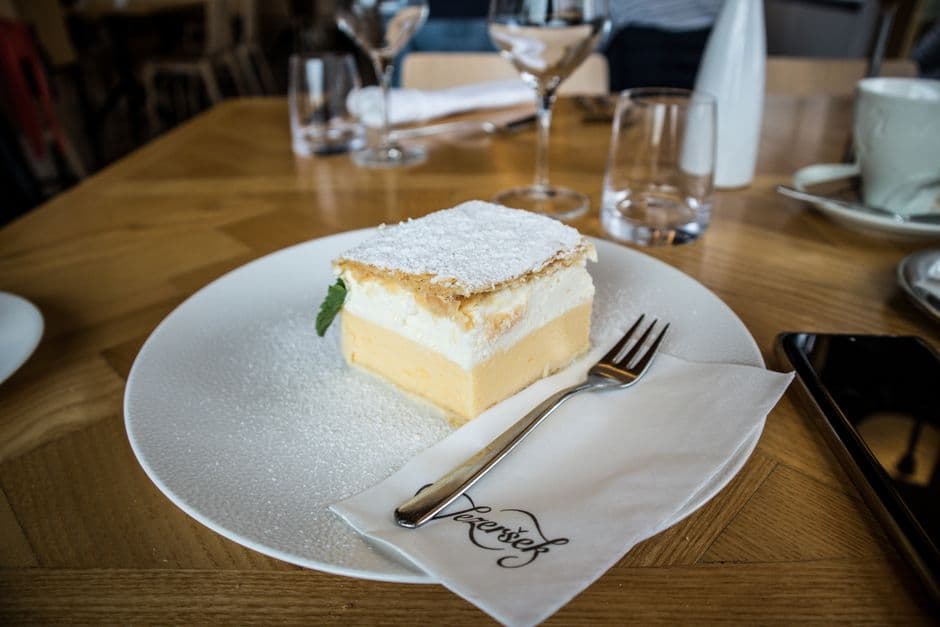
كريمسنيتا (كعكة كريمة الكسترد الكرواتية)
معجنات ساموبور الشهيرة: ورقتان من المعجنات المنتفخة مغطاة بكاسترد الفانيليا السميك وسحابة من الكريمة المخفوقة.
حول هذه الوصفة
كريمسنيتا (أو كريمبيتا) هي المعجنات الأكثر شهرة في كرواتيا وواحدة من الكعك الكريمي الرائع في أوروبا الوسطى، مع إصدارات منافسة في سلوفينيا والمجر والنمسا وبولندا. المعيار الكرواتي - وخاصة Samoborska kremšnita الشهير من بلدة Samobor - مبني على ثلاث طبقات دقيقة: طبقة رقيقة ومقرمشة من المعجنات المنتفخة في الأسفل، وطبقة سميكة من كسترد الفانيليا الناعم، وسحابة سخية من الكريمة المخفوقة المحلاة بالكاد، وكلها مغطاة بورقة أخرى من المعجنات المغطاة بكثافة بالسكر البودرة. يتم تقطيعها إلى مستطيلات مثالية بسكين مسنن حاد، وتؤكل باردة من علبة المعجنات، مع القهوة التركية القوية. تم تصميم تصميم الرقصات التركيبية - التحطيم، وزلة الكاسترد، والوسادة الكريمية - لتحقيق أقصى قدر من الدوبامين.
المكونات
يخدم 12
- 500 غعجين الفطير بالزبدة (أو ورقتين جاهزتين للفرد)
- 1 لحليب كامل الدسم
- 1كبسولة فانيليا، مقسمة (أو 2 ملعقة صغيرة من خلاصة الفانيليا)
- 8صفار بيض كبير
- 200 غالسكر الناعم
- 80 غنشا الذرة
- 20 غزبدة غير مملحة
- 4بياض بيضة كبيرة
- 60 غالسكر الناعم للبيض
- 500 ملكريم مزدوج، بارد جداً
- 2 ملعقة كبيرةالسكر البودرة
- 1 ملعقة صغيرةمستخلص الفانيليا
- كمية إضافية من السكر البودرة للرش
التعليمات
- 1
خبز صفائح المعجنات
نلف العجينة البف باستري لتناسب قالب مستطيل مقاس 23×33 سم. قطع ورقتين متساويتين. وخز في كل مكان مع شوكة. تُخبز في صواني مبطنة بالرق على حرارة 200 درجة مئوية لمدة 18-22 دقيقة حتى تصبح ذهبية اللون ومقرمشة بالكامل. بارد بشكل مسطح على الرفوف.
- 2
تسخين الحليب والفانيليا
قم بتسخين الحليب مع الفانيليا المكشورة والبذور حتى ينضج قليلاً. إزالة جراب.
- 3
اصنع قاعدة الكسترد
اخفقي الصفار مع 200 جرام من السكر ونشا الذرة في وعاء حتى يصبح شاحبًا وسميكًا. يُسكب الحليب الساخن ببطء مع الخفق المستمر حتى يتماسك.
- 4
طبخ الكسترد
عودة الخليط إلى المقلاة. يُطهى على نار متوسطة إلى منخفضة مع الخفق باستمرار لمدة 5-7 دقائق حتى يتكاثف ويتحول إلى قوام بودنغ ثقيل يحمل شريطًا. بعيدًا عن النار، أضيفي الزبدة. بارد إلى فاتر.
إذا تشكلت كتل، ادفع الكاسترد من خلال منخل قبل أن يبرد.
- 5
فاز بياض البيض
يُخفق بياض البيض مع 60 جرامًا من السكر حتى يصبح ناعمًا ولامعًا. أضيفي بلطف إلى الكاسترد الدافئ في ثلاث إضافات - وهذا ما يمنح كريمسنيتا طبقة الكسترد المميزة ذات التهوية الجيدة (مقابل كريمة المعجنات الأكثر كثافة).
- 6
تجميع طبقة الكاسترد
ضعي ورقة واحدة من المعجنات في طبق مستطيل عميق ومبطن بخفة. نسكب خليط الكاسترد بالتساوي، ثم نوزعه على الزوايا. قمة ناعمة. تبرد لمدة 30 دقيقة لتتماسك.
- 7
كريمة السوط
تُخفق الكريمة الباردة مع السكر البودرة والفانيليا حتى تصل إلى قمم متوسطة الصلابة.
- 8
أضف طبقة الكريمة
وزعي الكريمة المخفوقة فوق الكاسترد في طبقة سميكة ومتساوية. قم بتنعيم الجزء العلوي.
- 9
قمة مع المعجنات
خذ ورقة المعجنات الثانية. نرشها بكثافة بالسكر البودرة، ثم نقطعها إلى 12 مستطيلًا متساويًا بسكين مسننة وهي مسطحة - وهذا يمنع التشقق عند التقديم. ضعي بلطف على طبقة الكريم.
- 10
البرد وخدمتها
قم بتبريده لمدة 4 ساعات على الأقل، ويفضل طوال الليل. قطع على طول الخطوط المسجلة مسبقا بسكين مسنن ساخن. أكل باردا. الغبار مع السكر البودرة اضافية.
هل جرّبت هذه الوصفة؟
قيّمها وساعد الآخرين في العثور على الوصفات التي تنجح فعلاً.
سجّل الدخول بنقرة واحدة وسنحفظ التقييم الذي اخترته للتو.
كل ما تحتاجه لتخطيط أسبوعك — مجانًا
- تقويم الوجبات
- قائمة التسوق
- أفكار وصفات بالذكاء الاصطناعي
تابع ما تأكله
صوّر وجبتك لتسجيل السعرات والعناصر الغذائية، واستخدم مؤقتات الصيام وتتبع شرب الماء في تطبيق SnapCal المجاني.
نصائح للمحترفين
- →
قم بتقطيع العجينة العلوية قبل وضعها على الكريمة - بمجرد وضعها على الكريمة الطرية، ستتشقق بشكل متكسر.
- →
استخدم أفضل أنواع الفانيليا التي يمكنك شراؤها — كريمسنيتا يدور بشكل أساسي حول كسترد الفانيليا، وتظهر الفانيليا الضعيفة على الفور.
- →
قم بخبز صفائح المعجنات بشكل هش تمامًا ثم قم بتبريدها تمامًا قبل التجميع - المعجنات غير المخبوزة جيدًا تصبح مشبعة وتفسد تباين الملمس.
الاختلافات
- •
السلوفينية Bled kremšnita: تستخدم طبقة واحدة سميكة من الكاسترد مع الكريمة المخفوقة، ولا توجد طبقة كريمة منفصلة.
- •
الكريمات المجرية: بنية مشابهة، غالبًا ما تعلوها غاناش الشوكولاتة أو الكراميل بدلاً من السكر البودرة.
- •
الكريمبيتا البوسنية: طبقة كاسترد أرق، معجنات علوية أكثر وضوحًا.
تخزين
من الأفضل تناوله خلال 24 ساعة من التجميع. بعد تبريدها، تصبح المعجنات طرية في اليوم الثاني - ولا تزال لذيذة ولكنها أقل هشاشة. لا تجمد: الكريم يبكي.
التاريخ والأصل
تم تدوين Samoborska kremšnita في الخمسينيات من القرن الماضي من قبل محلات الحلويات U Samoboru في ساموبور، بالقرب من زغرب، على الرغم من وجود كعكات الكسترد والمعجنات المماثلة عبر الإمبراطورية النمساوية المجرية منذ أواخر القرن التاسع عشر. تم تطوير نسخة بليد السلوفينية (التي يعود تاريخها إلى عام 1953) بالتوازي.
الأسئلة المتداولة
ما الفرق بين كريمسنيتا الكرواتية والسلوفينية؟
تتكون Samoborska kremšnita الكرواتية من طبقتين متميزتين (كاسترد الفانيليا + الكريمة المخفوقة) بين صفائح المعجنات. السلوفينية Bled kremšnita عبارة عن طبقة واحدة من الكاسترد أكثر سمكًا مع الكريمة المخفوقة المطوية. كلاهما لذيذ؛ مواد مختلفة.
هل يمكنني استخدام عجين الفطير الذي اشتريته من المتجر؟
بالتأكيد - جميع أنواع الزبدة التي يتم شراؤها من المتجر (أوراق Dufour أو Pepperidge Farm Puff Pastry) تعمل بشكل رائع. فقط قم بلفها بشكل رقيق واخبزها بشكل هش بالكامل.
لماذا أوراق المعجنات الخاصة بي مبللة؟
إما أنها لم يتم خبزها بشكل هش بالكامل (يجب أن تكون ذهبية اللون وتتحطم عند كسرها)، أو أن الكاسترد كان دافئًا جدًا عند تجميعه، أو أن الحلوى بقيت لفترة طويلة جدًا. اخبزيها لفترة أطول مما تشعرين به؛ بارد تماما. التجمع بالقرب من يوم التقديم.
هل يمكنني تقديم kremšnita للأمام؟
نعم – قم بتجميعها في اليوم السابق للتقديم. سوف تصبح المعجنات طرية قليلاً بين عشية وضحاها (هذه هي الطريقة التي يفضلها بعض الكرواتيين). لا تحضرها قبل أكثر من 24 ساعة وإلا ستتحول المعجنات العلوية إلى عجينة.
حقائق التغذية
لكل وجبة (160g) · 12 حصص إجمالية
ملخص الوقت
هل لديك أسئلة؟
اسأل مساعد الطبخ الذي يعمل بالذكاء الاصطناعي لدينا أي شيء عن هذه الوصفة - البدائل والتقنيات والقياس.
الدردشة مع AI Chef →ظهرت في الأدلة
هذه الوصفة واردة في الأدلة المنسقة التالية:
المزيد من وصفات Croatian
قد يعجبك أيضًا
أطباق مشابهة من مطابخ أخرى حول العالم.
أدوات مطبخ مجانية
حاسبات ومحوّلات تكمّل هذه الصفحة — دون الحاجة إلى تسجيل.
حوّلها إلى خطة
جدولها، تسوّق لها، وتابع ما لديك بالفعل.
مجتمع
انضم إلى المحادثة
قم بتسجيل الدخول لترك تعليق وحفظ وصفاتك المفضلة