
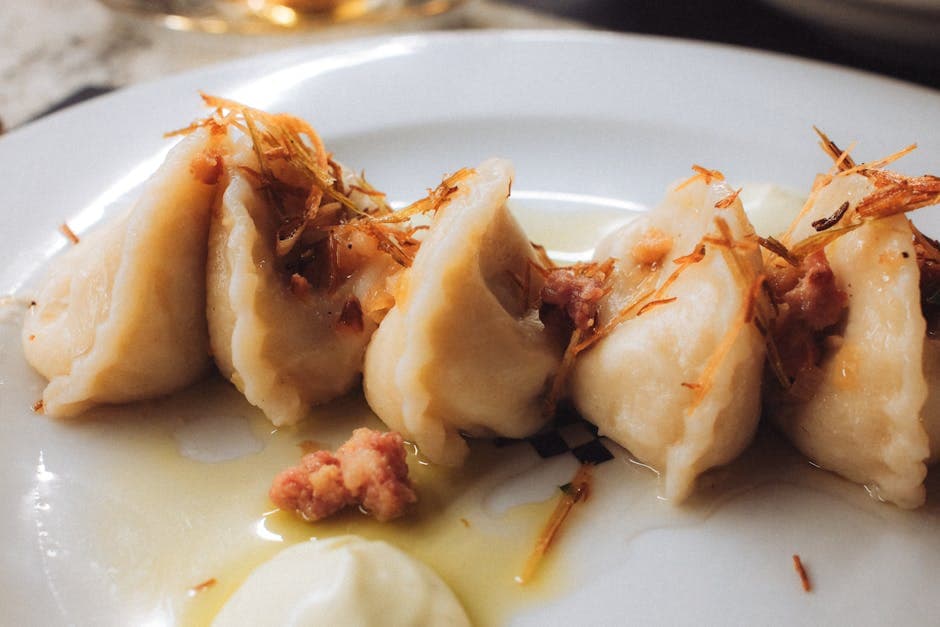
Aushak (Afghanische Lauch-Teigtaschen mit Joghurt und Lamm)
Afghanistans Festtags-Teigtasche: hauchdünner Teig mit gedünstetem Lauch gefüllt, mit Knoblauchjoghurt und gewürzter Lammsoße übergossen.
Über dieses Rezept
Aushak ist eines der großen zusammengesetzten Teigtaschengerichte Zentralasiens — Afghanistans Antwort auf Manti oder Pelmeni, aber mit einer ganz eigenen Finesse. Dünne Teigscheiben werden mit fein gehacktem Lauch (Gandana) gefüllt, der mit Salz, Pfeffer und etwas Öl gewürzt ist, zu Halbmonden geformt und kurz gekocht, dann auf einem Bett aus knoblauchhaltigem Joghurt angerichtet. Darüber kommt ein Löffel gewürzter Lammsoße (Qorma) mit Schälerbsen und gelben gespaltenen Kichererbsen, und das ganze Gericht wird mit getrocknetem Minze abgeschlossen — der charakteristische afghanische Abschluss, der alles zusammenbringt. Das Ergebnis ist ein tief geschichteter Bissen: würziger Joghurt gegen frischen Lauch, herzhaftes Lamm und der krautige Duft von getrockneter Minze. Es ist ein Festtagsgericht für Eid, Nowruz und Hochzeiten, auf einem großen Tablett zum Teilen serviert.
Zutaten
Dient 4
- 300 gMehl, plus etwas zum Bestäuben
- 1 großeEi
- 120 mlwarmes Wasser
- 0.5 TLfeines Salz (für den Teig)
- 500 gLauch oder Gandana (chinesischer Schnittlauch), fein gehackt (nur weiße und hellgrüne Teile)
- 2 ELneutrales Öl (für die Füllung)
- 1 TLfeines Salz (für die Füllung)
- 0.5 TLschwarzer Pfeffer (für die Füllung)
- 0.5 TLChiliflocken (für die Füllung)
- 400 gLammhackfleisch (oder Rinderhackfleisch)
- 2 ELneutrales Öl (für die Qorma)
- 1 mittleregelbe Zwiebel, fein gewürfelt
- 3 ZehenKnoblauch, fein gehackt
- 1 ELTomatenmark
- 100 ggelbe Schälerbsen, 2 Stunden eingeweicht
- 1 TLgemahlener Koriander
- 1 TLgemahlener Kümmel
- 0.5 TLKurkuma
- 1 TLfeines Salz (für die Qorma)
- 400 gdicker abgetropfter griechischer Joghurt
- 3 ZehenKnoblauch, gerieben (für den Joghurt)
- 0.5 TLfeines Salz (für den Joghurt)
- 2 ELgetrocknete Minze, zerrieben (unverzichtbar)
Anleitung
- 1
Teig zubereiten
Mehl und Salz vermengen. Das Ei mit warmem Wasser verquirlen und nach und nach zum Mehl geben. 10 Minuten kneten, bis ein glatter, elastischer Teig entsteht. Einwickeln und 45 Minuten ruhen lassen.
- 2
Qorma-Sauce kochen
Öl für die Qorma in einem Topf erhitzen. Das Lammhackfleisch 6 Minuten kräftig anbraten. Zwiebel hinzufügen und 6 Minuten weich dünsten. Knoblauch, Tomatenmark, abgetropfte Schälerbsen, alle Gewürze, Salz und 300 ml Wasser hinzufügen. Zugedeckt 35 Minuten köcheln, bis die Erbsen weich und die Sauce dick ist. Warm halten.
- 3
Füllung zubereiten
2 EL Öl in einer Pfanne bei mittlerer bis hoher Hitze erhitzen. Den gehackten Lauch mit Salz, Pfeffer und Chiliflocken hinzufügen. Nur 3–4 Minuten pfannenrühren — er soll welken, aber hellgrün bleiben und kein Wasser lassen. Auf einem Teller vollständig abkühlen lassen.
Die Füllung muss KALT sein, wenn Sie die Teigtaschen füllen, sonst erweicht der Dampf den Teig und sie reißen.
- 4
Knoblauchjoghurt zubereiten
Den Joghurt mit geriebenem Knoblauch und Salz verrühren. Bei Bedarf mit 2–3 EL Wasser auf eine dickflüssig-gießbare Konsistenz verdünnen. Auf Zimmertemperatur bringen.
- 5
Teig ausrollen und ausstechen
Den ausgeruhten Teig so dünn wie möglich ausrollen — hauchdünn, höchstens 2 mm. Mit einem Glas oder Ausstecher in 7 cm große Runden ausstechen.
- 6
Teigtaschen füllen
Auf jede Runde einen Teelöffel abgekühlte Lauchfüllung geben. Zu einem Halbmond falten und die Ränder fest zusammendrücken — Ränder leicht befeuchten, wenn der Teig trocken geworden ist.
Nicht überfüllen; eine überfüllte Aushak platzt im Wasser auf.
- 7
Kochen
Einen weiten Topf gesalzenes Wasser zum gleichmäßigen Köcheln bringen (kein starkes Kochen — das zerreißt die Teigtaschen). Die Aushak in Portionen 3–4 Minuten garen, bis sie an die Oberfläche steigen und leicht durchscheinend aussehen. Mit einem Schaumlöffel herausheben.
- 8
Anrichten
Den Knoblauchjoghurt auf einem weiten warmen Tablett verstreichen. Die heißen abgetropften Aushak in einer einzigen Lage darauflegen. Die warme Qorma-Sauce in einem großzügigen Streifen in der Mitte verteilen. Getrocknete Minze kräftig über alles zerbröseln und sofort servieren.
Haben Sie das gekocht?
Bewerte es und hilf anderen, die Rezepte zu finden, die wirklich funktionieren.
Einmal anmelden, und wir speichern die Bewertung, die Sie gerade gewählt haben.
Alles, was Sie für Ihre Wochenplanung brauchen — kostenlos
- Essensplaner
- Einkaufsliste
- KI-Rezeptideen
Behalten Sie im Blick, was Sie essen
Fotografieren Sie Ihre Mahlzeit, um Kalorien und Makros zu erfassen, nutzen Sie Fasten-Timer und tracken Sie Ihr Wasser – in der kostenlosen SnapCal-App.
Profi-Tipps
- →
Getrocknete Minze ist für afghanische Aushak unverzichtbar — frische Minze kann nicht ersetzt werden, das Geschmacksprofil ist völlig anders. In persischen und afghanischen Lebensmittelläden erhältlich.
- →
Gandana (chinesischer Lauch) ist die traditionelle Füllung und hat ein kräftigeres, schwefliges Aroma als gewöhnlicher Lauch; wenn erhältlich, verwenden. Normaler Lauch + ein Teelöffel Knoblauchschnittlauch ist die zweitbeste Option.
- →
Den Teig so dünn wie möglich ausrollen — dicke Aushak wirkt schwer und unförmig; der Zauber liegt im zarten Teig gegen die kräftige Qorma.
Variationen
- •
Mantu: Afghanistans andere große Teigtasche, mit gewürztem Rinderhackfleisch gefüllt und gedämpft statt gekocht, mit demselben Joghurt und derselben Qorma serviert.
- •
Vegetarische Aushak: Fleisch in der Qorma weglassen und Schälerbsen verdoppeln für eine vollständig vegetarische Version.
- •
Spinat-Aushak: eine weniger verbreitete Frühlingsvariante, bei der Lauch durch fein gehackten jungen Spinat und Dill ersetzt wird.
Lagerung
Ungekochte Teigtaschen lassen sich wunderbar einfrieren — auf einem Blech einzeln einfrieren, dann in Beutel füllen. Aus dem Gefrierfach mit 1 Minute extra Garzeit kochen. Nach dem Anrichten mit Joghurt und Qorma sofort essen; das Gericht lässt sich nicht aufbewahren.
Geschichte und Herkunft
Aushak erscheint in afghanischen Kochbüchern mindestens aus dem 19. Jahrhundert, mit Wurzeln in der Seidenstraßen-Teigtaschenkultur, die von China bis Anatolien reicht. Die Lauchfüllung ist typisch afghanisch, besonders mit Kabul und Herat verbunden; die geschichtete Joghurt-und-Qorma-Präsentation ist ihr charakteristischer afghanischer Stempel.
Häufig gestellte Fragen
Kann ich Wan-Tan-Teigblätter verwenden?
Ja, im Notfall — Wan-Tan-Teigblätter sind dünner als hausgemachter Aushak-Teig und eignen sich als Abkürzung. Nur 90 Sekunden kochen; sie garen schneller.
Was, wenn ich keine getrocknete Minze finde?
Es gibt keinen sauberen Ersatz — getrockneter Oregano in halber Menge ist die am wenigsten schlechte Alternative, aber dann kocht man ein anderes Gericht. Getrocknete Minze in jedem mediterranen, iranischen oder afghanischen Lebensmittelgeschäft erhältlich; hält ein Jahr.
Kann ich Aushak im Voraus zubereiten?
Ja — Teigtaschen bis zu 6 Stunden im Voraus füllen und formen und auf einem bemehlten Blech kühlen. Erst zum Servieren kochen, anrichten und garnieren.
Ist es scharf?
Nur leicht — die afghanische Küche priorisiert Wärme und Aroma über Schärfe. Die Chiliflocken in der Lauchfüllung sorgen für milde Hintergrundwärme, kein Brennen.
Nährwertangaben
Pro Portion (520g) · 4 Portionen insgesamt
Zeitzusammenfassung
Haben Sie Fragen?
Fragen Sie unseren KI-Kochassistenten zu diesem Rezept – Ersetzungen, Techniken, Skalierung.
Chatten Sie mit AI Chef →In Reiseführern vorgestellt
Dieses Rezept ist in den folgenden kuratierten Leitfäden enthalten:
Weitere Afghanische Rezepte
Das könnte Ihnen auch gefallen
Ähnliche Gerichte aus anderen Küchen der Welt.
Nach Zutat stöbern
Weitere Rezepte rund um dieselben Hauptzutaten.
Kostenlose Küchen-Tools
Rechner und Umrechner, die zu dieser Seite passen — ohne Anmeldung.
Daraus einen Plan machen
Einplanen, einkaufen und im Blick behalten, was schon da ist.
Weiterlesen
Ausführliche Artikel zu den Ideen hinter diesem Gericht.
Gemeinschaft
Beteiligen Sie sich an der Unterhaltung
Melden Sie sich an, um einen Kommentar zu hinterlassen und Ihre Lieblingsrezepte zu speichern