
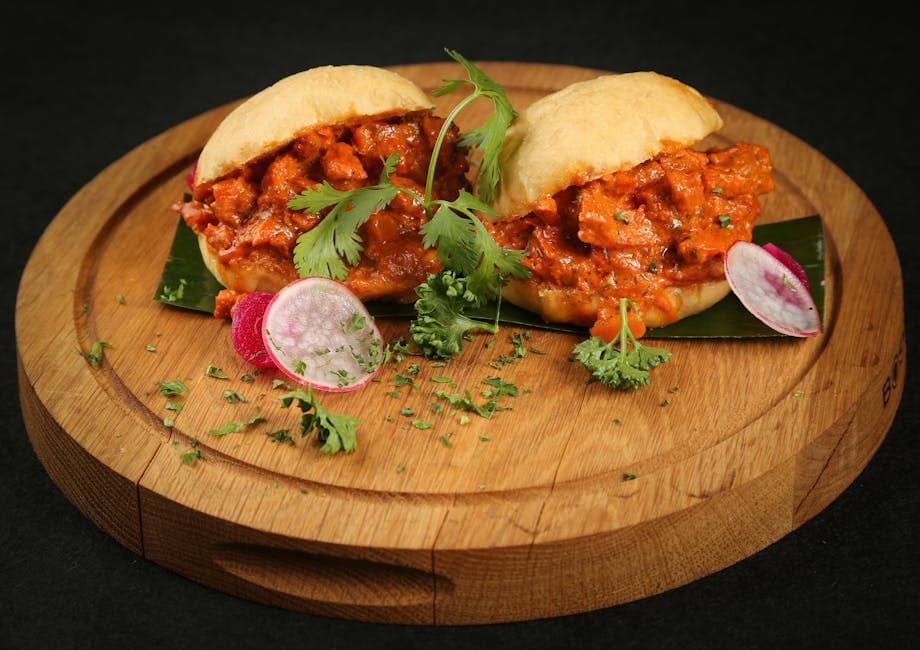
Bunny Chow (Durban-Curry im Brotlaib)
Durbans ikonisches Streetfood: ein ausgehoehlter Weissbrotlaib, gefuellt mit scharfem Lamm- oder Bohnencurry. Mit den Haenden gegessen, niemals mit Besteck.
Über dieses Rezept
Bunny Chow – oder fuer Einheimische einfach 'a bunny' – ist das charakteristische Streetfood von Durban, Suedafrika, und eine der grossen Fusionspeisen der Welt. Eine halbe Scheibe Weissbrot wird ausgehoehlt, das weiche Innere ('Virgin') beiseitegelegt und der Hohlraum bis zum Ueberlaufen mit einem scharfen Durban-Stil Lamm-, Hammel- oder Zuckerbohrencurry gefuellt. Man isst es im Stehen, reisst Stuecke des mit Sosse getraenkten Brotes ab, um das Curry aufzuloeffeln, und beendet es mit dem Virgin-Brotzapfen am Ende. Das Curry selbst ist unverkennbar Durban-indisch: dick, oelig, feurig von Chili, durchzogen von Garam Masala und Curryblaetern, mit Kartoffeln, die in der Sosse zerfallen sind. Es ist eine der befriedigendsten Mahlzeiten, die man mit zwei Haenden und null Zeremoniell essen kann.
Zutaten
Dient 4
- 800 gLammschulter oder Hammelfleisch, gewuerfelt
- 3 ELneutrales Oel
- 2 großeZwiebeln, fein geschnitten
- 5 ZehenKnoblauch, gehackt
- 1 DaumenIngwer, gehackt
- 3frische gruene Chilis, aufgeschlitzt
- 2Zimtstangen
- 4Kardamomkapseln, angedrueckt
- 1Sternanis
- 2 ELDurban-Masala (oder scharfes Currypulver)
- 1 TLgemahlene Kurkuma
- 1 TLgemahlener Kreuzkuemmel
- 1 TLgemahlener Koriander
- 3 ELTomatenmark
- 4reife Tomaten, gerieben
- 500 gfestkochende Kartoffeln, geschaelt und gevierteilt
- 1 sprigfrische Curryblaetter
- 500 mlWasser
- 2 TLSalz
- 2 ELfrischer Koriander, gehackt
- 2 loavesweiches Weisstoastbrot, ungeschnitten
Anleitung
- 1
Lamm anbraten
Oel in einem schweren Topf erhitzen. Lamm portionsweise kraeftig anbraten, 4 Minuten pro Portion. Herausnehmen.
- 2
Aromaten anroesten
Hitze reduzieren. Zwiebeln 10 Minuten tief goldbraun duensten – diese Tiefe macht ein gutes Durban-Curry aus. Knoblauch, Ingwer, Chilis, Zimt, Kardamom und Sternanis zugeben; 2 Minuten mitgaren.
- 3
Gewuerze roesten
Masala, Kurkuma, Kreuzkuemmel und Koriander zugeben. 90 Sekunden ruehren, bis intensiv duftend und das Oel sich orange am Rand absetzt.
Wenn das Masala das Oel nicht verfaerbt, schmeckt das Curry roh – eine volle Minute und eine halbe in Bewegung halten.
- 4
Basis aufbauen
Tomatenmark einruehren; 2 Minuten braten. Geriebene Tomaten zugeben; 6–8 Minuten kochen, bis dicklich und jammy und das Oel sich wieder an den Raendern absetzt.
- 5
Schmoren
Lamm zurueckgeben. Curryblaetter, Wasser, Salz zugeben. Aufkochen lassen, abdecken, 60 Minuten koechen.
- 6
Kartoffeln zugeben
Kartoffeln unterruehren. Unbedeckt 25–30 Minuten koechen, bis die Kartoffeln weich und das Curry dick, oelig und am Fleisch haftet.
- 7
Brot vorbereiten
Jeden Laib halbieren. Jede Haelfte aushoehlen und dabei eine 2 cm dicke Wand stehen lassen. Den Brotzapfen ('Virgin') aufbewahren.
- 8
Fuellen
Heisses Curry in jede Brothoehlung geben, leicht ueberfuellen. Den Virgin-Zapfen obenauf oder daneben legen.
- 9
Mit den Haenden essen
Den Virgin in Stuecke reissen, um das Curry aufzuloeffeln. Die mit Sosse getraenkten Waende zuletzt essen, da das Curry sie tief durchdrungen hat. Keine Gabel erlaubt.
Hast du das gekocht?
Bewerte es und hilf anderen, die Rezepte zu finden, die wirklich funktionieren.
Einmal anmelden, und wir speichern die Bewertung, die du gerade gewählt hast.
Alles, was du für deine Wochenplanung brauchst — kostenlos
- Essensplaner
- Einkaufsliste
- KI-Rezeptideen
Freihändig kochen
Hol dir KI-Essenspläne, einen Schritt-für-Schritt-Kochmodus und deine gespeicherten Rezepte in der kostenlosen Bento-App.
Profi-Tipps
- →
Ein stabiles, weiches Toastbrot verwenden – rustikale Krustebroete nehmen die Sosse nicht richtig auf und sind zu hart zum Einreissen.
- →
Durban-Masala (Marke Pakco oder Mother-in-Law) ist die passende Gewuerzmischung. Madras-Currypulver ist der naechste Ersatz; um 25 % reduzieren, da es schaerfer ist.
- →
Das Curry muss dick genug sein, dass ein Loeffel darin stehen bleibt – fluessiges Curry laeuft aus dem Laib heraus. Falls noetig unbedeckt einreduzieren.
Variationen
- •
Bohnen-Bunny: Zuckerbohnen oder rote Kidneybohnen statt Lamm – ebenso traditionell und vollstaendig vegetarisch.
- •
Haehnchen-Bunny: knochengebundene Haehnchenoberschenkel verwenden; Schmorzheit auf 35 Minuten reduzieren.
- •
Halbe vs. viertel Portion: ein 'Viertel' ist eine kleinere Brotportion fuer eine Person; eine 'Haelfte' (hier verwendet) reicht fuer zwei Hungrige oder einen Ausgehungerten.
Lagerung
Curry bis zu 3 Tage im Voraus zubereiten – es wird besser. Den Bunny erst kurz vor dem Essen zusammenstellen, sonst wird das Brot matschig. Gefuellte Bunnies nicht laenger als 2 Stunden kuehl stellen.
Geschichte und Herkunft
Bunny Chow entstand in den 1940er Jahren in Durbans indischer Gemeinschaft, als Arbeiter ein tragbares Mittagessen brauchten, das mit den Haenden gegessen werden konnte. Der Name 'Bunny' leitet sich von den Banias (indischen Kaufleuten) ab, die sie zuerst verkauften, nicht vom Tier.
Häufig gestellte Fragen
Warum heisst es Bunny?
Der Name stammt von 'Bania', einer Bezeichnung fuer indische Kaufleute im kolonialen Durban, die in den 1940er Jahren zuerst curry-gefuelltes Brot an Arbeiter verkauften. Es hat nichts mit Hasen zu tun.
Was ist Durban-Masala?
Durban-Masala ist eine chilibetonende suedafrikanisch-indische Gewuerzmischung, trockener und schaerfer als typisches Garam Masala, mit Paprika, Cayennepfeffer, Kreuzkuemmel, Koriander, Fenchel und Kurkuma. Marke Pakco ist der Standard.
Darf ich Bunny Chow mit einer Gabel essen?
Man kann, aber Durbaner betrachten es als Haeresie. Der Sinn ist das Ess-Ritual: den Brotzapfen einreissen, aufloeffeln und mit den sossenduraenkten Waenden beenden. Besteck nimmt dem Gericht seine Seele.
Was ist der Unterschied zwischen Bunny Chow und Kothu Paratha?
Bunny Chow ist Curry in einem ausgehohlten Brotlaib; Kothu Paratha ist gehacktes Fladenbrot, mit Curry angebraten. Verschiedene Formate, aehnliches tamilisch-diasporisches Erbe.
Nährwertangaben
Pro Portion (540g) · 4 Portionen insgesamt
Zeitzusammenfassung
Haben Sie Fragen?
Fragen Sie unseren KI-Kochassistenten zu diesem Rezept – Ersetzungen, Techniken, Skalierung.
Chatten Sie mit AI Chef →In Reiseführern vorgestellt
Dieses Rezept ist in den folgenden kuratierten Leitfäden enthalten:
Weitere South-african Rezepte
Das könnte dir auch gefallen
Ähnliche Gerichte aus anderen Küchen der Welt.
Kostenlose Küchen-Tools
Rechner und Umrechner, die zu dieser Seite passen — ohne Anmeldung.
Daraus einen Plan machen
Einplanen, einkaufen und im Blick behalten, was schon da ist.
Weiterlesen
Ausführliche Artikel zu den Ideen hinter diesem Gericht.
Leinsamen, Lignane und Hormonhaushalt: Eine umfassende Wissenschaft erklärt
12 Min.
Die Galveston-Diät für die Wechseljahre: Eine vollständige entzündungshemmende Ernährung, um der Gewichtszunahme im mittleren Lebensalter entgegenzuwirken
14 Min.
Was man bei GLP-1-Medikamenten essen sollte (Ozempic, Wegovy, Zepbound): Ein Ernährungsratgeber
14 Min.
Gemeinschaft
Beteiligen Sie sich an der Unterhaltung
Melden Sie sich an, um einen Kommentar zu hinterlassen und Ihre Lieblingsrezepte zu speichern