
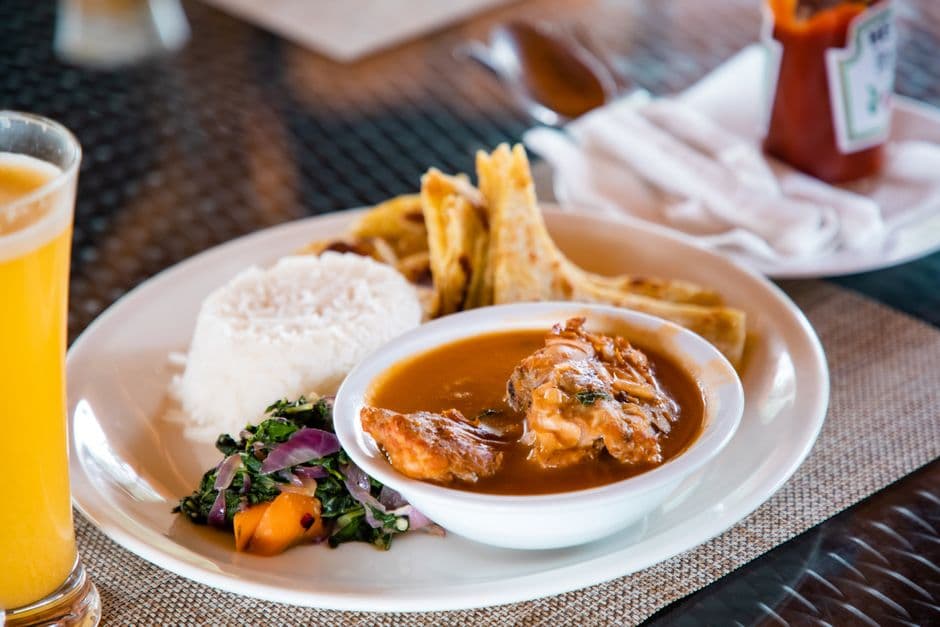
Luwombo
Huhn- oder Rindfleisch-Eintopf langsam-gedämpft in Bananenblatthülsen mit Pilzen und Erdnuss-Paste. Ein königliches Buganda-Gericht von außerordentlicher Zartheit und Arom.
Über dieses Rezept
Luwombo ist eines der am meisten verehrten traditionellen Gerichte Ugandas, berichtet von 1887 von Kawunta, dem königlichen Koch von Kabaka Mwanga II des Buganda-Königreichs, als eine spezielle Zubereitung für den königlichen Hof erfunden worden zu sein. Das Gericht umfasst Fleisch in einer Erdnuss- und Pilz-Sauc mariniert und in Bananenblatthülsen eingehüllt, die dann für mehrere Stunden gedämpft werden. Die eingeschlossene Kochtemperatur konzentriert die Geschmäcke und die Bananenblätter impartieren ein subtil Gras-, rauchig Arom zum Eintopf. Luwombo ist ein festliches und zeremonielles Gericht in der Buganda-Kultur, zubereitet für wichtige Gäste, Hochzeiten und Feierlichkeiten – es wird nie als Alltags-Gericht betrachtet.
Zutaten
Dient 4
- 1 kgHühnchenstücke mit Knochen oder kurze Rinderrippen
- 150 gErdnusspaste (ungesüßte Erdnussbutter)
- 100 ggetrocknete Pilze (z. B. Shiitake oder Austern), eingeweicht und in Scheiben geschnitten
- 1 großeZwiebel, fein gewürfelt
- 3 ZehenKnoblauch, gehackt
- 1 TLfrischer Ingwer, gerieben
- 2 großeTomaten, gewürfelt
- 200 mlEinweichflüssigkeit für Pilze (abgesiebt)
- 100 mlHühnerbrühe
- 2 ELPflanzenöl
- 4 großeBananenblätter, über Flamme weich gemacht und in 40 cm große Quadrate geschnitten
- 1 TLSalz
- 1 TLschwarzer Pfeffer
- 8 stripsBananenblatt oder Küchengarn zum Zusammenbinden
Anleitung
- 1
Bereiten Sie die Bananenblätter vor
Führen Sie jedes Bananenblatt kurz über eine Gasflamme oder tauchen Sie es einige Sekunden lang in kochendes Wasser, bis es tiefer grün wird und geschmeidig wird. Mit einem feuchten Tuch abwischen. Dadurch wird ein Splittern beim Falten verhindert.
- 2
Machen Sie die Erdnusssauce
Das Öl in einer Pfanne bei mittlerer Hitze erhitzen. Die Zwiebel 8 Minuten goldbraun braten. Knoblauch, Ingwer und Tomaten hinzufügen und 5 Minuten kochen lassen. Erdnusspaste, Pilze, Pilzeinweichflüssigkeit und Brühe einrühren. 5 Minuten köcheln lassen, bis eine glatte Masse entsteht. Mit Salz und Pfeffer würzen.
- 3
Das Fleisch marinieren
Die Hähnchen- oder Rindfleischstücke würzen und gründlich mit der Erdnuss-Pilz-Sauce bestreichen. Mindestens 30 Minuten bei Zimmertemperatur oder bis zu 4 Stunden im Kühlschrank marinieren lassen.
- 4
Machen Sie die Bananenblattpakete
Legen Sie ein großes Bananenblatt mit der glänzenden Seite nach unten auf eine Arbeitsfläche. Ein Viertel des marinierten Fleisches und der Soße in die Mitte geben. Falten Sie die Seiten des Blattes über die Füllung und falten Sie dann die Ober- und Unterseite, um ein ordentliches Päckchen zu erhalten. Mit Bananenblattstreifen oder Küchengarn festbinden. Wiederholen Sie dies für jede Portion.
- 5
Dämpfen Sie den Luwombo
Ordnen Sie die Päckchen in einem Dampfkorb oder auf einem Gestell über einem tiefen Topf mit kochendem Wasser an. Dicht abdecken und 1,5 bis 2 Stunden dämpfen, bis das Fleisch ganz zart ist und vom Knochen fällt. Kontrollieren Sie regelmäßig den Wasserstand und füllen Sie bei Bedarf nach. Servieren Sie die Päckchen am Tisch und öffnen Sie sie, um den aromatischen Dampf freizusetzen.
Haben Sie das gekocht?
Bewerte es und hilf anderen, die Rezepte zu finden, die wirklich funktionieren.
Einmal anmelden, und wir speichern die Bewertung, die Sie gerade gewählt haben.
Alles, was Sie für Ihre Wochenplanung brauchen — kostenlos
- Essensplaner
- Einkaufsliste
- KI-Rezeptideen
Behalten Sie im Blick, was Sie essen
Fotografieren Sie Ihre Mahlzeit, um Kalorien und Makros zu erfassen, nutzen Sie Fasten-Timer und tracken Sie Ihr Wasser – in der kostenlosen SnapCal-App.
Profi-Tipps
- →
Es ist wichtig, die Bananenblätter bei Hitze einzuweichen, damit sie beim Einwickeln nicht platzen.
- →
Wenn keine Bananenblätter verfügbar sind, verwenden Sie mit Pergament ausgelegte Folie – Sie verlieren zwar den Geschmack, aber das Gericht schmeckt trotzdem.
- →
Eine längere Garzeit für Rindfleisch (2 Stunden) liefert die besten Ergebnisse; Hähnchen braucht nur 1 bis 1,5 Stunden.
- →
Öffnen Sie die Päckchen am Tisch, um eine maximale dramatische Wirkung und ein maximales Aroma zu erzielen.
Variationen
- •
Luwombo ya nkoko: traditionelle Hühnchenversion, die häufigste.
- •
Luwombo ya ngege: Tilapia-Fischversion mit einer leichteren Sauce.
- •
Für eine rauchigere Tiefe 2 Esslöffel geräuchertes Paprikapulver in die Sauce geben.
- •
Vegetarisch: Ersetzen Sie das Protein durch geröstete Kräuterseitlinge, geräucherten Tofu oder gekochte Kichererbsen – würzen Sie zum Ausgleich leicht nach oben.
Lagerung
Luwombo kann in seinen versiegelten Verpackungen 2 Tage lang gekühlt oder zum Aufwärmen 20–30 Minuten lang erneut gedämpft werden. Die Füllung kann bis zu 2 Monate lang eingefroren (von den Blättern entfernt) werden.
Geschichte und Herkunft
Luwombo wurde 1887 von Kawunta, dem königlichen Koch von Kabaka Mwanga II. aus dem Königreich Buganda, kreiert. Das Gericht wurde entwickelt, um Fleisch zu konservieren und es zum königlichen Verzehr über große Entfernungen noch heiß zu liefern. Auch heute noch ist es das zeremonielle Gericht schlechthin des Volkes der Baganda und wird für Ehrengäste und wichtige Lebensereignisse in ganz Uganda zubereitet.
Häufig gestellte Fragen
Wo finde ich Bananenblätter?
Bananenblätter sind frisch oder gefroren in afrikanischen, karibischen und asiatischen Lebensmittelgeschäften erhältlich. Gefrorene Blätter funktionieren sehr gut – tauen Sie sie vor der Verwendung vollständig auf und erweichen Sie sie wie beschrieben bei Hitze.
Kann ich das im Voraus machen?
Ja – die meisten Komponenten können bis zu einem Tag im Voraus zubereitet und separat gekühlt werden. Kurz vor dem Servieren vorsichtig aufwärmen und zusammensetzen, damit die Konsistenz klar bleibt.
Was kann ich ersetzen, wenn ich nicht alle Zutaten habe?
Achten Sie darauf, welche Rolle jede Zutat spielt: Tauschen Sie Aromen gegen ähnliche aus (Schalotte gegen Zwiebel, Limette gegen Zitrone) und achten Sie darauf, dass das Fett-Säure-Salz-Gleichgewicht erhalten bleibt. Gewürzmischungen lassen sich in der Regel annähernd mit dem vergleichen, was im Vorratsschrank ist.
Woher weiß ich, dass es authentisch ist?
Authentizität liegt auf einem Spektrum – was wichtiger ist, ist die Würdigung der Technik und der Ausgewogenheit der Aromen. Wenn das Gericht harmonisch schmeckt und respektiert, wie die Köche seiner Heimat es zubereiten würden, sind Sie auf einem sicheren Stand.
Nährwertangaben
Pro Portion (400g) · 4 Portionen insgesamt
Zeitzusammenfassung
Haben Sie Fragen?
Fragen Sie unseren KI-Kochassistenten zu diesem Rezept – Ersetzungen, Techniken, Skalierung.
Chatten Sie mit AI Chef →In Reiseführern vorgestellt
Dieses Rezept ist in den folgenden kuratierten Leitfäden enthalten:
Weitere Ugandan Rezepte
Das könnte Ihnen auch gefallen
Ähnliche Gerichte aus anderen Küchen der Welt.
Kostenlose Küchen-Tools
Rechner und Umrechner, die zu dieser Seite passen — ohne Anmeldung.
Daraus einen Plan machen
Einplanen, einkaufen und im Blick behalten, was schon da ist.
Weiterlesen
Ausführliche Artikel zu den Ideen hinter diesem Gericht.
Intermittierendes Fasten und Bewegung: Eine umfassende Anleitung zum Training ohne Muskelverlust
13 Min.
Keto-Mahlzeitplanung: Eine komplette Woche mit kohlenhydratarmen Mahlzeiten leicht gemacht
13 Min.
Die ketogene Diät: Vollständiger wissenschaftlicher Leitfaden, Vorteile, Risiken und wer sie vermeiden sollte
14 Min.
Gemeinschaft
Beteiligen Sie sich an der Unterhaltung
Melden Sie sich an, um einen Kommentar zu hinterlassen und Ihre Lieblingsrezepte zu speichern