
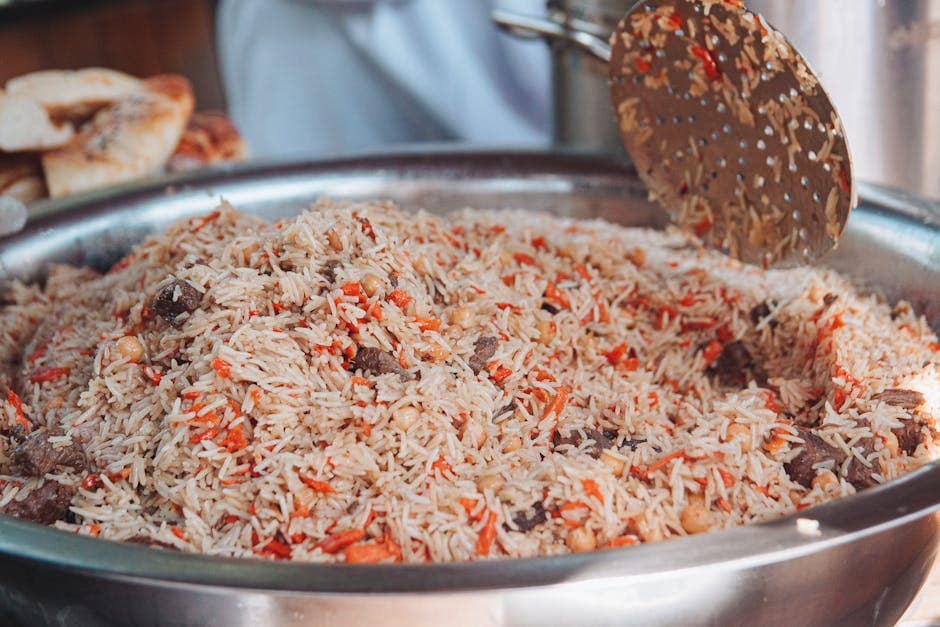
Usbekischer Plov (Osh) - Lammfleisch und Karotten-Pilaf
Usbekistans Nationalgericht - Lammfleisch, Karotten, Kreuzkümmel und Reis in einem einzigen tiefen Kessel gekocht, bis jedes Körn mit würziger Fett glänzt und das Fleisch auseinanderfällt.
Über dieses Rezept
Plov (osh) ist das Gericht der usbekischen Gastfreundschaft – es wird in riesigen gusseisernen Kesseln über Holzfeuern bei Hochzeiten, Beerdigungen und Sonntagsmittagessen zubereitet und auf Gemeinschaftsplatten serviert, um die sich Fremde und Familienangehörige gleichermaßen versammeln. Jede Region hat ihre eigene Variante (Bucharisch, Fergana, Samarkand, Taschkent), aber die Architektur ist gleich: Lammfleisch mit Knochen wird in Baumwollsamen- oder Sonnenblumenöl gebräunt, bis das Fett austritt und eine mahagonifarbene Farbe annimmt; Dicke Streifen aus gelben und orangefarbenen Karotten werden mit geschnittenen Zwiebeln und ganzen Kreuzkümmelsamen über das Fleisch geschichtet und langsam im Fett gedünstet, um die „Zirvak“-Basis zu schaffen. Anschließend wird der Reis gründlich gewaschen, ohne Rühren darüber geschichtet und mit Wasser versetzt, sodass alles gerade bedeckt ist. Der Kazan ist geschlossen und der Reis dampft im gewürzten Fett darunter. Zum Abschluss werden ganze Knoblauchzehen oben vergraben und manchmal ganze Quitten, Kichererbsen oder Berberitzen für einen Plov zum Hochzeitstag. Bei richtiger Zubereitung ist jedes Korn einzeln, mit Lammfett überzogen, von den Karotten leicht orange und nur mit Salz, Kreuzkümmel und der langsamen Chemie des Zirvak gewürzt. Das Gericht hat ein enormes kulturelles Gewicht: Die UNESCO hat Plov 2016 in die Liste des immateriellen Kulturerbes aufgenommen. Es gut zu kochen ist in Zentralasien eine Form männlichen Stolzes – usbekische Männer kochen routinemäßig Plov für 200 Hochzeitsgäste an einem einzigen Nachmittag über offener Flamme, und der Titel „oshpaz“ (Plov-Meister) ist einer der angesehensten in der Kultur.
Zutaten
Dient 6
- 800 gLammschulter oder -hals mit Knochen, in 4 cm große Stücke geschnitten (etwas Knochen ist unbedingt erforderlich)
- 200 gLammschwanzfett oder Rinderfett, klein gewürfelt (oder 150 ml Sonnenblumenöl)
- 3 großegelbe Zwiebeln, in dünne Halbmonde geschnitten
- 1.2 kgKarotten, geschält und in lange, dicke Stifte geschnitten (nicht reiben)
- 600 gLangkornreis (wenn möglich Devzira oder Basmati), gewaschen, bis das Wasser klar ist, und 30 Minuten eingeweicht
- 2 ganzKnoblauchzehen, äußeres Papier entfernt, aber ganz behalten
- 1 ELganze Kreuzkümmelsamen (Zira), plus 1 TL Salz
- 1 TLgemahlener Koriander, plus 1 TL Paprika als Farbe
- 1 small handfulgetrocknete Berberitzen oder 50 g Kichererbsen (optionale traditionelle Zugabe)
Anleitung
- 1
Das Fett auslassen
Stellen Sie einen schweren gusseisernen Topf oder Schmortopf auf mittlere bis hohe Hitze. Fügen Sie das gewürfelte Lammfett (oder Öl) hinzu und kochen Sie es 6–8 Minuten lang, bis das Fett ausgetreten ist und die Grieben goldbraun sind. Entfernen Sie die Grieben mit einem Schaumlöffel und bewahren Sie sie als Snack auf – sie werden „Jizza“ genannt und sind die Belohnung des Kochs.
- 2
Das Fleisch anbraten
Fügen Sie die Lammstücke in einer einzigen Schicht hinzu (bei Bedarf in mehreren Portionen verarbeiten). Bei starker Hitze insgesamt 8–10 Minuten anbraten, dabei wenden, um alle Seiten intensiv zu färben. Es ist die Maillard-Kruste, die dafür sorgt, dass der gesamte Topf nach Lamm schmeckt – lassen Sie es nicht aus und überstürzen Sie es nicht.
Bewegen Sie das Fleisch in den ersten 3 Minuten pro Seite nicht – lassen Sie eine echte Kruste entstehen. Zu frühes Rühren entfernt den braunen Fond.
- 3
Zwiebeln hinzufügen
Die in Scheiben geschnittenen Zwiebeln zum angebratenen Fleisch geben und 8–10 Minuten bei mittlerer Hitze unter gelegentlichem Rühren braten, bis sie goldbraun und weich sind. Sie geben Wasser ab, zerfallen dann und karamellisieren. Dies ist die zweite Schicht des Zirvak.
- 4
Karotten und Gewürze schichten
Die Karotten-Streichhölzer gleichmäßig über das Fleisch und die Zwiebeln verteilen. Mit Kreuzkümmel, gemahlenem Koriander, Paprika und Salz bestreuen. Nicht umrühren. Reduzieren Sie die Hitze auf mittlere bis niedrige Stufe, decken Sie sie ab und lassen Sie die Karotten 12–15 Minuten lang im Dampf weich werden – sie sollten schlaff und leuchtend orange werden und ihre Süße freisetzen.
- 5
Fügen Sie Wasser hinzu und stellen Sie den Zirvak her
Gießen Sie 250 ml kochendes Wasser hinzu (gerade so viel, dass es bis zur Hälfte der Karotten reicht), fügen Sie die in die Karottenschicht geschobenen Knoblauchzehen sowie etwaige Berberitzen oder Kichererbsen hinzu. Abdecken und 20 Minuten köcheln lassen – die geschichtete Soße am Boden ist jetzt der Zirvak, die Seele des Plov. Schmecken und salzen Sie aggressiv; Der Reis nimmt viel auf.
- 6
Reis hinzufügen
Den eingeweichten Reis abtropfen lassen. Verteilen Sie es gleichmäßig auf einer flachen Decke auf der Karottenschicht – rühren Sie es nicht in den Zirvak darunter. Gießen Sie kochendes Wasser vorsichtig über die Rückseite eines Löffels auf den Reis, bis das Wasser ihn gerade noch 1 cm bedeckt. Das ist entscheidend: Zu viel Wasser macht Plov matschig, zu wenig macht es kreidig.
- 7
Den Reis kochen und ruhen lassen
Bei mittlerer bis hoher Hitze ohne Deckel 8–10 Minuten lang stark köcheln lassen, bis das Oberflächenwasser aufgesogen ist und der Reis kleine Dampflöcher aufweist. Gut abdecken, die Hitze auf die niedrigste mögliche Stufe reduzieren (verwenden Sie einen Wärmediffusor, falls vorhanden) und 25 Minuten kochen lassen. Den Herd ausschalten und abgedeckt weitere 15 Minuten stehen lassen. Zum Servieren den Reis von oben auf eine große Platte löffeln, das Fleisch und den Knoblauch herausnehmen und mit dem Lamm und den Karotten einen Hügel aufhäufen.
Haben Sie das gekocht?
Bewerte es und hilf anderen, die Rezepte zu finden, die wirklich funktionieren.
Einmal anmelden, und wir speichern die Bewertung, die Sie gerade gewählt haben.
Alles, was Sie für Ihre Wochenplanung brauchen — kostenlos
- Essensplaner
- Einkaufsliste
- KI-Rezeptideen
Behalten Sie im Blick, was Sie essen
Fotografieren Sie Ihre Mahlzeit, um Kalorien und Makros zu erfassen, nutzen Sie Fasten-Timer und tracken Sie Ihr Wasser – in der kostenlosen SnapCal-App.
Profi-Tipps
- →
Lammfleisch mit Knochen ist unerlässlich – das Mark und das Bindegewebe geben dem Zirvak die nötige Würze. Ohne Knochen ergibt ein flacheres, weniger reichhaltiges Plov.
- →
Devzira-Reis aus Usbekistan ist der Goldstandard – rosafarbene, perlmuttartige Körner, die wie ein Schwamm den Geschmack aufnehmen. Basmati ist der beste weit verbreitete Ersatz; Verwenden Sie keinen Jasmin oder Kurzkorn.
- →
Rühren Sie den Plov niemals um, nachdem der Reis hineingegangen ist. Der Schichtaufbau (Fleisch/Zwiebel unten, Karotten in der Mitte, Reis oben) sorgt dafür, dass er richtig gart.
- →
Wenn Sie statt eines echten Kazan einen normalen Topf verwenden, ist ein Wärmediffusor oder Flammenbändiger von entscheidender Bedeutung, um ein Anbrennen des Bodens zu verhindern. Die untere Schicht sollte leicht knusprig sein und nicht anbrennen.
Variationen
- •
Nach Samarkand-Art: Halten Sie Fleisch, Karotten und Reis beim Servieren in deutlichen Streifen und nicht übereinander.
- •
Fergana-Art: Verwenden Sie Rindfleisch anstelle von Lammfleisch und fügen Sie für die Süße eine Handvoll Rosinen hinzu.
- •
Hochzeitsplov (Toy Oshi) – ganze Quitten, getrocknete Aprikosen und Berberitzen hinzufügen; serviert 20+ aus einem Kasan.
- •
Vegetarisches Plov – verzichten Sie auf Fleisch und Fett und verwenden Sie für den Zirvak nur mit Kreuzkümmel und Kichererbsen eine großzügige Menge Butter oder Ghee.
Lagerung
In einem luftdichten Behälter gekühlt 3 Tage haltbar. In einer abgedeckten Pfanne mit einem Spritzer Wasser bei sehr schwacher Hitze oder Dampf aufwärmen – niemals in der Mikrowelle erhitzen (die Reistextur leidet darunter). Lässt sich 1 Monat lang einfrieren, aber die Karotten werden noch weicher.
Geschichte und Herkunft
Plov ist in der zentralasiatischen Küche seit mindestens tausend Jahren dokumentiert; Das „Kompendium der türkischen Dialekte“ von Mahmud al-Kashgari aus dem 11. Jahrhundert beschreibt einen erkennbaren Proto-Plov. Heute gibt es über 100 dokumentierte regionale usbekische Varianten, und 2016 hat die UNESCO usbekisches Osch in ihre Liste des immateriellen Kulturerbes der Menschheit aufgenommen.
Häufig gestellte Fragen
Warum wird mein Reis matschig?
Höchstwahrscheinlich zu viel Wasser beim Reis, oder Sie haben umgerührt. Verwenden Sie gerade so viel kochendes Wasser, dass der Reis knapp bedeckt ist, und lassen Sie die Schichten bis zum Ende vollständig intakt.
Kann ich es in einem Reiskocher zubereiten?
Sie können den Zirvak in einer schweren Pfanne zubereiten, dann alles (Zirvak unten, Reis oben) in einen Reiskocher mit dem richtigen Wasserstand geben und einen Standardzyklus durchlaufen lassen. Die Textur ist akzeptabel, nicht ideal.
Muss ich die Karotten wirklich in Stifte schneiden?
Ja – geriebene Karotten lösen sich im Zirvak auf und verschwinden; runde Scheiben sind uneben. Lange Streichhölzer (ca. 5 mm dick) behalten ihre Form und sorgen für visuellen und strukturellen Kontrast.
Warum ganze Knoblauchzehen?
In der Oberseite des Reises vergraben, dämpfen sie zu einem Confit, das so weich ist, dass Sie die Nelken direkt in Ihren Mund drücken können. Es ist ein traditionelles Prunkstück und ein Genuss für den Ehrengast.
Nährwertangaben
Pro Portion (450g) · 6 Portionen insgesamt
Zeitzusammenfassung
Haben Sie Fragen?
Fragen Sie unseren KI-Kochassistenten zu diesem Rezept – Ersetzungen, Techniken, Skalierung.
Chatten Sie mit AI Chef →In Reiseführern vorgestellt
Dieses Rezept ist in den folgenden kuratierten Leitfäden enthalten:
Weitere Usbekische Rezepte
Das könnte Ihnen auch gefallen
Ähnliche Gerichte aus anderen Küchen der Welt.
Nach Zutat stöbern
Weitere Rezepte rund um dieselben Hauptzutaten.
Kostenlose Küchen-Tools
Rechner und Umrechner, die zu dieser Seite passen — ohne Anmeldung.
Rezept-Umrechner
Halbieren oder verdoppeln Sie jede Menge in diesem Rezept – ganz ohne Kopfrechnen.
Maßeinheiten-Umrechner
Rechnen Sie Cups, Gramm, Unzen und Milliliter in beide Richtungen um.
Heißluftfritteusen-Umrechner
Rechnen Sie Backofenzeit und -temperatur in Einstellungen für die Heißluftfritteuse um.
Daraus einen Plan machen
Einplanen, einkaufen und im Blick behalten, was schon da ist.
Weiterlesen
Ausführliche Artikel zu den Ideen hinter diesem Gericht.
Gemeinschaft
Beteiligen Sie sich an der Unterhaltung
Melden Sie sich an, um einen Kommentar zu hinterlassen und Ihre Lieblingsrezepte zu speichern