
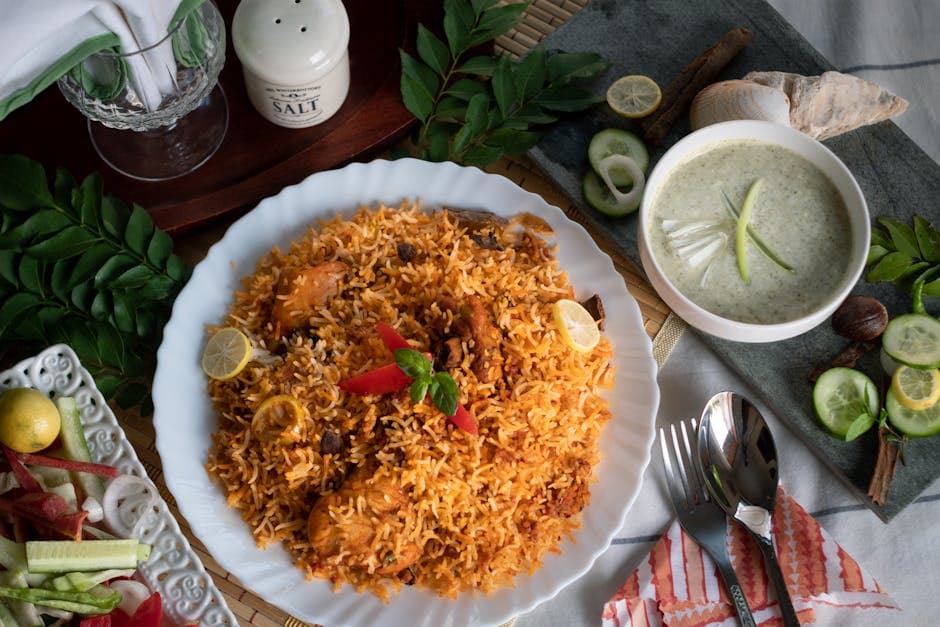
Sindhi Biryani (Pakistanischer Schichtreis)
Karachis ikonisches scharfes Biryani — Basmati geschichtet mit Hammelfleisch, Tomaten, Pflaumen, Minze, gruenen Chilis und getrockneten Pflaumen (Aloo Bukhara).
Über dieses Rezept
Sindhi Biryani ist das authentischste aller pakistanischen Biryanis: schaerfer als Hyderabadi, tomatenlastiger als Lucknowi und einzigartig von getrockneten Pflaumen (Aloo Bukhara) durchduftet, die in der Masala zerschmelzen. Hammelfleisch wird mit Joghurt, angebratenen Zwiebeln und einer groesseren Menge gruener Chilis langsam geschmort, bis es zaertes Fleisch ergibt; die Sauce wird nass und tiefrot. Vorgekochter Basmati wird ueber und unter dem Fleisch geschichtet, mit Minze, Koriander, geroesteten Zwiebeln und Safranmilch auf dem Topf, der dann versiegelt und gedaempft wird (Dum), bis die Reiskoerner lang und trocken, aber vollstaendig von der Saucenwuerze durchzogen sind. In Karachi hat jeder Haushalt und jeder Strassenhaendler ein etwas anderes Rezept — Sindhi Biryani ist die kulinarische Visitenkarte der Stadt.
Zutaten
Dient 6
- 1 kgHammelfleisch mit Knochen (Ziegen- oder Lammschulter), in 4 cm grosse Stuecke geschnitten
- 500 ggereifter Basmatireis, 30 Minuten eingeweicht
- 3 großeZwiebeln, in duenne Ringe geschnitten
- 4 mittlereTomaten, gehackt
- 200 gdicker Naturjoghurt
- 8gruene Chilis, 4 aufgeschlitzt und 4 ganz gelassen
- 8getrocknete Pflaumen (Aloo Bukhara) oder 6 Backpflaumen
- 3 ELIngwer-Knoblauch-Paste
- 2 TLrotes Chilipulver
- 1 TLgemahlene Kurkuma
- 2 ELSindhi Biryani Masala (Marke Shan oder National)
- 1 TLGaram Masala
- 4gruene Kardamomkapseln
- 4Gewuerznelken
- 2 sticksZimt
- 2Lorbeerblätter
- 150 mlPflanzenöl oder Ghee
- 1 Bundfrische Minze, gehackt
- 1 Bundfrischer Koriander, gehackt
- 1 PriseSafran, in 3 EL warmer Milch aufgeloest
- 1 TLKewra- oder Rosenwasser
- 1 ELSalz fuer das Fleisch
Anleitung
- 1
Zwiebeln anbraten
Oel in einem schweren Topf erhitzen. Zwiebelringe bei mittlerer Hitze 15 Minuten braten, bis sie tief goldbraun sind. Zwei Drittel mit einem Schaumloeffle entnehmen und auf Kuechenpapier abtropfen lassen — diese werden zum Schichten verwendet.
- 2
Masala-Basis zubereiten
Zum verbleibenden Zwiebel-Oel Kardamom, Nelken, Zimt und Lorbeer geben. 30 Sekunden anbloemen lassen. Ingwer-Knoblauch-Paste hinzufuegen und 1 Minute kochen. Hammelfleisch zugeben und von allen Seiten 8 Minuten anbraten.
- 3
Joghurt und Gewuerze hinzufuegen
Hitze reduzieren. Joghurt glatt ruehren und unterruehren. Chilipulver, Kurkuma, Sindhi Biryani Masala und Salz hinzufuegen. 5 Minuten kochen, bis das Oel sich abscheidet.
- 4
Tomaten hinzufuegen und langsam garen
Gehackte Tomaten und aufgeschlitzte gruene Chilis hinzufuegen. Zugedeckt bei niedriger Hitze 50 Minuten kochen, bis das Hammelfleisch zart ist und die Sauce dickfluessig und tiefrot ist. In den letzten 10 Minuten die getrockneten Pflaumen einruehren.
- 5
Reis vorkochen
Einen grossen Topf Wasser zum sprudelnden Kochen bringen. 1 EL Salz und den abgetropften Reis hinzufuegen. Nur 6 Minuten kochen — der Reis sollte zu 70 % gar sein und in der Mitte noch fest. Sofort abgiessen.
- 6
Das Biryani schichten
In einem schweren Topf die Haelfte des vorgekochten Reises ausbreiten. Mit der gesamten Hammelfleisch-Masala bedecken. Die Haelfte der gerosteten Zwiebeln, die Haelfte der Minze und die Haelfte des Korianders darueber verteilen. Den restlichen Reis hinzufuegen. Mit den verbleibenden Zwiebeln, Kraeutern, ganzen gruenen Chilis, Safranmilch und Kewrawawasser abschliessen. 2 EL Ghee darueber traeufeln.
- 7
Versiegeln und daempfen (Dum)
Fest abdecken — ein feuchtes Kuechentuch unter dem Deckel verwenden, um eine dichte Abdichtung zu erzielen. Auf der kleinstmoeglichen Flamme 25 Minuten garen. Eine Tava (flache Pfanne) unter den Topf stellen, wenn Ihr Herd zu heiss wird.
Wenn Sie den Biryani-Duft aus dem ganzen Zimmer wahrnehmen, hat die Abdichtung ein Leck — fester verschliessen.
- 8
Ruhen lassen und falten
Vom Herd nehmen und weitere 10 Minuten versiegelt ruhen lassen. Dann oeffnen und das Fleisch mit einem flachen Loeffel vorsichtig von unten nach oben falten, um es zu verteilen — niemals ruehren, da der Reis sonst zerbricht. Mit Raita und Zitronenspalten servieren.
Haben Sie das gekocht?
Bewerte es und hilf anderen, die Rezepte zu finden, die wirklich funktionieren.
Einmal anmelden, und wir speichern die Bewertung, die Sie gerade gewählt haben.
Alles, was Sie für Ihre Wochenplanung brauchen — kostenlos
- Essensplaner
- Einkaufsliste
- KI-Rezeptideen
Behalten Sie im Blick, was Sie essen
Fotografieren Sie Ihre Mahlzeit, um Kalorien und Makros zu erfassen, nutzen Sie Fasten-Timer und tracken Sie Ihr Wasser – in der kostenlosen SnapCal-App.
Profi-Tipps
- →
Gereiften Basmati verwenden (1 Jahr alt, als 'extra lang' oder 'gereift' gekennzeichnet) — frischer Basmati wird beim Dum matschig.
- →
Sindhi Biryani Masala von Shan oder National ist die naechste Abkuerzung zum authentischen Geschmack; eine selbst gemachte Variante benoetigt 15 Gewuerze.
- →
Die getrockneten Pflaumen (Aloo Bukhara) nicht weglassen — sie sind die einzige Zutat, die Sindhi von anderen Biryanis unterscheidet.
- →
Den Reis genau zu 70 % vorkochen — vollstaendig gegarter Reis wird beim Dum zu Brei.
Variationen
- •
Karachier Strassenstand-Versionen verwenden Rindfleisch statt Hammelfleisch.
- •
4 kleine gekochte Kartoffeln zwischen die Schichten legen fuer mehr Gehalt.
- •
Vegetarisches Sindhi-Biryani verwendet Kichererbsen, gemischtes Gemuese und dieselbe Masala-Basis.
Lagerung
Bis zu 3 Tage im Kuehlschrank aufbewahren. Mit 2 EL Wasser besprenkelt, abgedeckt, in der Mikrowelle auf mittlerer Stufe oder im Ofen bei 160 Grad Celsius 15 Minuten aufwaermen — niemals bei hoher Hitze, da der Reis dadurch austrocknet.
Geschichte und Herkunft
Sindhi Biryani entwickelte sich im Karachi des 20. Jahrhunderts aus Mughal-zeitlichen Schichtreis-Traditionen, die von wandernden Gemeinschaften nach der Teilung 1947 mitgebracht wurden, sowie aus der aelteren Sindhi-Kueche, die bereits reichlich getrocknete Pflaumen und Tomaten verwendete. Die verpackte 'Sindhi Biryani Masala' selbst wurde in den 1980er Jahren zu einem nationalen Exportprodukt.
Häufig gestellte Fragen
Was ist der Unterschied zwischen Sindhi und Hyderabadi Biryani?
Sindhi Biryani ist viel schaerfer, verwendet Tomaten und getrocknete Pflaumen und wird nach vollstaendigem Garen des Fleisches geschichtet (Pakki). Hyderabadi Biryani verwendet rohes mariniertes Fleisch, das zusammen mit dem Reis geschichtet und gedaempft wird (Kacchi), mit feinerer Wuerzung und ohne Tomaten.
Kann ich dieses Rezept mit Huehnchen zubereiten?
Ja — Huehnerschenkel mit Knochen verwenden, die langsame Garzeit auf 25 Minuten verkuerzen und wie beschrieben weitermachen. Huehnchen-Sindhi-Biryani ist in Karachier Haushalten weit verbreitet.
Warum ist mein Reis matschig?
Zwei Ursachen: Reis wurde ueber 70 % vorgekocht, oder die Dum-Hitze war zu hoch. Rei anstreben, der unter dem Fingernagel bricht, aber in der Mitte noch fest ist, und waehrend des Daempfens die kleinstmoegliche Flamme verwenden.
Nährwertangaben
Pro Portion (480g) · 6 Portionen insgesamt
Zeitzusammenfassung
Haben Sie Fragen?
Fragen Sie unseren KI-Kochassistenten zu diesem Rezept – Ersetzungen, Techniken, Skalierung.
Chatten Sie mit AI Chef →In Reiseführern vorgestellt
Dieses Rezept ist in den folgenden kuratierten Leitfäden enthalten:
Weitere Pakistanische Rezepte
Das könnte Ihnen auch gefallen
Ähnliche Gerichte aus anderen Küchen der Welt.
Nach Zutat stöbern
Weitere Rezepte rund um dieselben Hauptzutaten.
Kostenlose Küchen-Tools
Rechner und Umrechner, die zu dieser Seite passen — ohne Anmeldung.
Daraus einen Plan machen
Einplanen, einkaufen und im Blick behalten, was schon da ist.
Weiterlesen
Ausführliche Artikel zu den Ideen hinter diesem Gericht.
Gemeinschaft
Beteiligen Sie sich an der Unterhaltung
Melden Sie sich an, um einen Kommentar zu hinterlassen und Ihre Lieblingsrezepte zu speichern