Khachapuri Adjarian (Georgian Cheese Bread Boat)
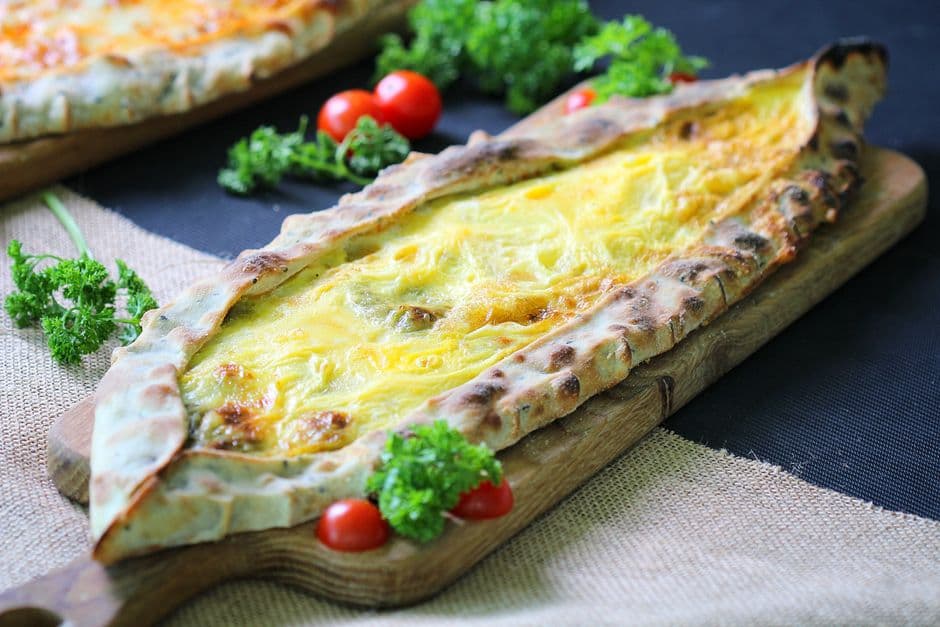
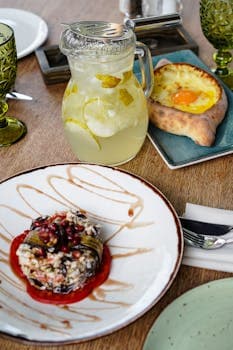
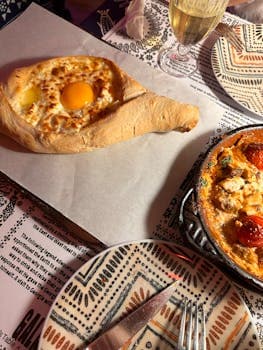
Georgia's most iconic dish — a boat-shaped bread filled with bubbling melted sulguni cheese, topped with a raw egg and a knob of butter. Broken into strips and dipped.
Khachapuri, khinkali, satsivi — wine, walnuts and the supra feast tradition of the Caucasus.
Georgian cuisine comes from the Caucasus crossroads between the Black Sea and the Silk Road, and it is organized around the supra — the ritual feast led by a toastmaster (tamada) where the table fills edge to edge. Its most exported dishes are khachapuri, the cheese-filled bread whose Adjarian version arrives as an open boat with a raw egg and butter stirred in at the table, and khinkali, twisted soup dumplings of spiced meat eaten by hand, broth first, topknot left on the plate.
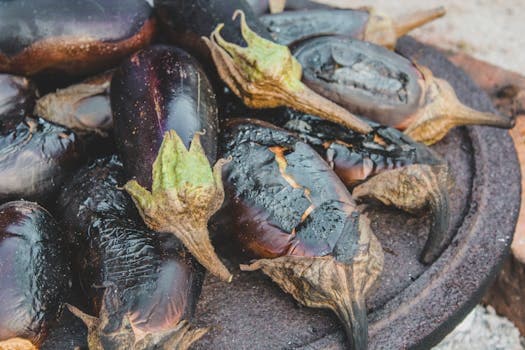
The flavor signature is unique in the region: walnuts ground into sauces (satsivi for poultry, bazhe, and the spreads rolled into eggplant nigvziani badrijani), tkemali sour plum sauce, and the spice blend khmeli suneli built on blue fenugreek (utskho suneli), dried marigold, and coriander. Western Georgia — Samegrelo and Imereti — leans on corn (ghomi porridge, mchadi bread) and hotter adjika chili paste; the east favors wheat bread and meat from the tone clay oven.
Georgia also claims eight thousand years of winemaking in buried qvevri clay vessels, a UNESCO-listed method, and wine is inseparable from the food culture. Home cooks finish stews like chakhokhbili (chicken with tomatoes and herbs) with fistfuls of fresh coriander, tarragon, and purple basil, and preserve the harvest as churchkhela — walnuts dipped in thickened grape juice — and jars of adjika and tkemali.
Khachapuri
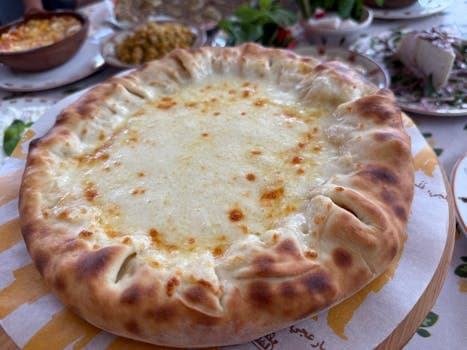
Cheese-filled breads in regional forms — circular Imeruli, double-cheese Megruli, and the egg-topped Adjarian boat.
Khinkali
Hand-twisted dumplings of peppered meat and broth, eaten by hand with the doughy topknot left behind on the plate.
Walnut sauces
Ground walnuts thicken satsivi, bazhe, and badrijani eggplant rolls, giving Georgian food its singular rich, tannic depth.
Khmeli suneli and blue fenugreek
The defining spice blend of blue fenugreek, dried marigold, and coriander seasons stews, sauces, and adjika.
Tkemali and adjika
Sour plum sauce and fermented chili-garlic paste — the two table condiments that sharpen meats, beans, and potatoes.
Supra and qvevri wine
The toastmaster-led feast and eight-millennia-old clay-vessel winemaking frame how Georgian food is actually eaten.
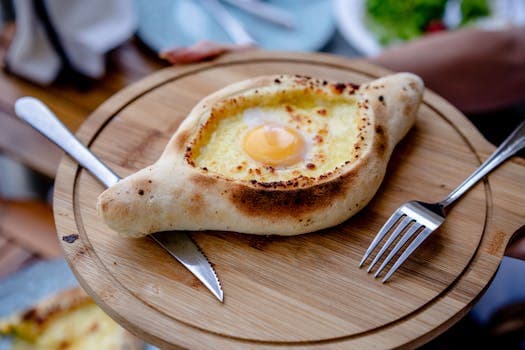
Georgia's most iconic dish — a boat-shaped bread filled with bubbling melted sulguni cheese, topped with a raw egg and a knob of butter. Broken into strips and dipped.
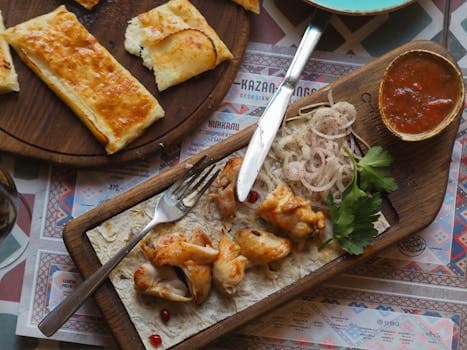
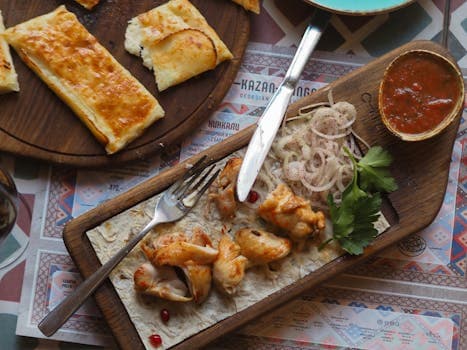
Georgia's deeply fragrant braised chicken — pieces simmered in a tomato and onion sauce with fenugreek, coriander and blue fenugreek, finished with a shower of fresh herbs.

Georgia's hearty flatbread stuffed with spiced kidney beans and fried onions — baked until golden. The earthy, satisfying bread of Racha and Georgian mountain villages.

Georgia's most popular outdoor cooking tradition — chunks of pork neck marinated simply in onion and pomegranate juice, grilled over vine wood coals until charred outside and juicy within.

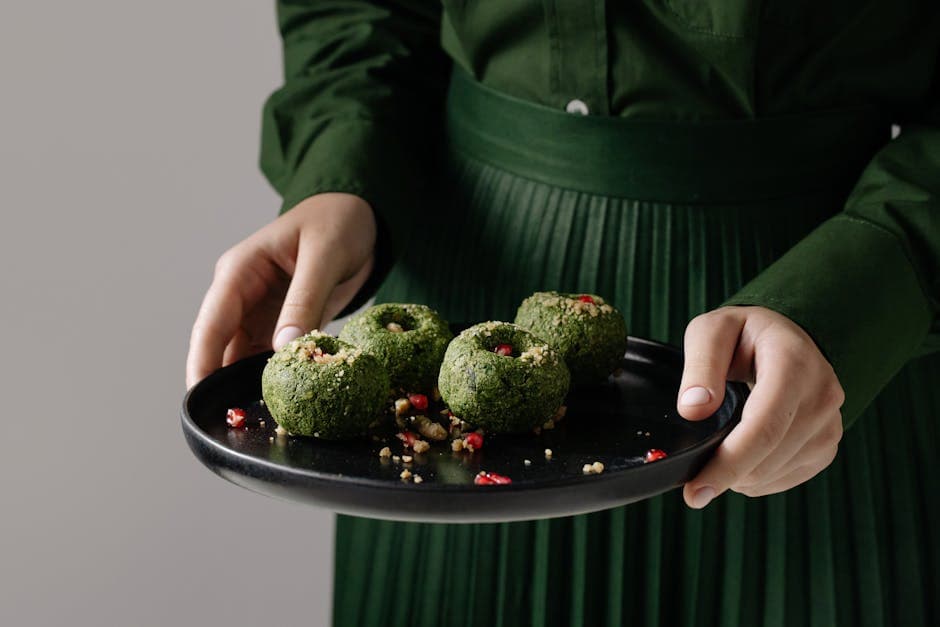
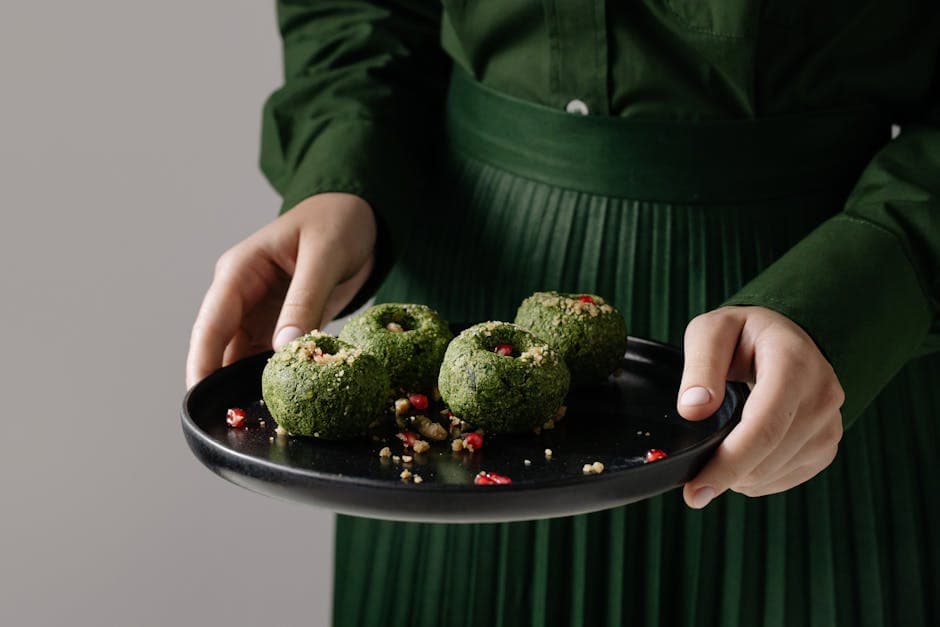
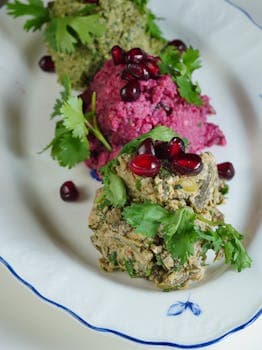
Georgian walnut and herb balls made from spinach, beetroot or green beans — a stunning mezze classic.

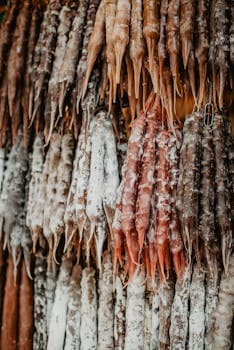
Georgian candle-shaped candy made from grape juice and walnuts — a traditional energy-dense snack.

Georgian spicy braised beef with tomatoes, herbs and a fiery kick from dried chillies.

Georgian spring lamb stew with tarragon, green plums, and herbs — the centrepiece of Easter celebrations.

Georgian bean-stuffed flatbread — a hearty, satisfying cousin of khachapuri filled with spiced kidney beans.

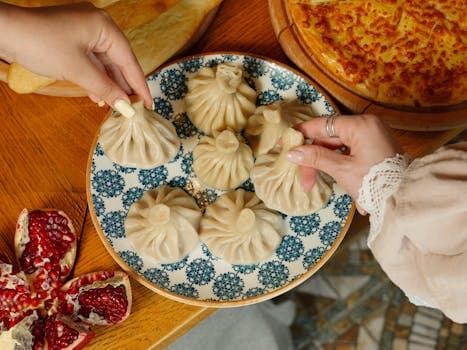
Hand-pleated Georgian dumplings filled with spiced meat broth — eaten by holding the topknot, biting carefully and slurping the soup inside.

Pan-fried chicken bathed in a sauce of milk and an enormous quantity of crushed garlic — Georgia's most extraordinary garlic dish.

Fried aubergine slices rolled around a savoury walnut-garlic-pomegranate filling — Georgia's most iconic vegetarian dish.

Spiced kidney bean stew with walnut, coriander and pomegranate — Georgia's national bean dish, served with cornbread.

Chicken in a thick, spiced walnut sauce with garlic, coriander and saffron — Georgia's iconic Christmas and New Year dish.

Crispy-edged Georgian cornbread cakes, pan-fried in lard or oil — the everyday bread of western Georgia, served with beans, cheese or stew.

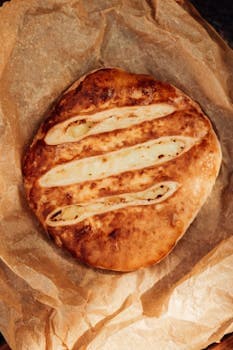
Round, sealed cheese-filled bread with a single slash on top — the everyday khachapuri of central Georgia.

Spatchcocked chicken pressed flat under a weight and pan-fried until impossibly crispy outside, juicy inside — Georgia's signature pressed chicken.

Pork and potatoes pan-fried with onions and peppers — Georgia's most beloved family-style dish, named for its purpose: shared.

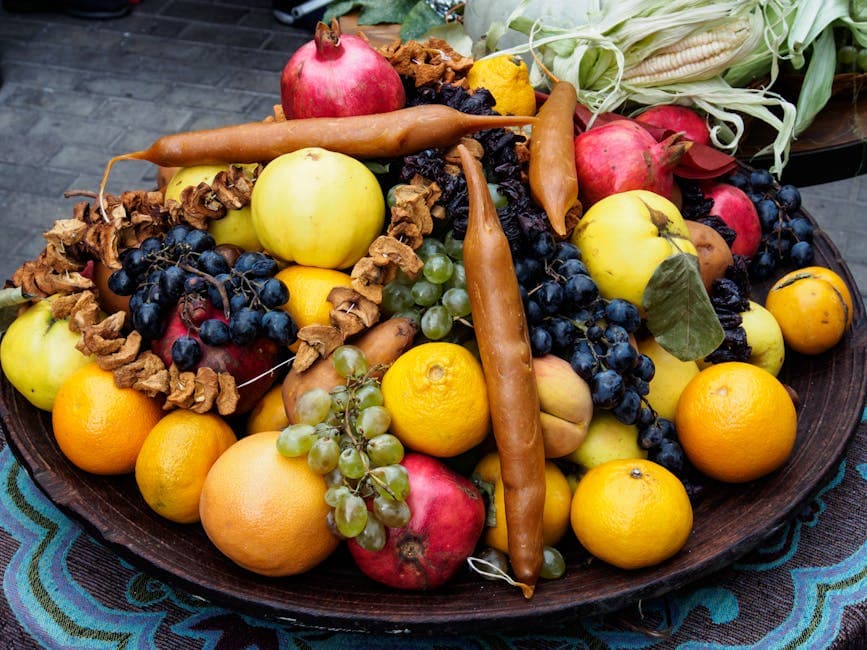
String of walnuts dipped repeatedly in thickened grape juice — Georgia's natural candy, traditionally made at autumn harvest.

Charred aubergine and pepper with walnuts, herbs, garlic and pomegranate — a smoky cold mezze for the Georgian feast table.

Boat-shaped Georgian cheese bread with a molten egg yolk and butter heart — pull, dip, devour.

Twisted Georgian dumplings holding spiced meat and hot broth — pinch the topknot, sip the soup, eat the rest.

Georgia's beloved cheese boat — pillowy yeasted bread shaped into a vessel, filled with melted sulguni and imeruli cheese, and topped at the table with a raw egg yolk and a knob of butter.
Georgian cuisine is known for khachapuri cheese breads, khinkali soup dumplings, walnut-based sauces like satsivi, sour plum tkemali, and herb-loaded stews such as chakhokhbili. It is also famous for the supra feast tradition led by a toastmaster and for qvevri winemaking, an eight-thousand-year-old clay-vessel method recognized by UNESCO.
Pick the dumpling up by its doughy topknot with your fingers — never a fork, which spills the broth. Bite a small hole in the side, sip out the hot broth, then eat the rest, seasoning with black pepper. The thick topknot is left on the plate; traditionally it serves as a count of how many you have eaten. Cutlery is considered a beginner's mistake.
Mostly no, with one regional exception. Eastern Georgian cooking is aromatic — blue fenugreek, coriander, marigold, fresh tarragon and basil — with little heat. Western regions like Samegrelo use adjika, a fermented red chili-garlic paste, and dishes there can be genuinely hot. At most tables, heat is a condiment choice: adjika and tkemali sit alongside the food rather than inside it.
Imeruli khachapuri is the most forgiving start: a soft yogurt-based dough filled with a salted cheese mix (mozzarella plus feta approximates Imeretian cheese) and pan-baked. Chakhokhbili — chicken braised with tomatoes, onions, and a final shower of coriander and basil — is the easiest stew. Lobio, stewed kidney beans with walnuts and herbs, is a strong vegetarian option.
Khachapuri is Georgia's cheese-filled bread, traditionally made with brined Imeretian or sulguni cheese. Imeruli is a closed round with cheese inside; Megruli adds a second cheese layer on top; Adjaruli (Adjarian) is an open boat finished with a raw egg yolk and butter, stirred into the molten cheese at the table and eaten by tearing off the crust to dip.