

NewDinner
Couscous Tfaya
A sumptuous Algerian couscous topped with tfaya — a slow-cooked caramelised onion and raisin relish flavoured with cinnamon and saffron — alongside tender lamb and vegetables.
160 min680 kcalHard
★4.8(543)
Couscous tfaya, rechta, bourek — rich Berber and Arab flavours of the Maghreb.
More recipes built around the same core ingredients.
Track what you eat
Snap your meal to log calories and macros, run fasting timers and track water in the free SnapCal app.
Plan your meals, track fasting and build your grocery list — free
MyCookingCalendar's dashboard runs right in your browser, no download needed.
A sumptuous Algerian couscous topped with tfaya — a slow-cooked caramelised onion and raisin relish flavoured with cinnamon and saffron — alongside tender lamb and vegetables.

Algeria's most important Ramadan soup: a richly spiced lamb and freekeh soup with tomato, chickpeas and fresh coriander — warming, nutritious and deeply aromatic.

Torn sheets of thin traditional bread drenched in a rich lamb and chickpea stew with sweet turnip and deep spicing — Algeria's most important ceremonial dish.

Algerian grilled chicken marinated in chermoula — a vibrant herb and spice paste of cilantro, cumin, paprika, and lemon, resulting in fragrant, deeply flavored roasted chicken.

Algerian braised chicken with green olives, preserved lemon, and saffron — an elegant Algerian classic.
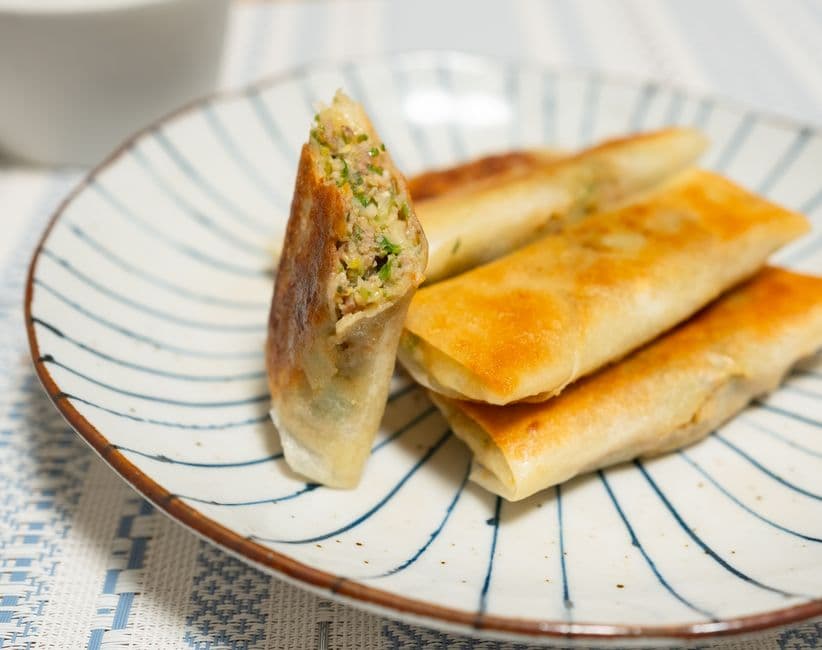
Crispy fried pastry rolls filled with spiced ground meat, egg, and parsley — Algeria's essential Ramadan appetizer.
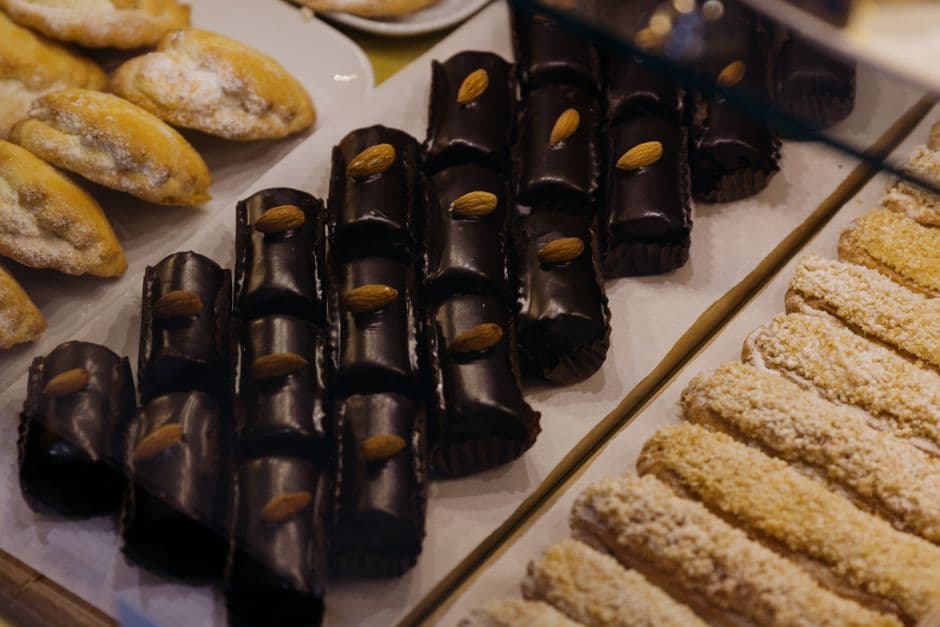
Fried or baked semolina diamonds filled with date paste and soaked in honey — Algeria's most iconic sweet.

Algerian handmade white noodles in a delicate chicken and chickpea broth — a refined Algerian celebration dish.

Spiced Algerian pepper, tomato, and egg stew — Algeria's answer to shakshuka, with its own distinctive character.

Algeria's beloved celebration dish — hand-torn pieces of thin flatbread (rougag) drenched in a slow-cooked lamb and chickpea stew fragrant with ras el hanout and tomatoes.
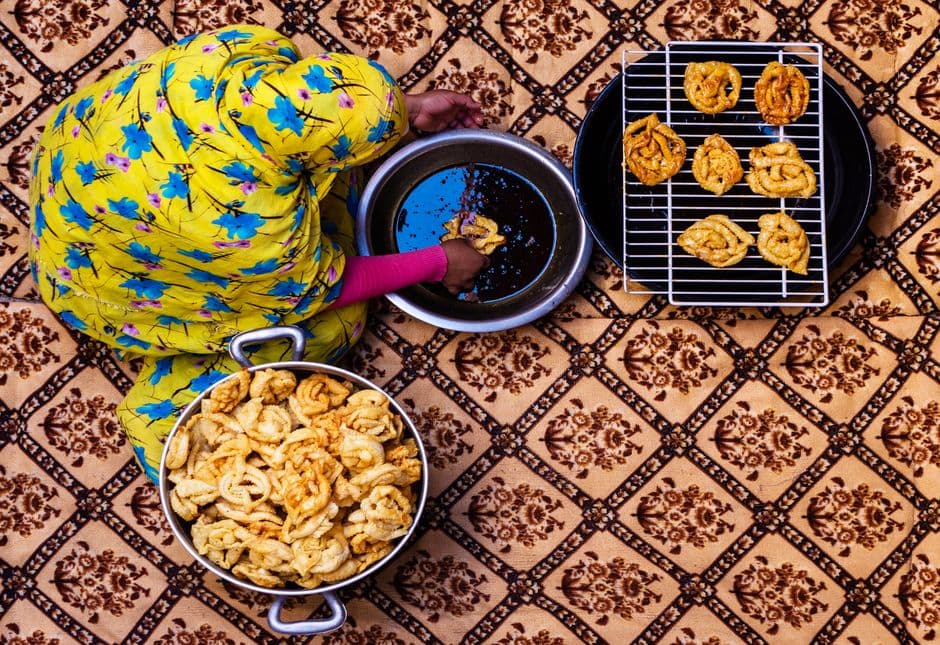
Algeria's sustaining daily soup — a thick, nourishing broth of tomatoes, lentils, chickpeas, lamb, vermicelli and warm spices, finished with lemon. Essential at every iftar table during Ramadan.
Fluffy steamed couscous topped with a sweet caramelised onion and raisin sauce — a festive Algerian classic.

Whole slow-roasted spiced lamb — Algeria's great celebration dish cooked over coals until fall-off-the-bone tender.
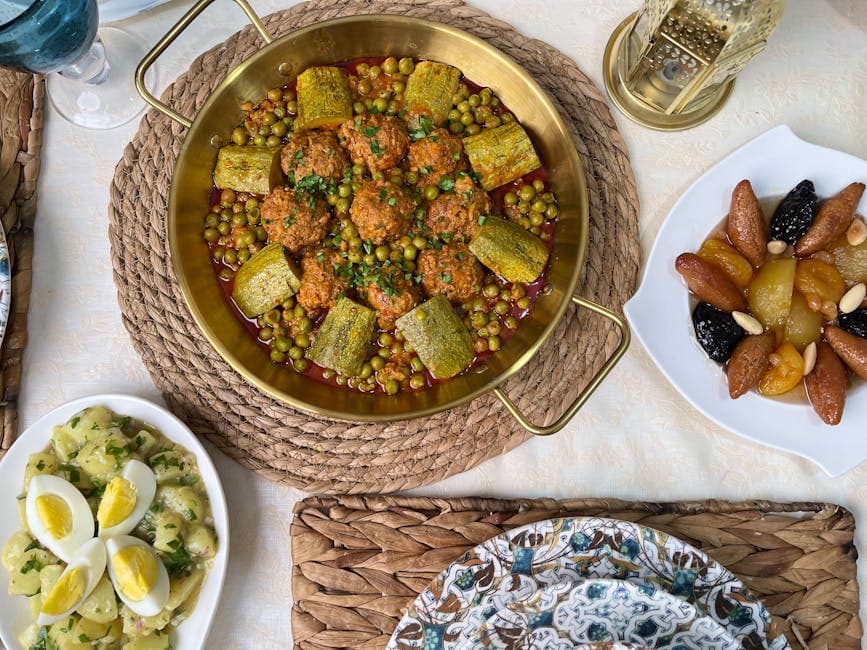
Slow-cooked chicken on torn flatbread with a lentil and fenugreek broth — a nourishing Algerian celebration dish.
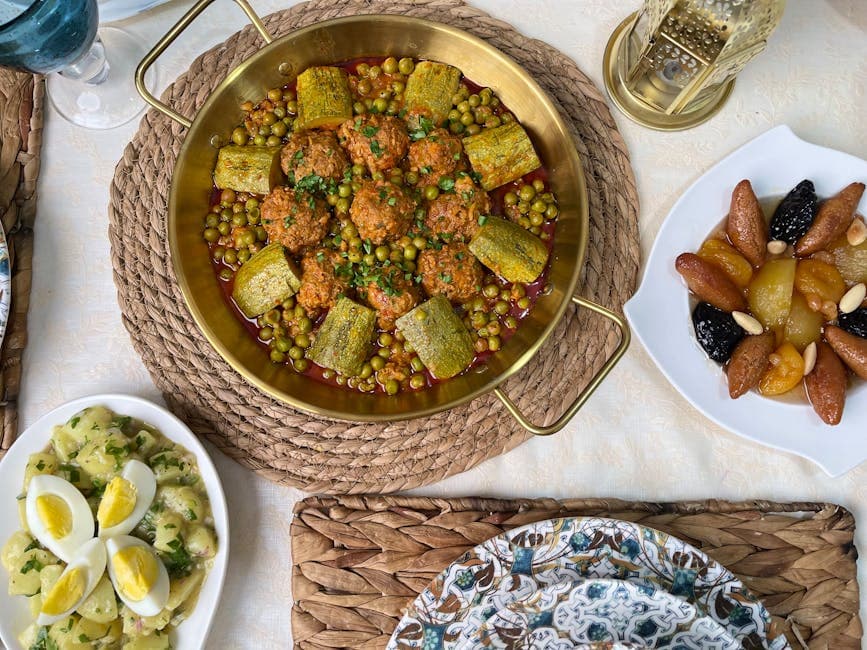
Algeria's wedding-day noodle dish — hand-rolled fresh pasta steamed and dressed with chicken, chickpeas, turnip, and cinnamon broth.
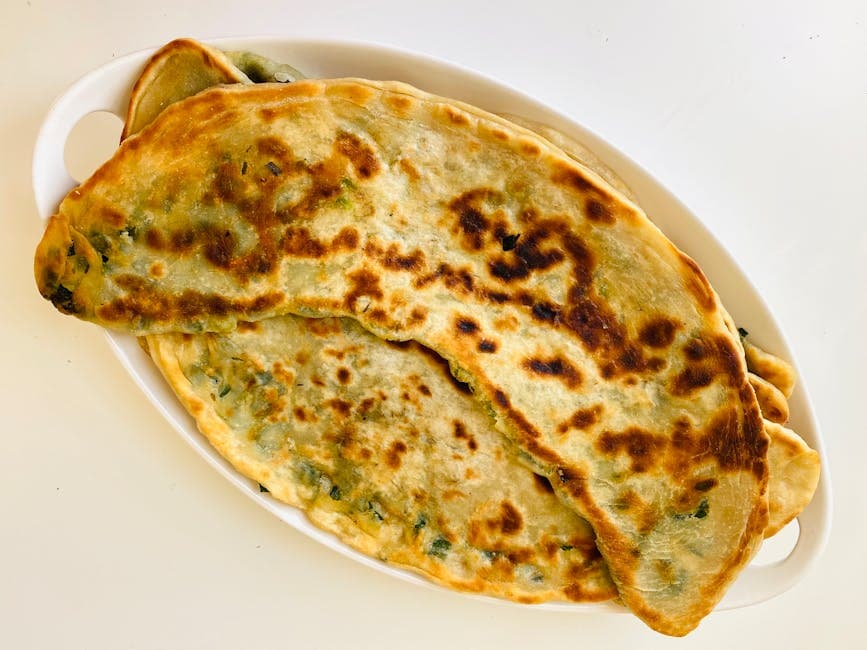
Algerian semolina flatbreads folded around a slow-cooked tomato, onion, and pepper filling — crisp outside, jammy inside.

Algeria's celebratory dish — delicate hand-cut steamed noodles tossed in smen butter and cinnamon, served with chicken, chickpeas and turnips in a fragrant white broth.

Algeria's Ramadan and winter soup — lamb, tomato, chickpeas and toasted green cracked wheat (frik) scented with mint and cinnamon.
Algerian cuisine reflects the largest country in Africa: Berber mountain cooking at its core, layered with Arab, Ottoman, Andalusian, and 130 years of French presence. Couscous — called ta'am, simply 'food,' in much of the country — is the national dish, steamed in a couscoussier and served under stews that range from lamb with chickpeas and turnips to the sweet lham lahlou of the east, lamb cooked with prunes, raisins, and orange-flower water.
The Ottoman legacy survives in Algiers' dolma (stuffed vegetables) and in chorba, the frik (cracked green wheat) and lamb soup that opens nearly every Ramadan table alongside bourek, fried pastry cylinders filled with spiced meat. From the French era came the baguette, now ubiquitous; Oran's Spanish past survives in garantita (from Spanish calentica), a chickpea-flour bake sold as street food. The west leans spicier and closer to Morocco; the east shows Tunisian heat.
Home cooking centers on slow stews called chtitha (sauce-based, heavy with garlic and dried chili) and marqa, on flatbreads like kesra and msemen cooked on a tagine griddle, and on a spice register of ras el hanout, cumin, paprika, and cinnamon. Semolina, not just for couscous, becomes breads, the diamond-cut honey cake makrout, and the porridge-like berkoukes with its hand-rolled giant pearls.
Couscous (ta'am)
Hand-rolled, double-steamed semolina under lamb or chicken stews with vegetables; so central Algerians simply call it 'food'.
Chorba frik
Lamb and cracked-green-wheat soup with tomato, coriander, and mint — the dish that breaks the fast every night of Ramadan.
Semolina breads
Kesra, msemen, and mbesses — griddle flatbreads made from semolina rather than flour, eaten with stews, honey, or olive oil.
Chtitha stews
Garlic-and-dried-chili sauce dishes (chtitha djedj, chtitha lham) thickened slowly, the everyday backbone of Algerian home cooking.
Bourek and dolma
Ottoman-rooted stuffed pastries and vegetables — meat-filled fried bourek is chorba's inseparable Ramadan partner.
Sweet-savory tradition
Eastern dishes like lham lahlou pair lamb with prunes, cinnamon, and orange-flower water, served at weddings and Eid.
Algerian cuisine is known for couscous — considered the national dish and called simply ta'am, 'food' — along with chorba frik soup, bourek pastries, semolina flatbreads like kesra and msemen, and garlicky chtitha stews. It blends Berber foundations with Ottoman dishes like dolma, Andalusian sweet-savory cooking, and French-era staples such as the baguette.
They share the couscous-and-tagine family, but Algerian cooking uses tomato more heavily in sauces, leans on semolina breads like kesra, and carries stronger Ottoman influence — bourek, dolma, and chorba have no central place in Morocco. Moroccan food makes wider use of sweet-savory tagines and preserved lemon, while Algerian dishes are generally more rustic and less sweetened, outside eastern specialties like lham lahlou.
Moderately. Most dishes are warmly spiced with ras el hanout, cumin, paprika, cinnamon, and plenty of garlic rather than hot. Heat shows up regionally: western cities near Morocco and eastern areas near Tunisia use more chili, and chtitha sauces are built on dried red chili. Harissa appears as a table condiment, so diners control their own heat level.
Chorba frik is the best starting point: brown lamb with onion and tomato, add coriander and frik (cracked green wheat, or substitute bulgur), and simmer — one pot, forgiving timing. Chtitha djedj, chicken in a garlic-paprika-chili sauce, is another simple classic. Steamed couscous is worth learning next, though instant couscous works while you practice the stew.
Frik is roasted, cracked green durum wheat — wheat harvested young, fire-dried, and crushed, giving it a smoky, slightly grassy flavor. It is the defining ingredient of Algerian chorba. Look for it in North African or Middle Eastern groceries, often labeled freekeh (the Levantine name). Coarse bulgur is an acceptable substitute, though it lacks the roasted smokiness.
Calculators and converters that pair with this page — no signup needed.