
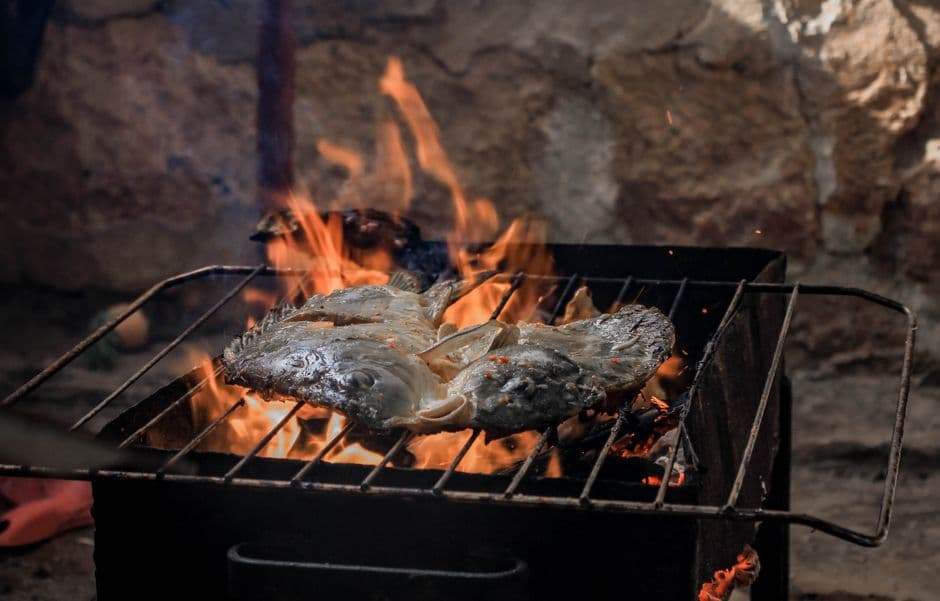
مسجوف (سمك الشبوط العراقي المشوي على النار)
الطبق الوطني العراقي - سمك الشبوط الكامل المشوي ببطء عموديًا بجانب نار الحطب المفتوحة، ويتم الانتهاء منه على الجمر، ويقدم مع الطماطم والبصل والليمون.
حول هذه الوصفة
المسكوف هو الطبق الوطني للعراق وواحد من أقدم الوجبات التي يتم إعدادها باستمرار على وجه الأرض - تصف الألواح الطينية السومرية أسماك نهر دجلة التي تم طهيها على نار مفتوحة منذ أكثر من أربعة آلاف عام. لم تتغير روح هذه التقنية: يتم تقسيم سمك شبوط المياه العذبة بالكامل (تقليديًا الشبوط أو الأرنب الأكبر) إلى أسفل الظهر مثل الفراشة، مملحًا، ومسندًا عموديًا على أوتاد معدنية حول نار حطب طويلة بحيث يطهى ببطء من الحرارة المشعة، ثم يوضع مباشرة فوق الجمر المحتضر في الدقائق الأخيرة لتقشير الجلد وبث الدخان في اللحم. والنتيجة هي سمكة حريرية متقشرة من الداخل، والماهوجني ومطلية من الخارج، ومعطرة بدخان النخيل أو خشب الطرفاء. يتم تقديمه على صينية واسعة مع البصل المفروم النيئ، شرائح الطماطم، المانجو المخلل (الأمبا) أو الليمون، والبقدونس المفروم الطازج والخبز العراقي المسطح - يقوم رواد المطعم بتمزيق الخبز، وكومة السمك، وإضافة القليل من الأمبا وعصرة من الليمون، وتناولها بأيديهم. المسكوف هو طعام نهري دجلة والفرات، وأسواق السمك على ضفاف النهر في شارع أبو نواس ببغداد، وطعام حفلات الزفاف العائلية. إنه يعبر كل الخطوط الدينية والعِرقية في العراق، وهو أحد الأطباق القليلة جدًا التي توحد البلاد حقًا. لا يمكن للنسخة المنزلية أن تكرر بشكل كامل الشواء العمودي المفتوح، ولكن الشواية الساخنة أو الفرن الذي يعمل بالحطب يقتربان بشكل ملحوظ.
المكونات
يخدم 4
- 1 whole (2 kg)سمك الشبوط، أو قاروص البحر، أو سمك السلمون المرقط الكبير - ذو القشور، ومنزوع الأحشاء، والفراشة (مقسم إلى أسفل الظهر والرأس والذيل)
- 3 ملعقة كبيرةزيت الزيتون
- 2 ملعقة كبيرةمعجون التمر الهندي (أو 1 ملعقة كبيرة عصير ليمون + 1 ملعقة كبيرة دبس الرمان)
- 2 ملعقة كبيرةمعجون الطماطم
- 1 ملعقة صغيرةالكركم المطحون
- 1 ملعقة صغيرةالكمون المطحون
- 1 ملعقة صغيرةفلفل أسود مطحون طازجًا
- 2 ملعقة كبيرةملح البحر الخشن
- 4 فصوصالثوم المهروس حتى يصبح معجونًا
- 2 كبيرطماطم، مقطعة إلى شرائح
- 1 كبيربصل أصفر، مقطع إلى شرائح رفيعة
- 1 حزمة صغيرةالبقدونس المفروم
- 2ليمون مقطّع إلى شرائح
- أمبا (صلصة المانجو المخللة العراقية) للتقديم
- خبز عراقي أو شامي طازج للتقديم
التعليمات
- 1
فراشة السمكة
إذا لم يفعل بائع السمك الخاص بك ذلك بالفعل، قم بتقسيم السمكة على طول الظهر من الرأس إلى الذيل، مع الحفاظ على جلد البطن سليمًا بحيث يفتح مثل الكتاب. مقياس شامل، وإزالة الخياشيم، واتركها حتى تجف. يُقطع اللحم بقطع قطرية ضحلة لمساعدة التتبيلة على التغلغل وإضفاء نكهة الدخان إلى الداخل.
- 2
اصنع ماء مالح
اخفقي زيت الزيتون، ومعجون التمر الهندي، ومعجون الطماطم، والكركم، والكمون، والفلفل، والملح، ومعجون الثوم في وعاء صغير حتى يصبح المزيج ناعمًا – وينبغي أن يكون قوام المعجون رقيقًا. قم بالفرشاة بسخاء على الجانب المقطوع من السمك، واعمل على اللحم المحزوز. دعها تنقع لمدة 30 دقيقة في درجة حرارة الغرفة.
- 3
تحضير النار الساخنة أو الشواية
إذا كان لديك فرن يعمل بالحطب أو شواية يمكنها التعامل مع سمكة كاملة، فأشعل نارًا ساخنة باستخدام الخشب الصلب (البلوط وخشب الفاكهة). دعها تحترق إلى جمر متوهج مع لهب منخفض. في حالة استخدام شواية غاز، قم بتسخين جانب واحد إلى درجة حرارة عالية (260 درجة مئوية +) واترك الجانب الآخر بعيدًا للطهي غير المباشر. الطريقة العراقية الكلاسيكية تستخدم الأوتاد العمودية بجانب النار. سنقوم بالتقريب مع الشواية.
- 4
التحميص البطيء بشكل غير مباشر أولاً
ضع السمك المحشو بالزبدة بحيث يكون جانب الجلد لأسفل على الجانب الأكثر برودة من الشواية (الحرارة غير المباشرة). أغلق الغطاء واطهيه لمدة 30 دقيقة - سيصبح اللحم معتمًا، وسيتحول التتبيلة إلى قشرة مطلية، وسوف تمتص السمكة دخان الخشب. يجب أن تكون درجة الحرارة ثابتة عند 175-200 درجة مئوية.
- 5
ضعي اللمسة النهائية على الحرارة المباشرة للحصول على بشرة ناعمة
انقل السمكة بعناية إلى الجانب الساخن المباشر للشواية، بحيث يكون جانب الجلد لأسفل. يُطهى لمدة 6-8 دقائق أخرى، مع فتح الغطاء، حتى يصبح الجلد مقرمشًا بعمق ومتفحمًا قليلاً عند الحواف. يجب أن يتقشر اللحم بسهولة باستخدام شوكة، وتصل درجة الحرارة الداخلية إلى 65 درجة مئوية عند النقطة الأكثر سمكًا.
إذا اشتعل اللهب بسبب تقطير الدهن، فحرك السمكة بعيدًا لفترة قصيرة، ولا تدعها تحترق.
- 6
انزلق على صينية التقديم
استخدم ملعقتين عريضتين لرفع السمكة بعناية على لوح خشبي كبير أو طبق - سوف تكون هشة. دهنها بأي ماء مالح متبقي للحصول على لمعان. دع الراحة 5 دقائق. الطبخ المرحل ينهي المركز.
- 7
تزيين وتقديم
نحيط السمك بشرائح الطماطم والبصل المقطع والبقدونس. دس أسافين الجير حول الحواف. ضع أوعية صغيرة من الأمبا (إذا كان لديك) وزيت الزيتون الإضافي بجانبها. الصينية نفسها هي القطعة المركزية للطاولة.
- 8
تناول الطعام بالطريقة التقليدية
قدمي الخبز العراقي المسطح أو البيتا الدافئ. يمزق رواد المطعم الخبز، ويقطعون قطعًا من السمك، ويضافون شرائح الطماطم والبصل، ويرشون القليل من الأمبا، ويعصرون الليمون، ويأكلون بأيديهم. الخبز ضروري - فهو يحمل السمك ويوازن الدخان. لا تنس أن تستمتع بالجلد المقرمش المطلي.
هل جرّبت هذه الوصفة؟
قيّمها وساعد الآخرين في العثور على الوصفات التي تنجح فعلاً.
سجّل الدخول بنقرة واحدة وسنحفظ التقييم الذي اخترته للتو.
كل ما تحتاجه لتخطيط أسبوعك — مجانًا
- تقويم الوجبات
- قائمة التسوق
- أفكار وصفات بالذكاء الاصطناعي
تابع ما تأكله
صوّر وجبتك لتسجيل السعرات والعناصر الغذائية، واستخدم مؤقتات الصيام وتتبع شرب الماء في تطبيق SnapCal المجاني.
نصائح للمحترفين
- →
الكارب تقليدي ولكنه يمكن أن يكون موحلاً إذا لم يكن من المياه النظيفة. تعمل كل من قاروص البحر أو سمك السلمون المرقط أو سمك النهاش أو البرانزينو بشكل جميل ويسهل الحصول عليها في معظم البلدان.
- →
يعد قطع الفراشة أمرًا بالغ الأهمية - يجب أن تكون السمكة مستوية حتى تتغلغل الحرارة بالتساوي. إذا لم يقم بائع السمك الخاص بك بذلك، فاطلب منه قطع الطائرة الورقية (مقسمة من الخلف، وبطن سليمة).
- →
الأمبا (صلصة المانجو المخللة العراقية) هي البهارات المميزة. متوفر في بقالة الشرق الأوسط. قم بخلط صلصة المانجو مع عصير الليمون الإضافي ونصف ملعقة صغيرة من الكركم.
- →
دخان الخشب هو ما يميز المسكوف - إذا كنت تقوم بالشواء في الداخل، استخدم مدخنًا على الموقد أو أضف حفنة من رقائق الخشب المنقوعة إلى شواية الغاز في علبة رقائق معدنية. بدون دخان عندك سمك مشوي وليس مسكوف.
الاختلافات
- •
نسخة فرن بغداد الحديثة: تُشوى على حرارة 220 درجة مئوية في فرن ساخن على رف سلكي لمدة 40 دقيقة، ثم تُطهى لمدة 3 دقائق تحت شواية عالية للحصول على بشرة مقرمشة.
- •
النسخة الجنوبية الأكثر توابلًا: أضف ملعقة صغيرة من الفلفل الحلبي وبعض شرائح الفلفل الحار الطازج إلى التتبيلة.
- •
سماق مسكوف: استبدل ملعقتين كبيرتين من السماق بنصف كمية التمر الهندي للحصول على نسخة أكثر إشراقًا وليمونًا أكثر.
- •
مسكوف السلمون: نسخة غربية - استخدم جانبًا من سمك السلمون المسلوق بنفس التتبيلة؛ يُطهى ساخنًا وسريعًا (200 درجة مئوية، 18 دقيقة).
تخزين
من الأفضل أن تؤكل على الفور. تبقى بقايا الطعام المبردة لمدة يومين - قومي بتقطيع السمك البارد فوق السلطة للحصول على وجبة غداء ممتازة في اليوم التالي. لا تقم بإعادة التسخين في الميكروويف (مطاطي ورائحة كريهة)؛ قم بتسخينه بلطف في فرن على حرارة 150 درجة مئوية لمدة 8 دقائق إذا لزم الأمر. لا تجمد الأسماك المطبوخة.
التاريخ والأصل
يعد المسكوف من بين أقدم الأطباق المطبوخة الموثقة على هذا الكوكب - حيث تصف الألواح الطينية السومرية والأكادية التي تعود إلى حوالي عام 1750 قبل الميلاد تحضيرات أسماك نهر دجلة شبه المتطابقة باستخدام الملح والزيت والنار المكشوفة. تم تحضير هذا الطبق بشكل مستمر على طول نهر دجلة لأكثر من أربعة آلاف عام وهو الآن الطبق الوطني الرسمي للعراق، ويتم الاحتفال به سنويًا في منطقة المطاعم الواقعة على ضفاف نهر أبو نواس ببغداد.
الأسئلة المتداولة
هل يمكنني صنع هذا في الداخل؟
نعم - قم بشويها على حرارة 220 درجة مئوية على رف سلكي لمدة 35-40 دقيقة، ثم 3 دقائق تحت شواية عالية للحصول على بشرة مقرمشة. أضف رقائق الخشب في علبة رقائق معدنية فوق موقد مسطح لإدخال بعض الدخان. ليست مطابقة لنسخة النار المفتوحة ولكنها جيدة جدًا.
ما نوع الأسماك التي يجب أن أستخدمها إذا لم أتمكن من الحصول على سمك الشبوط؟
سمك القاروس الكامل، البرانزينو، سمك السلمون المرقط، سمك النهاش أو حتى البلطي كلها تعمل. المفتاح هو أن تكون كاملة، ومقشرة، ومفرومة - فالشرائح لا تلتقط الدخان وتباين الجلد المقرمش الذي يميز المسكوف.
ما هو أمبا؟
الأمبا هو بهار يهودي عراقي مكون من المانجو الأخضر المخلل مع بذور الخردل والحلبة والكركم - منعش وحار وغير تقليدي قليلاً. وهو ضروري للمسكوف والعديد من السندويشات العراقية. تباع في محلات البقالة في الشرق الأوسط. بمجرد فتحه، يدوم لمدة 6 أشهر في الثلاجة.
هل الكارب آمن حقًا للأكل؟
يمكن أن يكون لمبروك دجلة البري نكهة موحلة ومخاوف بشأن تلوث المياه. يعتبر سمك الشبوط المستزرع من مصادر نظيفة، أو البدائل مثل قاروص البحر أو البرنزينو أو سمك السلمون المرقط، آمنًا تمامًا وغالبًا ما يكون طعمه أفضل.
حقائق التغذية
لكل وجبة (320g) · 4 حصص إجمالية
ملخص الوقت
هل لديك أسئلة؟
اسأل مساعد الطبخ الذي يعمل بالذكاء الاصطناعي لدينا أي شيء عن هذه الوصفة - البدائل والتقنيات والقياس.
الدردشة مع AI Chef →ظهرت في الأدلة
هذه الوصفة واردة في الأدلة المنسقة التالية:
المزيد من وصفات Iraqi
قد يعجبك أيضًا
أطباق مشابهة من مطابخ أخرى حول العالم.
أدوات مطبخ مجانية
حاسبات ومحوّلات تكمّل هذه الصفحة — دون الحاجة إلى تسجيل.
حوّلها إلى خطة
جدولها، تسوّق لها، وتابع ما لديك بالفعل.
اقرأ بعد ذلك
مقالات أطول تتعمّق في الأفكار وراء هذا الطبق.
مجتمع
انضم إلى المحادثة
قم بتسجيل الدخول لترك تعليق وحفظ وصفاتك المفضلة