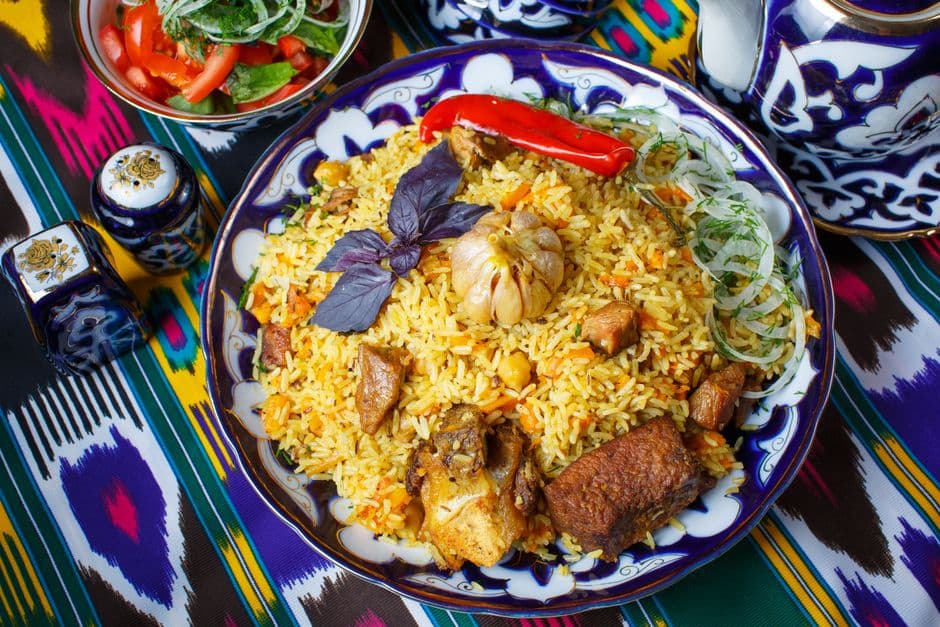
Beshbarmak
Kazakhstan's ceremonial dish — tender slow-boiled lamb served over wide, silky noodles and drenched in a rich onion broth sauce, eaten communally with the hands.
About This Recipe
Beshbarmak translates as 'five fingers' in Kazakh, reflecting the traditional nomadic practice of eating this dish directly with the hands. It is Kazakhstan's most festive and ceremonial dish, prepared for weddings, funerals, New Year celebrations and the honouring of guests. Lamb — or sometimes horse meat, beef or goat — is slow-boiled for hours in a richly seasoned broth until impossibly tender. Wide, flat noodle squares called zhaya are cooked in the same broth and layered on a large communal platter. The meat is piled on top, and the whole dish is drizzled with a glossy onion sauce (zhuvurkha) made by poaching sliced onions in the rich cooking broth.
Ingredients
Serves 6
- 1.5 kgbone-in lamb shoulder or leg(cut into large chunks)
- 2onions(one halved for broth, one thinly sliced for sauce)
- 3bay leaves
- 1 teaspoonblack peppercorns
- 1 teaspoonsalt(plus more to taste)
- 2.5 litreswater
- 400 gplain flour
- 2eggs
- 100 mlwater(for noodle dough)
- 0.5 teaspoonsalt(for noodle dough)
- 1 tablespoonbutter
- 0.5 teaspoonblack pepper
Instructions
- 1
Make the broth
Place the lamb in a large pot and cover with cold water. Bring to a boil and skim off all foam thoroughly. Add the halved onion, bay leaves, peppercorns and salt. Reduce heat to a gentle simmer and cook for 2–2.5 hours until the meat is very tender and falling from the bone.
- 2
Make the noodle dough
Mix flour, eggs, water and salt into a stiff dough. Knead for 10 minutes until smooth and elastic. Wrap and rest for 30 minutes. Roll out very thinly on a floured surface (about 1.5mm). Cut into rough rectangles or squares about 8cm × 5cm.
- 3
Make the onion sauce (zhuvurkha)
Remove the cooked lamb from the broth and set aside to rest. Ladle 400 ml of broth into a separate small pan. Add the thinly sliced onion, butter and black pepper. Simmer for 8–10 minutes until the onions are silky and the sauce has reduced slightly.
- 4
Cook the noodles
Bring the remaining broth to a rolling boil. Add the noodle squares in batches and cook for 5–6 minutes until tender but with a slight bite. Remove with a slotted spoon and arrange on a large serving platter.
Layer the noodles so they do not clump. A light drizzle of the onion sauce between layers prevents sticking.
- 5
Assemble and serve
Shred or slice the lamb off the bone and arrange on top of the noodles. Pour the onion sauce generously over the entire dish. Serve with a small bowl of the remaining hot broth (shorpa) on the side.
Pro Tips
- →
The quality of the lamb is paramount — use bone-in cuts for the richest broth.
- →
Skim the broth diligently in the first 20 minutes to achieve a clear, clean-tasting stock.
- →
Do not rush the simmer; 2.5 hours is the minimum for the meat to become truly tender.
Variations
- •
Beshbarmak with horse meat (kazy): the most traditional version, using smoked horse sausage alongside the boiled meat.
- •
Serve over boiled baby potatoes instead of noodles for a simpler regional variation.
Storage
Store meat and noodles separately in the fridge for up to 2 days. Reheat noodles in the leftover broth. The broth itself freezes well for up to 3 months.
History & Origin
Beshbarmak has been the centrepiece of Kazakh nomadic hospitality for centuries. When a guest arrives, a host traditionally prepares beshbarmak as the highest expression of welcome. The specific cuts of meat served to different guests carry social significance — the head is reserved for the most honoured elder.
Frequently Asked Questions
Can I use shop-bought pasta instead of homemade noodles?
Wide, flat pasta such as pappardelle or lasagne sheets broken into pieces work reasonably well. Homemade dough, however, gives the correct thick, chewy texture.
What is shorpa?
Shorpa is simply the cooking broth served as a soup alongside beshbarmak. It is seasoned and sipped between bites to cleanse the palate.
Nutrition Facts
Per serving (550g) · 6 servings total
Time Summary
Have Questions?
Ask our AI cooking assistant anything about this recipe — substitutions, techniques, scaling.
Chat with AI Chef →More Kazakh Recipes
Community
Join the conversation
Sign in to leave a comment and save your favourite recipes