
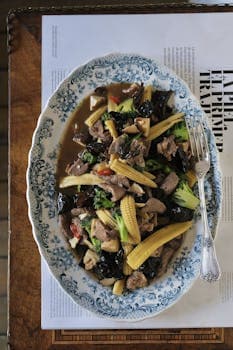
Cantonese Beef and Broccoli Stir-Fry — Martin Yan-Inspired
Velvet-marinated beef and crisp broccoli in a glossy oyster-soy sauce — Cantonese stir-fry mastered in 10 minutes flat.
⭐Inspired by Martin Yan · 🇨🇳 ChinaAbout This Recipe
This recipe is inspired by Chef Martin Yan's lifelong career teaching Cantonese home cooking on PBS — over 30 years of patient, technique-driven episodes that brought wok mastery to American audiences. Beef and broccoli is the canonical Cantonese-American stir-fry. Done well it requires three things: velveting the beef (a marinade with cornflour and soda that produces tender meat), a screaming-hot wok, and split-second timing. With practice, the dish is on the table 10 minutes after you walk into the kitchen — exactly Yan's promise: 'If Yan can cook, so can you!'
Ingredients
Serves 4
- 500 gbeef sirloin or flank steak(very thinly sliced against the grain)
- 1 tbspsoy sauce(for the marinade)
- 1 tbspShaoxing wine(or dry sherry)
- 1 tbspcornflour
- 0.5 tspbaking soda(for velveting)
- 0.5 tspwhite pepper
- 1 headbroccoli(cut into small florets, stems peeled and sliced)
- 3 tbspneutral oil(high smoke point)
- 4 clovesgarlic(minced)
- 1 tbspfresh ginger(minced)
- 2 tbspoyster sauce
- 1 tbspsoy sauce(for the sauce)
- 1 tspsugar
- 1 tsptoasted sesame oil
- 120 mlchicken stock or water
- 1 tspcornflour(for the slurry)
- 2spring onions(cut into 4cm lengths)
Instructions
- 1
Velvet the beef
Toss the sliced beef with soy sauce, Shaoxing, cornflour, baking soda and white pepper. Massage well. Rest 15 minutes — the baking soda tenderises, the cornflour creates the velvet coating.
Slice beef against the grain at a 45° angle for maximum tenderness.
- 2
Blanch the broccoli
Drop the broccoli into a pot of boiling salted water for 60 seconds. Drain and rinse with cold water to stop cooking. This pre-cook means the broccoli won't slow down the stir-fry.
- 3
Mix the sauce
Whisk the oyster sauce, soy sauce, sugar, sesame oil, stock and cornflour slurry until smooth.
- 4
Get the wok smoking
Heat the wok over the highest heat your stove can produce until it smokes. Add 2 tablespoons oil and swirl. The pan must be RIPPING hot or the beef will steam.
- 5
Stir-fry the beef
Add the marinated beef in a single layer. Don't move for 30 seconds. Then stir-fry for 60 seconds until just browned at the edges but still pink in the middle. Transfer to a plate.
- 6
Cook aromatics and combine
Add the remaining 1 tablespoon oil. Throw in the garlic and ginger and stir-fry 15 seconds until fragrant. Add the broccoli and stir-fry 60 seconds. Pour in the sauce and bring to a quick boil. Return the beef and toss for 30 seconds until everything is glossy and coated. Add the spring onions, toss once. Serve immediately over jasmine rice.
Did you make this?
Rate it and help other cooks find the recipes that actually work.
One tap to sign in, and we'll save the rating you just picked.
Everything you need to plan your week — free
- Meal calendar
- Grocery list
- AI recipe ideas
Cook this hands-free
Get AI meal plans, step-by-step cooking mode, and your saved recipes in the free Bento app.
Pro Tips
- →
Slice the beef PAPER-thin against the grain — this is the biggest single tenderness factor.
- →
Don't crowd the wok — if needed, stir-fry the beef in two batches.
- →
The total cooking time should be under 5 minutes — speed is the soul of stir-fry.
Variations
- •
Beef and Snow Peas: substitute snow peas for broccoli — even quicker.
- •
Black Bean Beef: add 1 tablespoon fermented black beans (douchi) with the garlic.
- •
Chicken Version: substitute chicken thighs cut the same way; same velveting works.
Storage
Best eaten immediately. The stir-fry loses texture as it cools.
History & Origin
Beef and broccoli is a defining dish of Cantonese-American cuisine, developed in 19th-century San Francisco where Cantonese immigrants adapted southern Chinese stir-fry techniques to American produce. Martin Yan's PBS series 'Yan Can Cook' (1982–2014) taught Cantonese stir-fry technique to two generations of American home cooks.
Frequently Asked Questions
What is 'velveting'?
Velveting is the Chinese restaurant technique of marinating sliced meat in cornflour, soda, soy and rice wine before stir-frying. The cornflour creates a thin protective coat that keeps the meat juicy; the baking soda alters the protein structure to make tougher cuts tender. It's how restaurant stir-fries are so silky.
Do I need a wok?
Ideally yes — a wok's shape allows for the high-heat tossing that defines stir-fry. A heavy skillet works fine if your stove can get it screaming hot and you cook in small batches.
Why was 'Yan Can Cook' so influential?
It ran from 1982 to 2014 — over 30 years — and aired in 70+ countries at its peak. Martin Yan's catchphrase 'If Yan can cook, so can you!' and his blistering knife skills made Cantonese home cooking accessible to two generations of American TV viewers. He won two Daytime Emmys.
What is 'velveting'?
A Chinese restaurant technique: marinate sliced meat in cornflour, soda, soy and rice wine before stir-frying. The cornflour creates a thin protective coat keeping the meat juicy; the baking soda alters the protein structure to make tougher cuts tender. Restaurant stir-fries are silky because of velveting; home cooks who skip this step always wonder why their stir-fry tastes 'less than'.
What's the secret to home wok hei?
Get the wok screaming hot — your stove may not get hot enough. Work in tiny batches (one serving at a time). A propane burner attachment for outdoor use produces real wok hei; gas stoves indoors approximate it; electric stoves struggle.
Nutrition Facts
Per serving (320g / 11.3 oz) · 4 servings total
Time Summary
Have Questions?
Ask our AI cooking assistant anything about this recipe — substitutions, techniques, scaling.
Chat with AI Chef →Featured in Guides
This recipe is featured in the following curated guides:
More Chinese Recipes
You Might Also Like
Similar dishes from other cuisines around the world.
Browse by Ingredient
More recipes built around the same core ingredients.
Free Kitchen Tools
Calculators and converters that pair with this page — no signup needed.
Put This Into a Plan
Schedule it, shop for it, and track what you already have.
Read Next
Longer reads that go deeper on the ideas behind this dish.
Community
Join the conversation
Sign in to leave a comment and save your favourite recipes