
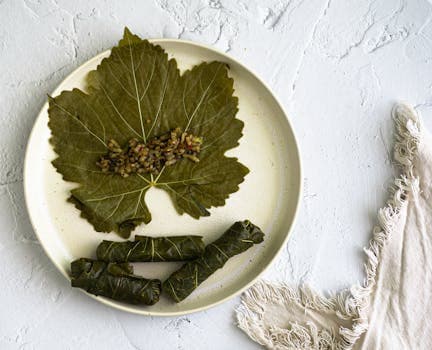
Dolma — Turkish Stuffed Grape Leaves with Rice
Tender grape leaves stuffed with herbed rice, pine nuts and currants, braised in olive oil and lemon juice. A jewel of Turkish meze culture.
About This Recipe
Sarma (rolled) or dolma (stuffed) grape leaves are one of the most universally recognised dishes of the Ottoman culinary tradition, found across Turkey, Greece, the Balkans, the Middle East and the Caucasus. The Turkish zeytinyağlı (olive oil) version is filled with a fragrant mixture of rice, pine nuts, currants, dill, mint and allspice — no meat — and braised gently in olive oil and lemon until the leaves are silky and the rice is perfectly cooked. The filling achieves a beautiful balance of flavours: the sweet currants against the toasted pine nuts, the cool herbs against the warm spice. The grape leaves themselves become delicately sour from the lemon braising, which cuts through the olive oil richness. Making stuffed grape leaves at home takes patience and practice — rolling takes time, and the first few will be imperfect. But the results are spectacular, and they keep beautifully for several days, improving as they sit. Serve at room temperature with thick yogurt and lemon wedges.
Ingredients
Serves 6
- 40 piecesgrape vine leaves(brined (from a jar) or fresh blanched)
- 300 gshort-grain rice(rinsed)
- 2 largeonions(finely diced)
- 100 mlolive oil(plus extra for serving)
- 50 gpine nuts
- 50 gcurrants or raisins
- 1 tspallspice
- 0.5 tspcinnamon
- 0.5 tspblack pepper
- 1 tspsugar
- 1 tspsalt
- 30 gfresh dill(chopped)
- 20 gfresh mint(chopped)
- 3 tbsplemon juice
- 250 mlhot water
Instructions
- 1
Make the filling
Sauté onions in half the olive oil until soft and golden, 10 minutes. Add pine nuts and toast until golden. Add currants, allspice, cinnamon, pepper, sugar and salt. Stir 1 minute. Add rice and stir to coat. Add 150ml hot water and cook until absorbed but rice is still al dente, 8–10 minutes. Cool, then mix in dill and mint.
The rice should be about 60% cooked — it will finish cooking inside the rolls.
- 2
Prepare leaves
Rinse brined leaves, blanch in boiling water 1 minute, drain. Lay flat on a work surface. Remove tough stems.
- 3
Roll the dolma
Place a heaped teaspoon of filling near the stem end of each leaf. Fold the sides in over the filling, then roll firmly from bottom to top into a tight cylinder. Do not roll too tightly — the rice needs room to expand.
- 4
Braise
Line a heavy pot with torn grape leaves or sliced tomatoes. Pack rolls tightly in a single layer, seam-side down. Mix remaining olive oil, lemon juice and water; pour over. Place a heavy plate on top to keep rolls submerged. Cover and cook over very low heat for 50–60 minutes.
- 5
Cool and serve
Cool in the pot. Serve at room temperature drizzled with olive oil and lemon, alongside thick yogurt.
Did you make this?
Rate it and help other cooks find the recipes that actually work.
One tap to sign in, and we'll save the rating you just picked.
Everything you need to plan your week — free
- Meal calendar
- Grocery list
- AI recipe ideas
Cook this hands-free
Get AI meal plans, step-by-step cooking mode, and your saved recipes in the free Bento app.
Pro Tips
- →
Pack the rolls tightly in the pot — they should support each other and not unroll during cooking.
- →
The heavy plate is essential to keep rolls submerged and prevent unrolling.
- →
Make 2 days ahead — stuffed grape leaves improve significantly with time.
- →
Taste and adjust salt at the very end — flavors concentrate as liquids reduce, and a final pinch of flaky salt sharpens the whole dish.
Variations
- •
Meat dolma: add 150g browned minced lamb to the filling, omit currants and pine nuts.
- •
Fresh tomato addition: layer sliced tomatoes between the rolls for extra moisture and flavour.
- •
Vegetarian: swap the protein for roasted king oyster mushrooms, smoked tofu or cooked chickpeas — adjust seasoning slightly upward to compensate.
- •
Spicier: add a finely chopped fresh chile or a teaspoon of crushed Aleppo/Urfa pepper to the aromatics for warm, layered heat instead of a single sharp hit.
Storage
Keeps refrigerated for up to 5 days. Bring to room temperature before serving. Do not freeze — the leaves become soggy.
History & Origin
Dolma and sarma (the terms are often used interchangeably, though technically dolma means stuffed vegetables and sarma means wrapped) have been central to Ottoman and Turkish cooking for at least 500 years. The technique of stuffing vegetables appears in Ottoman palace cookbooks from the 17th century. Today, grape leaf dolma is considered one of the defining dishes of Turkish cuisine.
Frequently Asked Questions
Where do I find grape vine leaves?
In jars at Middle Eastern, Turkish and Greek grocery stores, and increasingly in larger supermarkets. Fresh grape leaves (in spring) can be blanched briefly in boiling water.
Why do my dolma unroll during cooking?
They need to be rolled tightly with seam-side down, and packed closely together in the pot so they can't unroll. The heavy plate on top also helps.
Can I make dolma with other vegetables?
Yes — stuffed peppers, courgettes, tomatoes and aubergines are all variations of the dolma concept, using the same or similar filling.
Can I make this ahead of time?
Yes — most of the components can be prepared up to a day in advance and refrigerated separately. Reheat gently and assemble just before serving so textures stay distinct.
Nutrition Facts
Per serving (180g / 6.3 oz) · 6 servings total
Time Summary
Have Questions?
Ask our AI cooking assistant anything about this recipe — substitutions, techniques, scaling.
Chat with AI Chef →Featured in Guides
This recipe is featured in the following curated guides:
More Turkish Recipes
You Might Also Like
Similar dishes from other cuisines around the world.
Browse by Ingredient
More recipes built around the same core ingredients.
Free Kitchen Tools
Calculators and converters that pair with this page — no signup needed.
Put This Into a Plan
Schedule it, shop for it, and track what you already have.
Read Next
Longer reads that go deeper on the ideas behind this dish.
Community
Join the conversation
Sign in to leave a comment and save your favourite recipes