
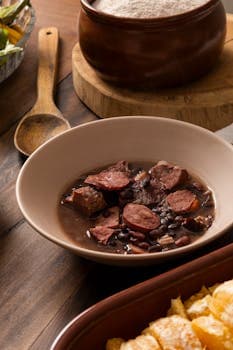
Feijoada Brasileira (Brazilian Black Bean and Pork Stew)
Brazil's national dish — a hearty black bean stew with smoked and cured pork, served with white rice, farofa, collard greens and orange slices.
About This Recipe
Feijoada is Brazil's most celebrated dish and its unofficial national symbol. It is a slow-cooked stew of black beans with an array of smoked and cured pork products — chouriço sausage, smoked pork ribs, bacon, dried beef and pork trotters or tail — seasoned with onion, garlic, bay and orange peel. The stew cooks for hours until the beans absorb the fat and smoke of the pork, turning the broth deep mahogany and intensely flavourful. Feijoada is traditionally served on Wednesdays and Saturdays in Brazilian restaurants and at weekend family gatherings, accompanied by white rice, sautéed collard greens (couve refogada), farofa (toasted cassava flour), fried banana, orange slices and a tiny cup of cachaça. It is a meal, not a dish — an event.
Ingredients
Serves 8
- 600 gdried black beans, soaked overnight
- 400 gsmoked pork ribs
- 300 gchouriço or linguiça sausage, sliced
- 200 gsmoked bacon, in a piece
- 200 gdried or cured beef (carne seca, or substitute beef jerky)
- 1pork trotter or tail (optional)
- 2white onion, finely diced
- 6garlic cloves, minced
- 4bay leaves
- 1orange peel strip
- 3 tbsplard or vegetable oil
- to tastesalt and black pepper
Instructions
- 1
Soak and pre-cook meats
Soak dried/cured meats overnight in cold water, changing water once, to reduce saltiness. Drain.
- 2
Start the beans
Drain soaked beans and place in a large pot with 2 litres cold water. Add all meats, bay leaves and orange peel. Bring to a boil, skim foam, then simmer covered for 1.5 hours.
- 3
Sauté soffritto
In a separate pan, fry onion in lard until deeply golden, about 15 minutes. Add garlic and cook 2 minutes. Add a ladleful of beans and mash some into the pan to thicken. Return everything to the main pot.
- 4
Continue cooking
Continue simmering uncovered for another 1.5 hours until the beans are very tender, the broth is thick and dark, and the meats are falling off the bone. Season with salt and pepper.
- 5
Serve
Remove large bones. Serve the stew in a deep earthenware pot alongside white rice, sautéed collard greens, farofa, sliced oranges and fried banana.
Did you make this?
Rate it and help other cooks find the recipes that actually work.
One tap to sign in, and we'll save the rating you just picked.
Everything you need to plan your week — free
- Meal calendar
- Grocery list
- AI recipe ideas
Track what you eat
Snap your meal to log calories and macros, run fasting timers and track water in the free SnapCal app.
Pro Tips
- →
The variety of pork products creates complexity — use at least 3–4 different types.
- →
Soak salty cured meats overnight — this prevents the feijoada from being unpleasantly salty.
- →
Mashing some beans into the soffritto and returning it to the pot is the technique that thickens the broth.
- →
Taste and adjust salt at the very end — flavors concentrate as liquids reduce, and a final pinch of flaky salt sharpens the whole dish.
Variations
- •
Vegetarian feijoada: omit all meat and add extra smoked paprika, liquid smoke and mushrooms for a plant-based version.
- •
Feijoada light: use fewer types of pork and less fat for a simpler weeknight version.
- •
Spicier: add a finely chopped fresh chile or a teaspoon of crushed Aleppo/Urfa pepper to the aromatics for warm, layered heat instead of a single sharp hit.
- •
Lighter: reduce the fat by a third and finish with a squeeze of citrus or a splash of vinegar to keep brightness without losing body.
Storage
Improves overnight. Keeps in the fridge for 5 days or freezes for 3 months.
History & Origin
Feijoada's origin is debated. The popular myth credits enslaved Africans who combined the pork scraps discarded by slaveowners with black beans. More likely, it evolved from Portuguese cozido (bean and meat stew). Today it is embraced across all social classes as Brazil's defining national dish.
Frequently Asked Questions
Can I use canned black beans?
Yes — use 3 cans (1.2 kg). Skip the initial long cooking and add to the pot with the pre-cooked meats. Total cooking time reduces to about 1 hour.
What is farofa?
Farofa is toasted cassava (manioc) flour, cooked in butter with onion and bacon. It absorbs the feijoada broth and adds texture. Couscous or breadcrumbs can substitute at a stretch.
Can I make this ahead of time?
Yes — most of the components can be prepared up to a day in advance and refrigerated separately. Reheat gently and assemble just before serving so textures stay distinct.
What can I substitute if I don't have all the ingredients?
Stay close to the role each ingredient plays: swap aromatics for similar ones (shallot for onion, lime for lemon), and keep the fat-acid-salt balance intact. Spice blends can usually be approximated with what's in the cupboard.
Nutrition Facts
Per serving · 8 servings total
Time Summary
Have Questions?
Ask our AI cooking assistant anything about this recipe — substitutions, techniques, scaling.
Chat with AI Chef →Featured in Guides
This recipe is featured in the following curated guides:
More Brazilian Recipes
You Might Also Like
Similar dishes from other cuisines around the world.
Browse by Ingredient
More recipes built around the same core ingredients.
Free Kitchen Tools
Calculators and converters that pair with this page — no signup needed.
Put This Into a Plan
Schedule it, shop for it, and track what you already have.
Read Next
Longer reads that go deeper on the ideas behind this dish.
Community
Join the conversation
Sign in to leave a comment and save your favourite recipes