
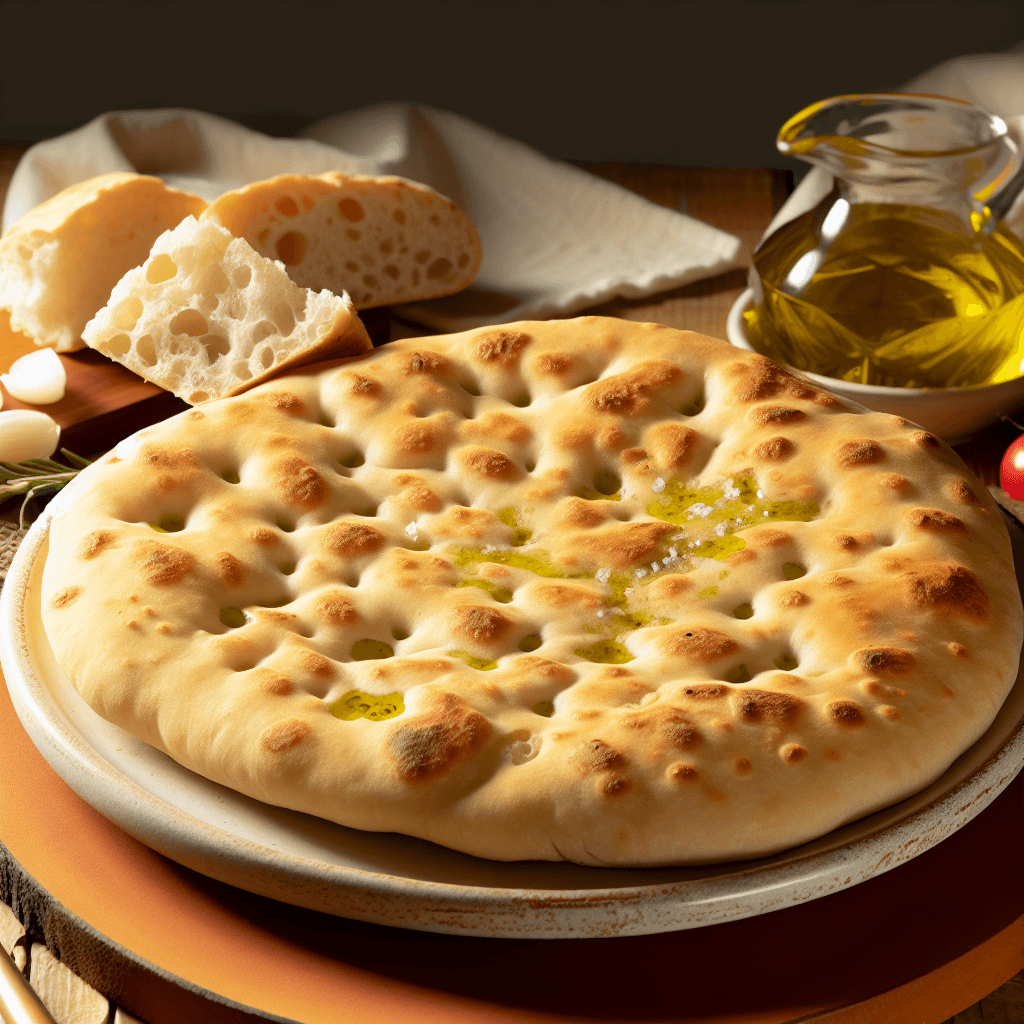
Focaccia Genovese (Ligurian Olive Oil Flatbread)
Genoa's famous olive oil flatbread — dimpled, pillowy, generously oiled and scattered with sea salt. The definitive focaccia.
About This Recipe
Focaccia Genovese is the original and, many argue, the finest version of the dish. Ligurian focaccia is characterised by its high olive oil content (both in the dough and poured over the top before baking), its distinctive dimpled surface and a perfectly balanced salt crust. The interior should be soft and airy with a slight chew; the bottom should develop a light golden-brown crust from the oil in the pan. The dough is wetter than bread dough, enriched with olive oil and left for a long first rise, then spread into an oiled baking tray and left to rise again before dimpling and baking. In Genoa, focaccia is eaten for breakfast with a cappuccino, as a snack, as an accompaniment to meals — it is a way of life.
Ingredients
Serves 8
- 500 gstrong bread flour or 00 flour
- 375 mlwater, lukewarm
- 7 ginstant dried yeast
- 10 gfine salt
- 50 mlextra-virgin olive oil for dough
- 80 mlextra-virgin olive oil for tray and topping
- 1 tbspflaky sea salt (e.g. Maldon) for topping
Instructions
- 1
Make the dough
Mix flour, yeast and fine salt. Add water and 50 ml olive oil, mix into a rough dough and knead for 8 minutes until smooth and slightly tacky. The dough is wetter than bread dough — don't add extra flour.
- 2
First rise
Place dough in an oiled bowl, cover and leave at room temperature for 1–1.5 hours until doubled.
- 3
Transfer to tray
Pour 40 ml olive oil into a large rimmed baking tray (30×40 cm). Turn the dough onto the tray and gently stretch it to fit. If it springs back, rest for 10 minutes and try again.
- 4
Second rise
Drizzle the remaining 40 ml olive oil over the surface. Cover and leave to rise for 45 minutes until puffy.
- 5
Dimple and salt
Preheat oven to 230°C (445°F). Press your fingers firmly into the dough making deep dimples all over. Sprinkle generously with flaky salt.
- 6
Bake
Bake for 20–25 minutes until the top is golden and the edges are deeply brown. The olive oil should make the bottom slightly crisp.
- 7
Cool and serve
Rest for 10 minutes before cutting. Eat warm.
Did you make this?
Rate it and help other cooks find the recipes that actually work.
One tap to sign in, and we'll save the rating you just picked.
Everything you need to plan your week — free
- Meal calendar
- Grocery list
- AI recipe ideas
Track what you eat
Snap your meal to log calories and macros, run fasting timers and track water in the free SnapCal app.
Pro Tips
- →
More olive oil than you think — Ligurian focaccia is not shy with olive oil. It is the defining flavour.
- →
The dimples prevent the focaccia from puffing up uniformly and create small oil-filled wells.
- →
For extra flavour, add fresh rosemary or thinly sliced onion before baking.
- →
Taste and adjust salt at the very end — flavors concentrate as liquids reduce, and a final pinch of flaky salt sharpens the whole dish.
Variations
- •
Focaccia al rosmarino: add rosemary sprigs pressed into the dimples.
- •
Focaccia col formaggio (Recco): a completely different, paper-thin filled version from Recco near Genoa.
- •
Vegetarian: swap the protein for roasted king oyster mushrooms, smoked tofu or cooked chickpeas — adjust seasoning slightly upward to compensate.
- •
Spicier: add a finely chopped fresh chile or a teaspoon of crushed Aleppo/Urfa pepper to the aromatics for warm, layered heat instead of a single sharp hit.
Storage
Best on the day it is made. Store wrapped at room temperature for up to 2 days, or freeze slices.
History & Origin
Focaccia has ancient roots in Liguria, dating back to pre-Roman times. Ligurian sailors are credited with spreading it across the Mediterranean. The word comes from the Latin 'focus' (hearth) — it was originally baked on hearthstones.
Frequently Asked Questions
Can I use all-purpose flour instead of bread flour?
Yes — all-purpose flour produces a slightly softer, less chewy focaccia. Both work well.
Why is my focaccia not airy?
The dough may have over-proofed (bubbles burst) or under-proofed. Use the poke test: dough should spring back slowly.
Can I make this ahead of time?
Yes — most of the components can be prepared up to a day in advance and refrigerated separately. Reheat gently and assemble just before serving so textures stay distinct.
What can I substitute if I don't have all the ingredients?
Stay close to the role each ingredient plays: swap aromatics for similar ones (shallot for onion, lime for lemon), and keep the fat-acid-salt balance intact. Spice blends can usually be approximated with what's in the cupboard.
Nutrition Facts
Per serving · 8 servings total
Time Summary
Have Questions?
Ask our AI cooking assistant anything about this recipe — substitutions, techniques, scaling.
Chat with AI Chef →Featured in Guides
This recipe is featured in the following curated guides:
More Italian Recipes
You Might Also Like
Similar dishes from other cuisines around the world.
Free Kitchen Tools
Calculators and converters that pair with this page — no signup needed.
Put This Into a Plan
Schedule it, shop for it, and track what you already have.
Read Next
Longer reads that go deeper on the ideas behind this dish.
Community
Join the conversation
Sign in to leave a comment and save your favourite recipes