
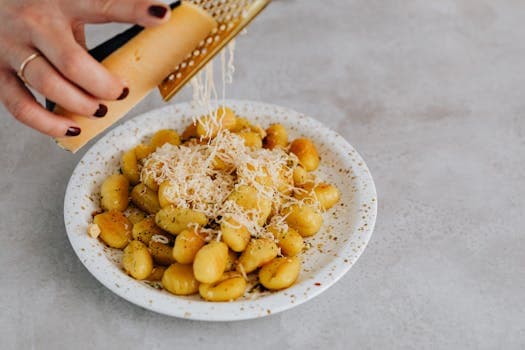
Gnocchi al Burro e Salvia (Potato Gnocchi with Sage Butter)
Pillowy homemade potato gnocchi tossed in browned sage butter — one of Italy's most comforting and elegant pasta dishes.
About This Recipe
Making gnocchi from scratch is one of Italian cooking's most rewarding tasks. The dough is a simple mixture of riced floury potatoes, 00 flour and egg — but the ratio requires a gentle hand. Too much flour and the gnocchi become dense and rubbery; too little and they fall apart in the water. The ideal gnocco (singular) is light, slightly yielding and just holds its shape. The simplest and arguably best sauce for gnocchi is burro e salvia — browned butter infused with fresh sage leaves. The nuttiness of the browned butter (beurre noisette in French, burro nocciola in Italian) complements the mild potato flavour perfectly. A shower of Parmesan completes the dish.
Ingredients
Serves 4
- 1 kgfloury potatoes (Maris Piper, Russet or Desiree)
- 200 g00 flour or plain flour
- 1egg yolk
- 1 tspfine salt
- 100 gunsalted butter
- 15fresh sage leaves
- 60 gParmesan, grated
- to tastesalt and black pepper
Instructions
- 1
Bake potatoes
Bake potatoes whole in their skins at 200°C (390°F) for 50–60 minutes until completely tender. (Baking, not boiling, keeps the potato dryer.)
- 2
Rice potatoes
While still hot, scoop potato flesh and pass through a potato ricer or fine sieve onto a clean work surface. Let steam evaporate for 5 minutes.
- 3
Make dough
Make a well in the riced potato. Add flour, egg yolk and salt. Mix gently until a soft dough just comes together — work as little as possible.
- 4
Shape gnocchi
Divide dough into portions. Roll each into a rope about 2 cm thick on a lightly floured surface. Cut into 2 cm pieces. Roll each piece over a fork (or gnocchi board) to create ridges.
- 5
Cook gnocchi
Drop gnocchi into a large pot of well-salted boiling water in batches. They are cooked when they float to the surface, about 2–3 minutes. Remove with a slotted spoon.
- 6
Make sage butter
Melt butter in a wide pan over medium-high heat. Add sage leaves and cook until the butter foams, then turns golden-brown and smells nutty, about 3 minutes. Add cooked gnocchi and toss to coat.
- 7
Serve
Divide between warm plates, spoon over the sage butter and crispy sage. Top with Parmesan and black pepper.
Did you make this?
Rate it and help other cooks find the recipes that actually work.
One tap to sign in, and we'll save the rating you just picked.
Everything you need to plan your week — free
- Meal calendar
- Grocery list
- AI recipe ideas
Track what you eat
Snap your meal to log calories and macros, run fasting timers and track water in the free SnapCal app.
Pro Tips
- →
Use floury, not waxy, potatoes — waxy potatoes release too much water and require more flour, making rubbery gnocchi.
- →
Work the dough as little as possible — over-kneading develops gluten and produces tough gnocchi.
- →
Test one gnocco in the boiling water before shaping all of them — if it falls apart, add a little more flour.
- →
Taste and adjust salt at the very end — flavors concentrate as liquids reduce, and a final pinch of flaky salt sharpens the whole dish.
Variations
- •
Gnocchi al gorgonzola: toss with a sauce of melted gorgonzola, cream and walnuts.
- •
Gnocchi alla sorrentina: baked in tomato sauce with mozzarella.
- •
Vegetarian: swap the protein for roasted king oyster mushrooms, smoked tofu or cooked chickpeas — adjust seasoning slightly upward to compensate.
- •
Spicier: add a finely chopped fresh chile or a teaspoon of crushed Aleppo/Urfa pepper to the aromatics for warm, layered heat instead of a single sharp hit.
Storage
Shaped uncooked gnocchi can be frozen on a tray, then transferred to bags. Cook from frozen, adding 1 minute to cooking time.
History & Origin
Potato gnocchi became widespread in Italy only after potatoes arrived from the Americas in the 16th century. Before that, gnocchi were made from bread, polenta or semolina. Today potato gnocchi are most closely associated with Veneto and Friuli.
Frequently Asked Questions
Why are my gnocchi chewy and dense?
Too much flour or overworking the dough. Use the minimum flour needed for the dough to hold together.
Can I make the dough ahead?
Form and freeze gnocchi the same day you make them — the dough deteriorates if stored uncooked in the fridge.
Can I make this ahead of time?
Yes — most of the components can be prepared up to a day in advance and refrigerated separately. Reheat gently and assemble just before serving so textures stay distinct.
What can I substitute if I don't have all the ingredients?
Stay close to the role each ingredient plays: swap aromatics for similar ones (shallot for onion, lime for lemon), and keep the fat-acid-salt balance intact. Spice blends can usually be approximated with what's in the cupboard.
Nutrition Facts
Per serving · 4 servings total
Time Summary
Have Questions?
Ask our AI cooking assistant anything about this recipe — substitutions, techniques, scaling.
Chat with AI Chef →Featured in Guides
This recipe is featured in the following curated guides:
More Italian Recipes
You Might Also Like
Similar dishes from other cuisines around the world.
Browse by Ingredient
More recipes built around the same core ingredients.
Free Kitchen Tools
Calculators and converters that pair with this page — no signup needed.
Put This Into a Plan
Schedule it, shop for it, and track what you already have.
Read Next
Longer reads that go deeper on the ideas behind this dish.
Community
Join the conversation
Sign in to leave a comment and save your favourite recipes