
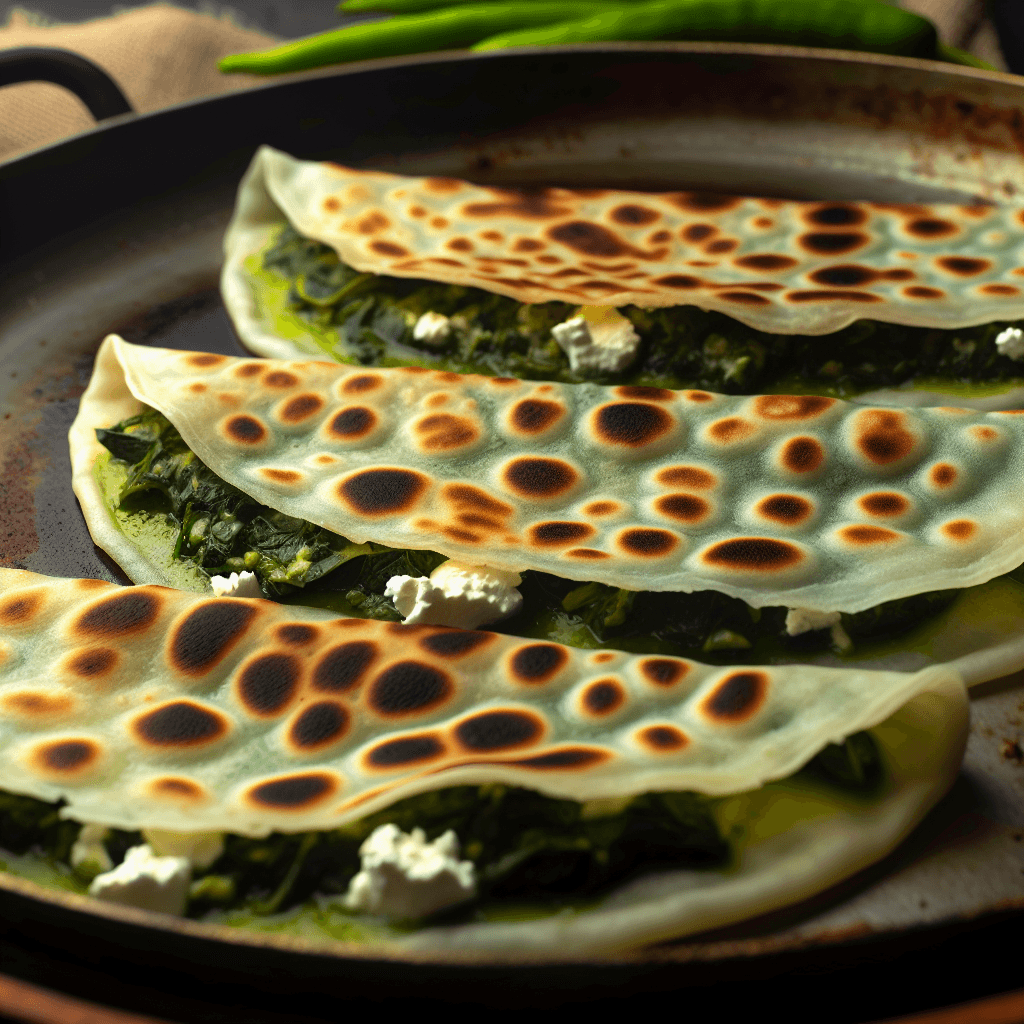
Gözleme with Spinach and Feta — Turkish Stuffed Flatbread
Thin handmade flatbread filled with wilted spinach, crumbled feta and herbs, folded and cooked on a griddle until golden and crispy.
About This Recipe
Gözleme is one of the great Turkish street foods — a large, thin flatbread (yufka) that is filled, folded and cooked on a sac, the traditional domed iron griddle that Turkish women have used for centuries. Watching an expert gözlemeci spin the dough tissue-thin and fold it into perfect golden squares is one of the great food theatre experiences of Turkey. The word gözleme comes from 'göz' (eye), referring to the small bubbles that appear on the dough's surface as it cooks. The dough is a simple unleavened flour-water mixture, rolled incredibly thin, filled, folded once or twice to enclose the filling, then cooked with butter until blistered and golden. Spinach and feta is the most classic filling combination, but gözleme is endlessly versatile: minced meat, potato, kaşar cheese, mushroom and herb versions all exist. The key to great gözleme is rolling the dough thin enough that it becomes almost translucent, and cooking over medium-high heat so the outside crisps while the filling heats through.
Ingredients
Serves 4
- 300 gplain flour(plus extra for dusting)
- 150 mlwarm water
- 1 tspsalt
- 1 tbspolive oil
- 300 gfresh spinach(washed)
- 200 gfeta cheese(crumbled)
- 1 smallonion(finely diced)
- 2 clovesgarlic(minced)
- 0.5 tsppul biber
- 0.5 tspblack pepper
- 30 gfresh parsley(chopped)
- 40 gbutter(for cooking)
Instructions
- 1
Make the dough
Mix flour, salt, oil and water. Knead 8 minutes until smooth and soft. Divide into 4 balls. Cover and rest 20 minutes.
Gözleme dough should be very soft and pliable — softer than bread dough.
- 2
Make the filling
Sauté onion in oil until soft. Add spinach and garlic; cook until wilted and all moisture has evaporated. Season with pul biber and pepper. Cool, then mix with crumbled feta and parsley.
- 3
Roll thin
On a lightly floured surface, roll each dough ball into a very thin circle or oval, about 35–40cm diameter.
- 4
Fill and fold
Spread filling over one half of the dough, leaving a 1cm border. Fold the other half over to cover. Press edges to seal. Alternatively, place filling in the centre and fold into thirds.
- 5
Cook
Heat a large dry griddle or frying pan over medium-high heat. Cook gözleme 2–3 minutes until golden and blistered, pressing gently. Flip, add a knob of butter and cook 2–3 minutes more. Serve immediately.
Did you make this?
Rate it and help other cooks find the recipes that actually work.
One tap to sign in, and we'll save the rating you just picked.
Everything you need to plan your week — free
- Meal calendar
- Grocery list
- AI recipe ideas
Track what you eat
Snap your meal to log calories and macros, run fasting timers and track water in the free SnapCal app.
Pro Tips
- →
Roll the dough as thin as possible — the thinner it is, the crispier the result.
- →
Cook over medium-high heat, not high — too hot burns the outside before the dough cooks through.
- →
Serve immediately — gözleme loses its crispness quickly.
- →
Taste and adjust salt at the very end — flavors concentrate as liquids reduce, and a final pinch of flaky salt sharpens the whole dish.
Variations
- •
Potato gözleme: fill with mashed potato seasoned with onion and butter.
- •
Minced meat gözleme: fill with browned seasoned lamb mince.
- •
Cheese-only gözleme: kaşar cheese (or mozzarella) melts beautifully.
- •
Vegetarian: swap the protein for roasted king oyster mushrooms, smoked tofu or cooked chickpeas — adjust seasoning slightly upward to compensate.
Storage
Best eaten immediately. Leftover gözleme can be reheated in a dry pan — do not microwave.
History & Origin
Gözleme is a quintessentially Anatolian preparation, closely associated with rural Turkish women who would make it on the sac during family gatherings and festivals. It became famous internationally through Turkish food stalls at markets and fairs worldwide. The sac (pronounced 'sach') is a convex iron griddle heated from below — specialist gözleme cooks can roll the dough to near-translucent thinness.
Frequently Asked Questions
Can I use ready-made yufka or filo instead of making dough?
Yes — brush yufka sheets with butter, add filling and fold. Filo is too thin and fragile but large yufka sheets work well.
Why is my gözleme doughy in the middle?
The dough was rolled too thick, or the heat was too low. Roll very thin and cook over medium-high heat.
What pan works best?
A large flat griddle, cast iron skillet or non-stick frying pan all work. The wider the better — gözleme should not be cramped.
Can I make this ahead of time?
Yes — most of the components can be prepared up to a day in advance and refrigerated separately. Reheat gently and assemble just before serving so textures stay distinct.
Nutrition Facts
Per serving (220g / 7.8 oz) · 4 servings total
Time Summary
Have Questions?
Ask our AI cooking assistant anything about this recipe — substitutions, techniques, scaling.
Chat with AI Chef →Featured in Guides
This recipe is featured in the following curated guides:
More Turkish Recipes
You Might Also Like
Similar dishes from other cuisines around the world.
Browse by Ingredient
More recipes built around the same core ingredients.
Free Kitchen Tools
Calculators and converters that pair with this page — no signup needed.
Put This Into a Plan
Schedule it, shop for it, and track what you already have.
Read Next
Longer reads that go deeper on the ideas behind this dish.
Community
Join the conversation
Sign in to leave a comment and save your favourite recipes