
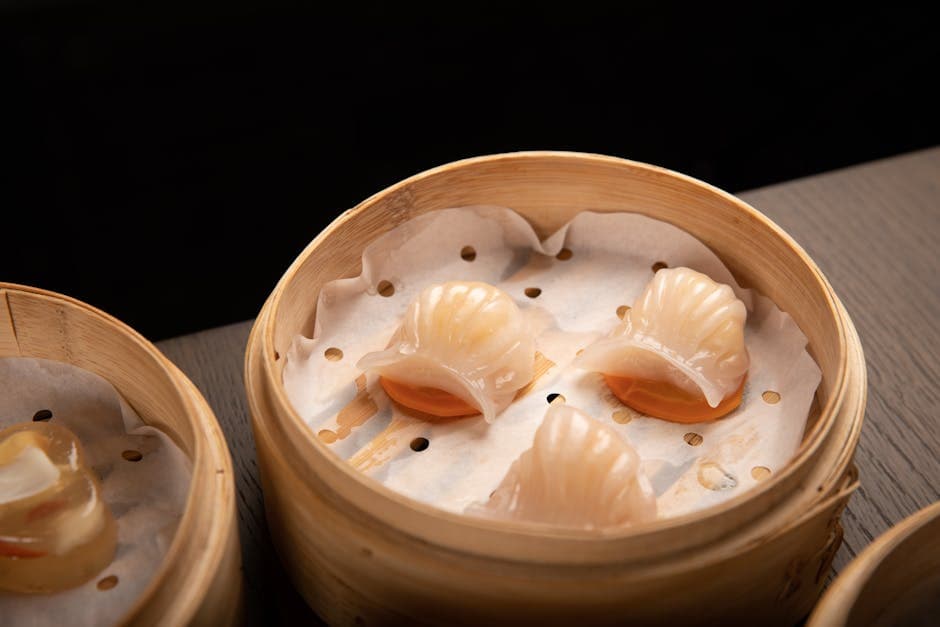
Har Gow (Cantonese Steamed Shrimp Dumplings)
The benchmark of any dim sum kitchen — delicate translucent steamed dumplings filled with whole prawns and bamboo shoots.
About This Recipe
Har gow (蝦餃) is the yardstick by which dim sum restaurants are judged. The translucent wheat starch skin must be thin enough to show the pink of the prawn filling inside, yet strong enough not to tear. It should have at least seven pleats. The filling of whole or coarsely chopped prawns, bamboo shoots, sesame oil and a whisper of white pepper should be fresh and clean. Making har gow at home requires wheat starch (not plain flour) and a confident hand with the distinctive pleating technique. The reward is extraordinary — fresh har gow bears no resemblance to frozen versions. Rooted in the everyday cooking of Chinese kitchens, Har Gow (Cantonese Steamed Shrimp Dumplings) balances technique and tradition: the wheat starch (no-gluten wheat starch, not plain flour) is treated with care, drawing on time-honoured ratios that locals have refined across generations. The dish carries an unmistakable sensory signature — aromas that fill the kitchen as it cooks, layered textures that reveal themselves bite by bite, and a depth of flavour that comes from patient seasoning rather than shortcuts. Whether served as a weeknight starter or as the centrepiece of a celebratory table, it reflects a regional pantry where local produce, seasoning habits and cooking vessels shape the final result. Home cooks who make this dish often note how forgiving it is once the core method is understood, and how a few small choices — the freshness of the wheat starch (no-gluten wheat starch, not plain flour), the order of additions, the resting time at the end — separate a good version from a memorable one. This recipe walks through those choices so the dish arrives with the character it has on its home turf.
Ingredients
Serves 4
- 150 gwheat starch (no-gluten wheat starch, not plain flour)
- 50 gtapioca starch
- 200 mlboiling water
- 1 tbsplard or vegetable shortening
- 400 graw prawns, peeled and deveined
- 60 gcanned bamboo shoots, finely diced
- 1 tspsesame oil
- 1 tspsoy sauce
- 0.5 tspsalt
- pinchwhite pepper
- 0.5 tspsugar
- 1 tbspcornflour
Instructions
- 1
Make dough
Mix wheat starch and tapioca starch. Pour boiling water over and stir quickly. Add lard and knead while still warm until smooth. Cover and rest 10 minutes.
- 2
Make filling
Roughly chop half the prawns and leave the other half whole. Mix all prawns with bamboo shoots, sesame oil, soy sauce, salt, white pepper, sugar and cornflour. Mix vigorously in one direction to develop a bouncy texture.
- 3
Shape wrappers
Divide dough into small balls (about 15 g each). Roll each ball into a circle about 9 cm across. (Or use a cleaver on an oiled surface: press down with the flat side to flatten into a round wrapper.)
- 4
Pleat
Place a teaspoon of filling in the centre. Fold the wrapper over and pleat one side in small folds to create 7+ pleats, pressing firmly to seal.
- 5
Steam
Line a bamboo steamer with parchment paper (or cabbage leaves). Place har gow without touching. Steam over boiling water for 8–9 minutes until the wrappers are translucent and the filling is cooked.
- 6
Serve
Serve immediately with soy sauce and a small dish of ginger in black vinegar.
Did you make this?
Rate it and help other cooks find the recipes that actually work.
One tap to sign in, and we'll save the rating you just picked.
Everything you need to plan your week — free
- Meal calendar
- Grocery list
- AI recipe ideas
Track what you eat
Snap your meal to log calories and macros, run fasting timers and track water in the free SnapCal app.
Pro Tips
- →
Work quickly with the dough — wheat starch dough dries out fast. Keep covered with a damp cloth.
- →
The pleating is a skill that takes practice. Watch a video before attempting — it helps enormously.
- →
Do not over-fill: a tablespoon of filling is sufficient per dumpling.
- →
Source the freshest wheat starch (no-gluten wheat starch, not plain flour) you can find — it is the flavour anchor of the dish.
- →
Season in layers as you go; tasting at each stage prevents a flat or over-salted final result.
Variations
- •
Add 1 tsp of spring onion and a sliver of ginger to the filling for a more complex flavour.
- •
Har gow can also be pan-fried like gyoza for a crispy-bottomed version.
- •
Vegetarian: replace the main protein with mushrooms, paneer, tofu or hearty beans for a meat-free version.
- •
Spicier: add fresh chilli, a chilli paste or a pinch of cayenne with the aromatics for a warmer profile.
- •
Lighter: reduce the fat by a third and use stock in its place — flavour stays intact but the dish feels less rich.
Storage
Freeze uncooked har gow on a floured tray before transferring to bags. Steam from frozen, adding 3 minutes to cooking time.
History & Origin
Har gow was created in a teahouse near Guangzhou (Canton) in the early 20th century and spread through the yum cha (dim sum) tradition. It became the signature dumpling of Cantonese cuisine and the benchmark of any dim sum kitchen.
Frequently Asked Questions
Can I make Har Gow (Cantonese Steamed Shrimp Dumplings) ahead of time?
Yes — most components hold well in the fridge for a day or two. Reheat gently with a splash of liquid to bring it back to life.
What can I substitute for wheat starch (no-gluten wheat starch, not plain flour)?
If wheat starch (no-gluten wheat starch, not plain flour) is hard to find, the closest substitutes share its texture and water content. Adjust seasoning slightly since substitutes often carry less character of their own.
Is this recipe authentic to Chinese cooking?
It follows the most widely accepted home-cook template. Regional variants exist and we note the main ones in the variations section.
Why did my version turn out bland?
Usually under-seasoning or rushing the aromatic stage. Build flavour in layers, taste as you go, and finish with a touch of acid or salt to brighten the dish.
Nutrition Facts
Per serving · 4 servings total
Time Summary
Have Questions?
Ask our AI cooking assistant anything about this recipe — substitutions, techniques, scaling.
Chat with AI Chef →Featured in Guides
This recipe is featured in the following curated guides:
More Chinese Recipes
You Might Also Like
Similar dishes from other cuisines around the world.
Free Kitchen Tools
Calculators and converters that pair with this page — no signup needed.
Put This Into a Plan
Schedule it, shop for it, and track what you already have.
Read Next
Longer reads that go deeper on the ideas behind this dish.
Community
Join the conversation
Sign in to leave a comment and save your favourite recipes