
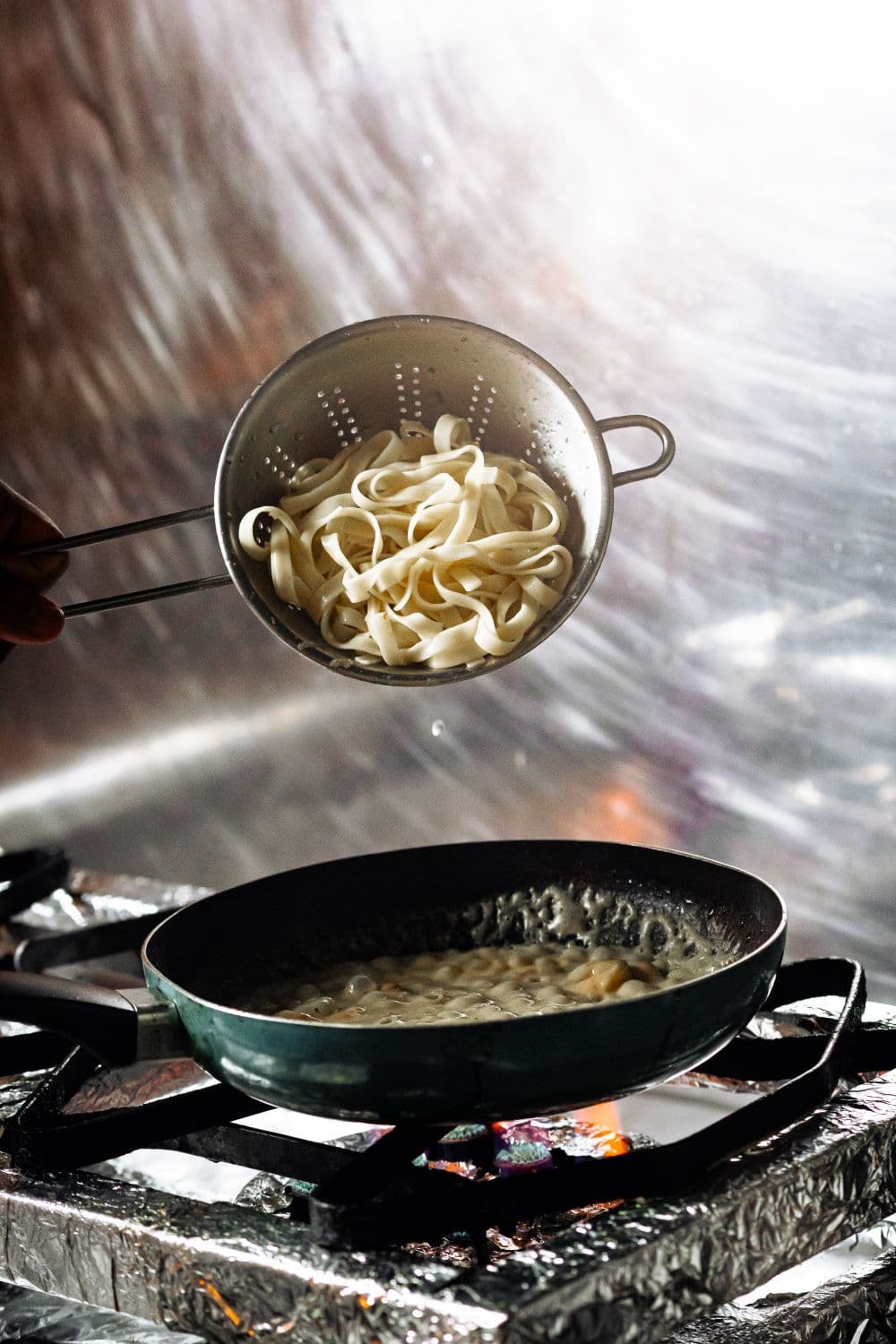
Heart of Palm 'Fettuccine' — Atala-Inspired
Fresh young palm hearts cut into ribbons, dressed simply with butter, lime and Brazil nut — the dish that put indigenous Brazilian ingredients on D.O.M.'s tasting menu.
⭐Inspired by Alex Atala · 🇧🇷 BrazilAbout This Recipe
Inspired by Chef Alex Atala's pioneering use of indigenous Brazilian ingredients at D.O.M., this dish reframes fresh palm heart (palmito) as fettuccine — the white tender heart cut into long ribbons that dress beautifully and have a unique tender-crunchy texture, closer in mouthfeel to a very fresh bamboo shoot than to any pasta. Atala has spent his career documenting Brazil's biodiversity through his Instituto ATÁ, and palm heart is one of the ingredients he has done most to globalise, using it as a way to spotlight Amazonian ingredients on a fine-dining stage typically dominated by imported European staples. The technique is deliberately restrained: fresh palm heart needs almost nothing done to it beyond a very light dressing, since its natural texture and faintly sweet, nutty flavour are the point — heavy sauces or long cooking would mask exactly what makes the ingredient special. A simple dressing of melted butter, a squeeze of lime and a scattering of toasted Brazil nuts (another Amazonian staple) is enough to bring out its character without overwhelming it. If fresh whole palm hearts aren't available, good-quality jarred palm heart, well drained and patted dry, is the practical substitute — the flavour is milder, but the ribbon technique and dressing still work.
Ingredients
Serves 4
- 400 gfresh palm hearts (palmito pupunha)(or jarred palm hearts, drained)
- 60 gunsalted butter
- 1 clovegarlic(smashed)
- 1lime(zested and juiced)
- 60 gParmigiano-Reggiano(finely grated)
- 30 gBrazil nuts(lightly toasted and finely chopped)
- 0.5 bunchfresh parsley(chopped)
- 1 tbspextra-virgin olive oil
- Maldon sea salt and freshly cracked black pepper
- 0.5 tspAleppo pepper or piri piri(to finish)
Instructions
- 1
Prep the palm hearts
Cut the palm hearts lengthwise into long, fettuccine-thick ribbons (about 0.5cm wide × the full length of the heart). If using jarred, gently rinse and pat dry first.
- 2
Sauté
Melt the butter in a wide pan over medium heat. Add the smashed garlic and cook 60 seconds until fragrant. Discard the garlic.
- 3
Cook the 'fettuccine'
Add the palm heart ribbons to the foaming butter. Toss gently for 2-3 minutes — they should warm through and absorb the butter without browning. They are tender and barely need cooking.
- 4
Finish with lime
Off the heat, stir in the lime zest, half the lime juice, parsley and a generous pinch of Maldon. Toss.
- 5
Plate fine-dining-style
Twirl the palm heart ribbons into nests on warm plates (use tongs and a spoon). Drizzle with olive oil. Top with grated Parmigiano, chopped Brazil nuts, a final pinch of Aleppo pepper and the remaining lime juice. Serve immediately.
Did you make this?
Rate it and help other cooks find the recipes that actually work.
One tap to sign in, and we'll save the rating you just picked.
Everything you need to plan your week — free
- Meal calendar
- Grocery list
- AI recipe ideas
Cook this hands-free
Get AI meal plans, step-by-step cooking mode, and your saved recipes in the free Bento app.
Pro Tips
- →
Fresh pupunha palm heart is dramatically better than jarred — find at Brazilian groceries.
- →
Don't overcook — palm hearts are meant to remain crisp-tender.
- →
Brazil nuts are essential — they connect the dish to its Amazonian roots.
Variations
- •
Truffle Variation: shave fresh black truffle over the top in season — Atala's restaurant move.
- •
Vegan Version: substitute vegan butter and skip the Parmigiano; use nutritional yeast instead.
- •
Carbonara Variation: toss with cured egg yolk and pancetta for a Brazilian-Italian crossover.
Storage
Best eaten immediately. Cooked palm heart loses texture quickly.
History & Origin
Pupunha palm heart has been cultivated by indigenous Amazonian peoples for over a millennium. Industrial harvesting in the 20th century devastated wild palm populations, but sustainable Brazilian cultivation has re-established palm heart as a key Brazilian ingredient. Alex Atala's restaurant D.O.M. and his Instituto ATÁ have championed sustainable palm heart farming for global fine-dining adoption.
Frequently Asked Questions
What is pupunha palm heart?
Pupunha (Bactris gasipaes) is a Brazilian palm species cultivated specifically for its sustainable hearts — unlike wild palmito juçara, harvesting pupunha doesn't kill the tree. Atala's advocacy has been key to popularising sustainably farmed pupunha as the ethical choice for fine dining.
Can I use jarred palm heart?
Yes — but fresh is dramatically better. Jarred palm heart is preserved in salty brine and has a more uniform, slightly chalky texture. Fresh pupunha has a clean, almost sweet vegetable character. Jarred works for the technique here, but the dish is at its best fresh.
Why Brazil nuts?
Castanha-do-Pará (Brazil nut) is one of Brazil's most iconic Amazonian ingredients. Pairing it with palm heart creates a dish rooted entirely in Brazilian indigenous cuisine — both ingredients harvested from the same Amazonian biodiversity Atala has spent his career championing.
Is this dish vegan?
Easily made vegan — substitute vegan butter for the dairy butter and skip the Parmigiano (use nutritional yeast or omit entirely). The dish then becomes a clean showcase for the palm heart's natural flavour.
Nutrition Facts
Per serving (180g / 6.3 oz) · 4 servings total
Time Summary
Have Questions?
Ask our AI cooking assistant anything about this recipe — substitutions, techniques, scaling.
Chat with AI Chef →Featured in Guides
This recipe is featured in the following curated guides:
More Brazilian Recipes
You Might Also Like
Similar dishes from other cuisines around the world.
Browse by Ingredient
More recipes built around the same core ingredients.
Free Kitchen Tools
Calculators and converters that pair with this page — no signup needed.
Put This Into a Plan
Schedule it, shop for it, and track what you already have.
Read Next
Longer reads that go deeper on the ideas behind this dish.
Community
Join the conversation
Sign in to leave a comment and save your favourite recipes