
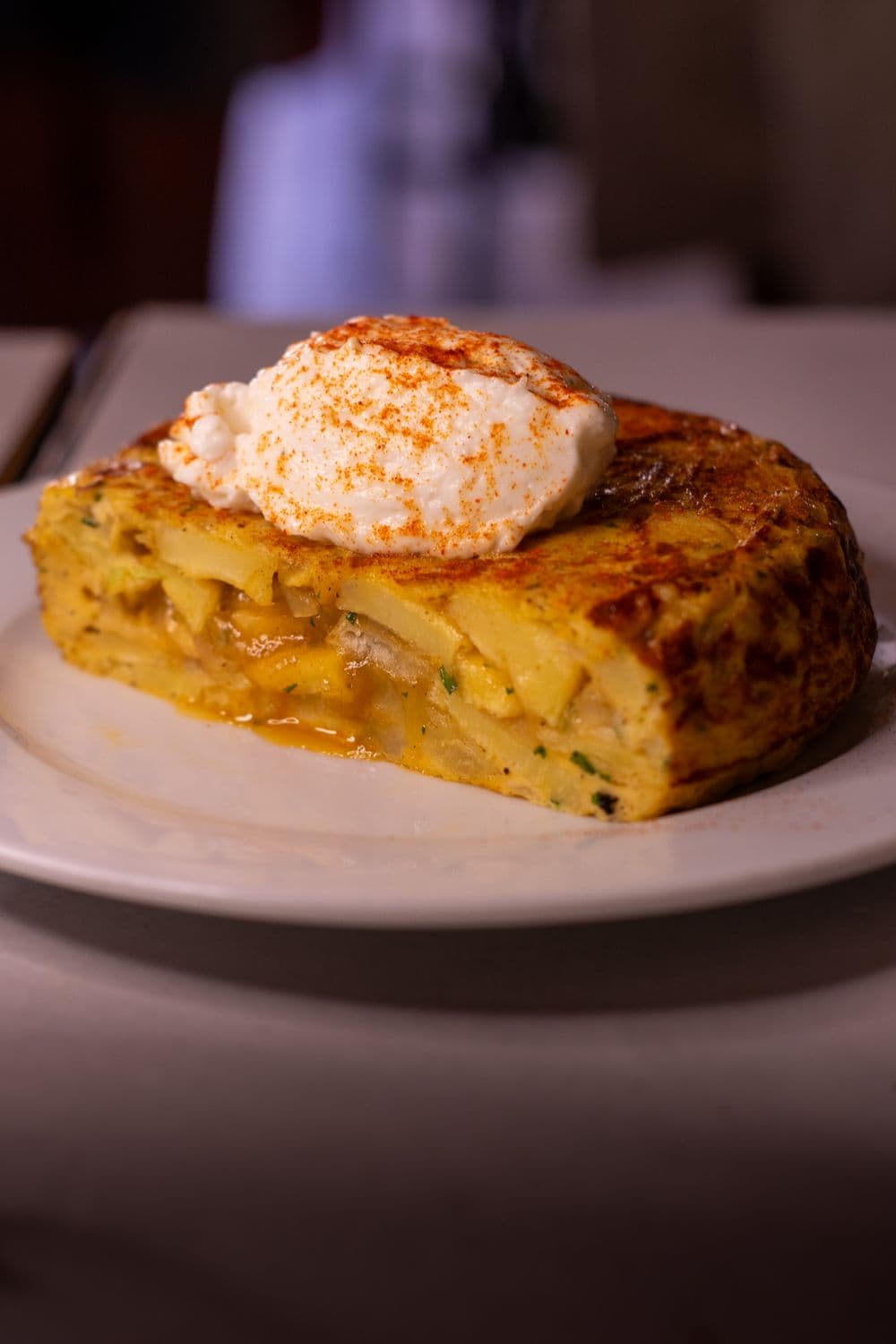
Liquid Spanish Omelette — Adrià-Inspired
A modernist deconstruction of tortilla española — egg yolk foam, caramelised onion purée, and crispy potato gel — Catalan avant-garde at home.
⭐Inspired by Ferran Adrià · 🇪🇸 SpainAbout This Recipe
This recipe is inspired by Chef Ferran Adrià's revolutionary work at elBulli, where he deconstructed Spanish classics like tortilla española into their component flavours and textures. Adrià's argument was that cuisine — like art or music — is a serious creative discipline in which questioning every assumption produces real progress. This 'liquid Spanish omelette' separates the three flavours of a classic tortilla — egg, caramelised onion, potato — and presents them as a foam, a purée and a gel. Eaten in one spoonful, it tastes unmistakably like a tortilla; visually, it is something else entirely.
Ingredients
Serves 4
- 3large eggs(free range, very fresh)
- 100 mldouble cream
- 2large white onions(thinly sliced)
- 60 mlextra-virgin olive oil(divided)
- 1 tspcaster sugar
- 400 gYukon Gold potatoes(peeled and diced)
- 200 mlmilk
- 2 gagar-agar powder
- 30 gunsalted butter
- Maldon sea salt(to taste)
- white pepper(to taste)
- 1 pinchsmoked paprika(for garnish)
Instructions
- 1
Caramelise the onions
Heat 30ml olive oil over low heat. Add the onions, sugar and a generous pinch of salt. Cook for 35–40 minutes, stirring every 5 minutes, until deeply caramelised and jam-like. Blend with 2 tablespoons water until smooth. Pass through a sieve. Keep warm.
- 2
Make the potato gel
Boil the potatoes in salted water until very tender. Drain and blend with the milk and butter until completely smooth. Pass through a fine sieve. Bring to a simmer in a clean pan with the agar-agar, whisking constantly for 2 minutes. Pour into a flat tray and refrigerate 20 minutes to set firm. Once set, blend again to a smooth, glossy gel.
- 3
Make the egg yolk foam
In a bowl, separate the yolks from the whites. Whisk the yolks with the cream, salt and pepper. Strain into a metal mixing bowl set over a pan of barely simmering water. Whisk continuously for 4 minutes until the mixture thickens to a sabayon — light, airy and just holding peaks. Off the heat, whisk vigorously for 30 seconds to incorporate air.
- 4
Plate the deconstruction
Spoon a teaspoon of caramelised onion purée at one corner of each shallow plate. Spoon a teaspoon of potato gel beside it. Add a generous quenelle of egg yolk foam. Finish with a tiny pinch of smoked paprika. Serve immediately.
- 5
Eat in one spoonful
Instruct diners: take all three components on one spoon at once. The combined taste is unmistakably tortilla española; the form is something Adrià would call 'tecnoemocional' cuisine.
Did you make this?
Rate it and help other cooks find the recipes that actually work.
One tap to sign in, and we'll save the rating you just picked.
Everything you need to plan your week — free
- Meal calendar
- Grocery list
- AI recipe ideas
Cook this hands-free
Get AI meal plans, step-by-step cooking mode, and your saved recipes in the free Bento app.
Pro Tips
- →
This recipe takes patience — don't rush any of the three components.
- →
Use a digital scale for the agar-agar — proportions matter for the gel to set correctly.
- →
The dish lives in the eating; the visual deconstruction means nothing without the recombination on the spoon.
Variations
- •
Classic Tortilla Española: combine all three components into a regular Spanish omelette using whole eggs, fried potatoes and caramelised onion.
- •
Add Chorizo: a small dot of chorizo oil at the side of the plate adds Adrià's late-elBulli colour.
Storage
Each component can be made several hours ahead and refrigerated. Combine just before serving.
History & Origin
Tortilla española — the Spanish potato omelette — has been a national dish since the early 19th century. Ferran Adrià's elBulli closed in 2011 after redefining fine dining for a generation. His deconstructions of Spanish classics, like this one, are widely studied at culinary schools as examples of late-20th-century modernist cuisine.
Frequently Asked Questions
Is this hard to make at home?
It's challenging but achievable — the three components (caramelised onion purée, potato gel with agar-agar, and egg yolk foam) each require careful technique but no specialised equipment beyond a blender and a fine sieve.
Why deconstruct a tortilla?
Ferran Adrià's argument was that you don't truly understand a dish until you can take it apart and put it back together. The deconstructed version asks: what is the irreducible flavour identity of a tortilla? The answer turns out to be these three things.
What is 'tecnoemocional' cuisine?
Ferran Adrià's preferred term for what others called 'molecular gastronomy' — cooking that emotionally engages diners through technical surprise. He rejected the molecular label, arguing it focused on technique rather than emotion. The deconstruction here is meant to provoke and delight, not to be technically clever.
Why was elBulli closed?
Adrià closed elBulli in 2011 to convert it into a creative research foundation. He argued the restaurant had become unsustainable — the team produced more new dishes per year than diners could process and the staff lost too much time to research and reflection.
What can I substitute for agar-agar?
Carrageenan or pectin can produce similar gels but with slightly different textures. Agar is the cleanest setting agent and the easiest to work with at home; it's increasingly available in mainstream supermarkets in the baking aisle.
Nutrition Facts
Per serving (180g / 6.3 oz) · 4 servings total
Time Summary
Have Questions?
Ask our AI cooking assistant anything about this recipe — substitutions, techniques, scaling.
Chat with AI Chef →Featured in Guides
This recipe is featured in the following curated guides:
More Spanish Recipes
You Might Also Like
Similar dishes from other cuisines around the world.
Browse by Ingredient
More recipes built around the same core ingredients.
Free Kitchen Tools
Calculators and converters that pair with this page — no signup needed.
Put This Into a Plan
Schedule it, shop for it, and track what you already have.
Read Next
Longer reads that go deeper on the ideas behind this dish.
Community
Join the conversation
Sign in to leave a comment and save your favourite recipes