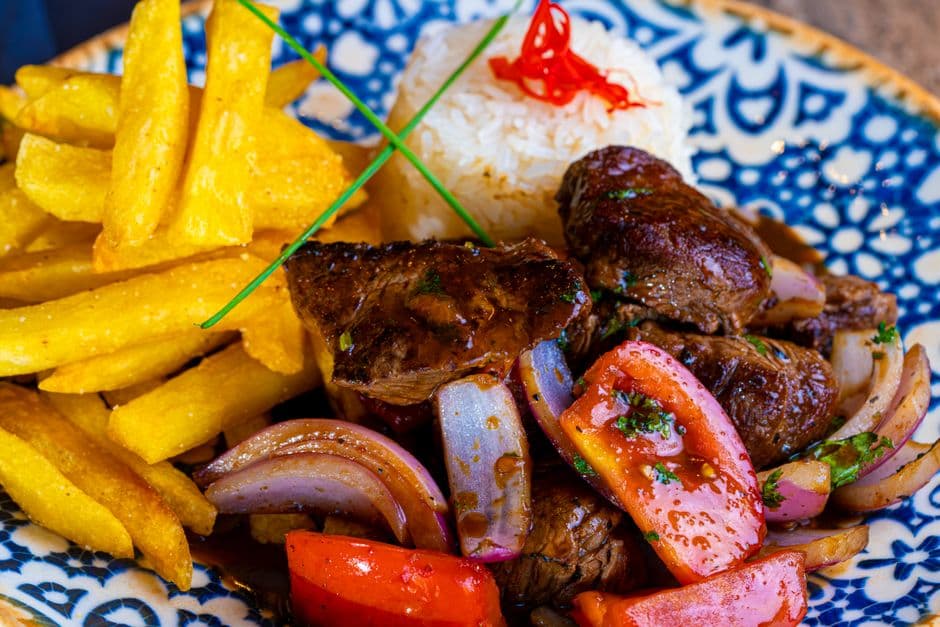
Lomo Saltado
Peru's signature stir-fry — strips of beef tenderloin, tomatoes and onions tossed in a soy-and-vinegar sauce over high heat, served with both white rice and crispy chips.
About This Recipe
Lomo saltado is the most emblematic dish of chifa, the Peruvian-Chinese fusion cuisine that emerged in the 19th century when thousands of Cantonese immigrants arrived to work on Peru's railways. The word 'saltado' comes from the Spanish verb 'saltar' (to jump), referring to the high-heat wok technique brought by Chinese cooks. The result is a remarkable fusion: Peruvian beef, tomatoes, ají amarillo and coriander meet Chinese soy sauce and wok technique in a dish that is simultaneously both cultures and neither. Serving it with both white rice and chips (french fries) is non-negotiable — the chips soak up the sauce and become something extraordinary.
Ingredients
Serves 4
- 600 gbeef tenderloin or sirloin(cut into 1cm × 6cm strips)
- 2 mediumred onions(cut into thick wedges)
- 3 mediumripe tomatoes(cut into wedges)
- 2ají amarillo chillies(deseeded and cut into strips (or 2 tbsp paste))
- 4 tablespoonssoy sauce
- 2 tablespoonsred wine vinegar
- 1 tablespoonoyster sauce
- 4 clovesgarlic(minced)
- 2 tablespoonsvegetable oil
- 1 small bunchfresh coriander(roughly chopped)
- 400 gchips (french fries)(freshly cooked, to serve)
- 400 gsteamed white rice(to serve)
Instructions
- 1
Season and rest the beef
Season the beef strips generously with salt and black pepper. Allow to sit at room temperature for 15 minutes. Pat completely dry with kitchen paper just before cooking — moisture is the enemy of a good sear.
- 2
Make the sauce
Combine the soy sauce, red wine vinegar and oyster sauce in a small bowl. Set aside.
- 3
Sear the beef
Heat a wok or large heavy frying pan over the highest possible heat until smoking. Add 1 tablespoon of oil. Sear the beef strips in a single layer — do not crowd the pan; work in 2 batches. Cook for 60–90 seconds per side without moving for a deep brown crust. Remove from the wok and set aside.
High heat is everything in lomo saltado. A household burner may not be hot enough — if so, let the wok heat for a full 3 minutes before cooking.
- 4
Stir-fry the vegetables
Add the remaining oil to the wok. Add the onion wedges and ají amarillo strips and stir-fry for 2 minutes over high heat — the onion should char slightly at the edges but remain firm in the centre. Add the garlic and cook 30 seconds. Add the tomato wedges and stir-fry for 1 minute — they should soften slightly but not collapse.
- 5
Combine and sauce
Return the beef to the wok. Pour in the sauce and toss everything together vigorously for 1 minute. The sauce will reduce and coat everything in a glossy glaze. Taste and adjust seasoning.
- 6
Serve
Remove from heat and scatter with fresh coriander. Serve immediately over white rice with the hot chips alongside — or, in the traditional manner, toss the chips directly into the wok with the lomo at the last moment so they absorb the sauce.
Pro Tips
- →
Use the best beef you can afford — the quick, high-heat cooking means quality makes a real difference.
- →
Slice the beef against the grain for maximum tenderness.
- →
Stainless steel or carbon-steel woks conduct heat better than non-stick; for this dish, the char marks are part of the flavour.
Variations
- •
Lomo saltado de pollo uses chicken breast strips in place of beef and is equally delicious.
- •
A vegetarian version substitutes portobello mushrooms and firm tofu for the beef.
Storage
Best eaten immediately. Leftovers can be refrigerated for 1 day; reheat in a very hot pan. The chips will not retain their texture.
History & Origin
Lomo saltado emerged in Lima in the late 19th century as Cantonese immigrants adapted their wok cooking techniques to Peruvian ingredients. The dish became so popular it crossed cultural boundaries and is now considered one of Peru's national dishes, demonstrating how migration can enrich a nation's cuisine.
Frequently Asked Questions
Why is lomo saltado served with both rice and chips?
The double carbohydrate is characteristic of the dish and reflects the Peruvian appetite for rice (brought by Asian immigrants) alongside the New World potato. The chips absorb the delicious sauce and become a dish in themselves.
Nutrition Facts
Per serving (420g / 14.8 oz) · 4 servings total
Time Summary
Have Questions?
Ask our AI cooking assistant anything about this recipe — substitutions, techniques, scaling.
Chat with AI Chef →More Peruvian Recipes
Community
Join the conversation
Sign in to leave a comment and save your favourite recipes