
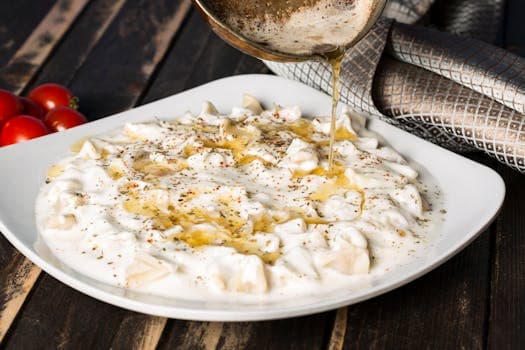
Mantı — Turkish Dumplings with Garlic Yogurt
Tiny handmade Turkish dumplings filled with spiced lamb, served with garlic yogurt, paprika butter and dried mint. One of Turkey's most celebrated dishes.
About This Recipe
Mantı is one of the jewels of Turkish cuisine — tiny parcels of hand-rolled dough filled with a simple but perfectly seasoned lamb and onion mixture, boiled and then lavished with three layers of sauce: cool garlic yogurt, sizzling paprika butter poured tableside, and a dusting of dried mint and sumac. The contrast between the cool yogurt and hot butter is spectacular. The skill of Turkish home cooks is measured by how small they can make their mantı — tradition holds that 40 should fit in a single spoon. Commercially made mantı are larger, but even home versions the size of a large chickpea are impressive. The filling is deliberately sparse — just enough to taste — because the ratio of pasta to filling to sauce is the true art. Mantı is closely related to Central Asian dumplings brought to Anatolia by Turkic peoples centuries ago, and cousins exist across a vast geographic range from China (mànrou) to Armenia (manti) to Afghanistan (mantu). Turkish mantı is distinguished by its yogurt sauce, making it unique among the family.
Ingredients
Serves 4
- 300 gplain flour(plus extra)
- 1 largeegg
- 120 mlwater(lukewarm)
- 1 tspsalt
- 200 gminced lamb or beef
- 1 mediumonion(very finely grated)
- 0.5 tspblack pepper
- 0.5 tspsalt
- 400 gthick plain yogurt(full-fat, room temperature)
- 4 clovesgarlic(crushed to paste)
- 60 gbutter
- 1.5 tspTurkish red pepper paste (biber salçası) or sweet paprika
- 1 tspdried mint
- 0.5 tspsumac(to serve)
Instructions
- 1
Make the dough
Mix flour and salt, make a well, add egg and water. Knead 10 minutes until smooth and firm. Wrap in cling film and rest 30 minutes.
Mantı dough should be firmer than pasta dough — it needs to hold its shape when rolled thin and cut.
- 2
Make the filling
Mix minced meat with grated onion (squeeze out liquid), salt and pepper. The mixture should be quite dry — do not add any liquid.
- 3
Roll and cut
Roll dough very thin (1–2mm) on a lightly floured surface. Cut into 3–4 cm squares using a sharp knife or pastry cutter. Place a tiny amount of filling (pea-sized) in the centre of each square.
Keep unrolled dough covered while working — it dries out quickly.
- 4
Fold the mantı
Bring all four corners of each square up to meet at the top and pinch firmly to seal, or pinch two opposite corners together to form a boat shape. Ensure there are no gaps.
- 5
Cook and sauce
Boil mantı in well-salted water for 10–12 minutes until they float and the dough is cooked through. Mix yogurt with crushed garlic and spread over serving plates. Drain mantı and arrange on the yogurt. Melt butter in a small pan, add pepper paste or paprika and cook 30 seconds until sizzling. Pour over mantı. Sprinkle with dried mint and sumac.
Did you make this?
Rate it and help other cooks find the recipes that actually work.
One tap to sign in, and we'll save the rating you just picked.
Everything you need to plan your week — free
- Meal calendar
- Grocery list
- AI recipe ideas
Cook this hands-free
Get AI meal plans, step-by-step cooking mode, and your saved recipes in the free Bento app.
Pro Tips
- →
The smaller the mantı, the more impressive — but aim for consistency rather than size.
- →
Cook mantı in batches to avoid crowding, which causes them to stick together.
- →
The garlic yogurt can be made up to 2 hours ahead and left at room temperature — cold yogurt on hot mantı is disappointing.
- →
Taste and adjust salt at the very end — flavors concentrate as liquids reduce, and a final pinch of flaky salt sharpens the whole dish.
Variations
- •
Baked mantı (fırın mantı): bake unfilled in the oven until golden, then add yogurt and top with browned butter and chopped tomatoes.
- •
Cheese mantı: fill with a mixture of white cheese (beyaz peynir) and parsley instead of meat.
- •
Vegetarian: swap the protein for roasted king oyster mushrooms, smoked tofu or cooked chickpeas — adjust seasoning slightly upward to compensate.
- •
Spicier: add a finely chopped fresh chile or a teaspoon of crushed Aleppo/Urfa pepper to the aromatics for warm, layered heat instead of a single sharp hit.
Storage
Uncooked mantı can be frozen on a tray then transferred to a bag — cook from frozen adding 3–4 minutes. Cooked mantı without sauce keeps 2 days refrigerated.
History & Origin
Mantı's origins trace to Central Asian Turkic nomadic cuisine, arriving in Anatolia during the Seljuk period. Similar dumplings are found from Korea (mandu) to Afghanistan (mantu), reflecting the vast spread of Turkic culinary influence along the Silk Road. Turkish mantı is distinguished by its triple sauce of yogurt, butter and mint — a combination unique to Anatolian cooking.
Frequently Asked Questions
My mantı keep opening during cooking — how do I seal them?
Pinch very firmly, wetting the edges slightly with water if needed. Make sure there is no filling near the edges. Also ensure the dough is not too dry.
Can I make mantı ahead?
Yes — shape and freeze on a baking tray, then transfer to freezer bags. Cook from frozen. You can also refrigerate for up to 24 hours before cooking.
What is the correct size for mantı?
Traditional mantı should be very small — the benchmark is 40 fitting in a tablespoon. Home cooks often make them slightly larger (2–3 cm) which is perfectly acceptable.
Can I make this ahead of time?
Yes — most of the components can be prepared up to a day in advance and refrigerated separately. Reheat gently and assemble just before serving so textures stay distinct.
Nutrition Facts
Per serving (350g / 12.3 oz) · 4 servings total
Time Summary
Have Questions?
Ask our AI cooking assistant anything about this recipe — substitutions, techniques, scaling.
Chat with AI Chef →Featured in Guides
This recipe is featured in the following curated guides:
More Turkish Recipes
You Might Also Like
Similar dishes from other cuisines around the world.
Browse by Ingredient
More recipes built around the same core ingredients.
Free Kitchen Tools
Calculators and converters that pair with this page — no signup needed.
Put This Into a Plan
Schedule it, shop for it, and track what you already have.
Read Next
Longer reads that go deeper on the ideas behind this dish.
Community
Join the conversation
Sign in to leave a comment and save your favourite recipes