
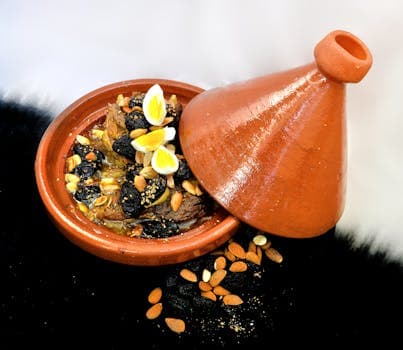
Lamb Tagine with Preserved Lemon — Lahlou-Inspired
Slow-braised lamb shoulder with preserved lemon, green olives, saffron and fresh herbs — Morocco's most refined home dish.
⭐Inspired by Mourad Lahlou · 🇲🇦 MoroccoAbout This Recipe
This dish is inspired by Chef Mourad Lahlou's modern Moroccan cooking at Aziza and Mourad in San Francisco — the first Moroccan restaurant in America to earn a Michelin star. Lahlou's approach has been to take Moroccan home dishes like tagines and treat them with fine-dining rigour without losing their soul. This lamb tagine pairs slow-braised shoulder with the holy trinity of Moroccan flavours — preserved lemon, green olives and saffron — finished with abundant fresh herbs. It's based on the Marrakshi tradition Lahlou grew up with, refined for the home cook.
Ingredients
Serves 6
- 1.5 kglamb shoulder(boneless, cut into 5cm chunks)
- 3 tbspolive oil
- 2large onions(thinly sliced)
- 6 clovesgarlic(minced)
- 1 tbspfresh ginger(grated)
- 2 tspground cumin
- 2 tspsweet paprika
- 1 tspground coriander
- 1 tspground turmeric
- 1 tspground cinnamon
- 0.5 tspground white pepper
- 1 pinchsaffron threads(bloomed in 2 tbsp warm water)
- 500 mlchicken stock
- 1 canchickpeas(drained, 400g)
- 2preserved lemons(rind only, finely chopped)
- 150 gMoroccan green olives(or Picholine olives, pitted)
- 2 tbspfresh coriander(chopped)
- 2 tbspfresh flat-leaf parsley(chopped)
- salt and pepper(to taste)
- 300 gcouscous(to serve)
Instructions
- 1
Sear the lamb
Pat the lamb completely dry. Season generously with salt and pepper. Heat 2 tablespoons olive oil in a heavy Dutch oven or tagine over high heat. Brown the lamb in batches — 2 minutes per side until deeply seared. Transfer to a plate. Don't rush this — the fond is the foundation of flavour.
Drying the meat is the single most important step for a proper sear.
- 2
Build the spice base
Reduce heat to medium. Add the remaining oil and cook the onions for 8 minutes until soft and lightly caramelised. Add the garlic, ginger, cumin, paprika, coriander, turmeric, cinnamon and white pepper. Cook 60 seconds — the spices should bloom and become deeply fragrant.
Toasting whole spices like cumin in a dry pan first and grinding fresh gives even more depth.
- 3
Braise slowly
Return the lamb and any juices to the pot. Add the saffron with its soaking water, the stock and chickpeas. Bring to a simmer, cover tightly and reduce heat to LOW. Cook for 90 minutes, stirring once or twice.
- 4
Add preserved lemon and olives
Stir in the preserved lemon rind and olives. Continue cooking uncovered for another 30–40 minutes until the lamb is meltingly tender and the sauce has reduced and thickened. Taste — preserved lemon is salty, so adjust seasoning carefully.
- 5
Cook the couscous
While the tagine finishes, prepare the couscous: pour boiling water (or stock) over the couscous in a 1:1 ratio with 2 tablespoons olive oil and salt. Cover for 5 minutes, then fluff with a fork.
- 6
Plate and serve
Pile the couscous onto warm plates. Spoon the lamb tagine over the top with plenty of sauce. Scatter fresh coriander and parsley generously. Serve with warm Moroccan flatbread (khobz) if you have it.
Did you make this?
Rate it and help other cooks find the recipes that actually work.
One tap to sign in, and we'll save the rating you just picked.
Everything you need to plan your week — free
- Meal calendar
- Grocery list
- AI recipe ideas
Cook this hands-free
Get AI meal plans, step-by-step cooking mode, and your saved recipes in the free Bento app.
Pro Tips
- →
Preserved lemon RIND ONLY — discard the soft pulp, which is too salty for direct use.
- →
Bloom saffron in warm (not hot) water for 10 minutes before adding — it releases the colour and flavour better.
- →
Tagines taste even better the next day — make ahead if you can.
Variations
- •
Chicken Tagine: substitute chicken thighs for lamb — reduce cooking time to 50 minutes.
- •
Lamb with Prunes & Apricots (mrouzia): substitute the olives and lemon with 200g pitted prunes, 100g dried apricots and 2 tablespoons honey for a sweet-savoury version.
- •
Tagine with Seven Vegetables: replace half the lamb with chunks of carrot, turnip, courgette, butternut squash, sweet potato, fennel and tomato.
Storage
Improves with age — keep refrigerated for up to 4 days. Freezes excellently for up to 3 months.
History & Origin
The tagine — both the dish and the conical earthenware vessel — has been the cornerstone of Berber cooking across North Africa for at least 1,000 years. The slow, low cooking in the conical vessel returns moisture to the food, allowing dishes to braise gently with very little liquid. Mourad Lahlou's eponymous restaurant in San Francisco was the first Moroccan restaurant in the United States to earn a Michelin star.
Frequently Asked Questions
Do I need a tagine pot?
No — a heavy Dutch oven works very well. The traditional conical tagine returns more moisture to the dish, but a tight-fitting Dutch oven achieves a similar result.
Where do I buy preserved lemons?
Any Middle Eastern or North African grocer, and increasingly major supermarkets. They keep for years sealed and are easy to make at home: pack lemon quarters in salt and lemon juice, leave at room temperature for 4 weeks.
How does Lahlou's tagine differ from a traditional Marrakshi version?
Mourad Lahlou's restaurants serve refined tagines with cleaner spice ratios, careful preserved-lemon harvesting (rind only), and modern plating. The flavour profile is faithful to home tradition, but the precision and presentation are fine-dining.
Can I use a regular pot instead of a tagine?
Yes — a heavy Dutch oven works almost as well. The traditional conical tagine returns more moisture to the dish, but a tight-fitting Dutch oven is functionally similar at home. The clay tagine adds slight earthiness but isn't required.
What is preserved lemon and how do I make it?
Preserved lemons are quartered lemons packed in salt and lemon juice for 4 weeks at room temperature. The salt cures the rind into a soft, intensely citrusy condiment. Available at Middle Eastern grocers; easy to make at home and keeps for years sealed.
Nutrition Facts
Per serving (420g / 14.8 oz) · 6 servings total
Time Summary
Have Questions?
Ask our AI cooking assistant anything about this recipe — substitutions, techniques, scaling.
Chat with AI Chef →More Moroccan Recipes
You Might Also Like
Similar dishes from other cuisines around the world.
Browse by Ingredient
More recipes built around the same core ingredients.
Free Kitchen Tools
Calculators and converters that pair with this page — no signup needed.
Put This Into a Plan
Schedule it, shop for it, and track what you already have.
Read Next
Longer reads that go deeper on the ideas behind this dish.
Community
Join the conversation
Sign in to leave a comment and save your favourite recipes