
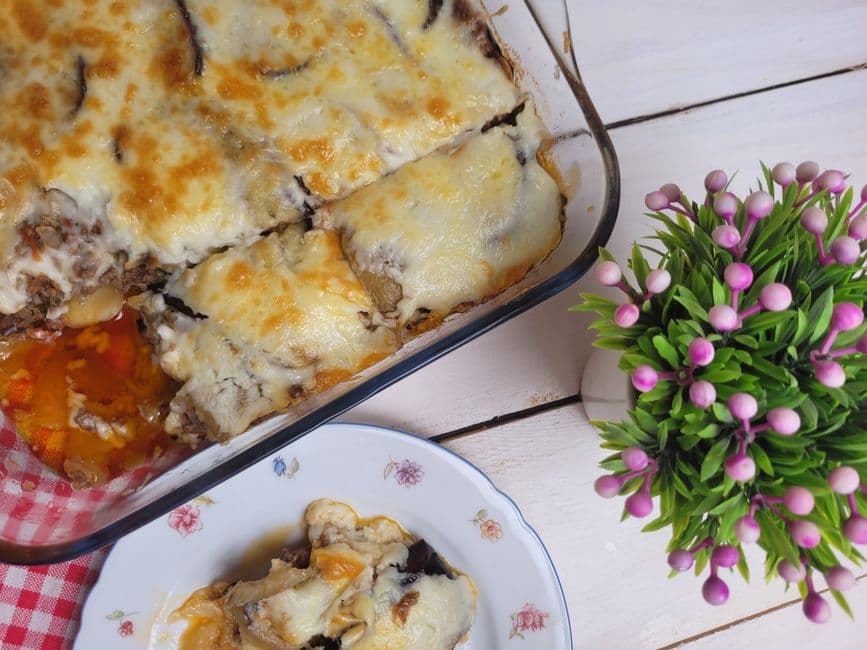
Moussaka
Layers of roasted aubergine, spiced lamb ragù and creamy béchamel — the definitive Greek casserole, baked until golden and bubbling.
About This Recipe
Moussaka is arguably the most iconic dish in Greek cuisine: a layered casserole of roasted aubergine, richly spiced meat sauce and silky, egg-enriched béchamel, baked until the top is golden and the interior is set just enough to slice. Every Greek household has a version passed down through generations, with small variations in spicing, the thickness of layers, and whether potato is included at the base. At its best, moussaka is deeply satisfying — the bittersweet aubergine absorbing the meat juices, the cinnamon and allspice warming the sauce, and the béchamel providing a creamy, gratinéed crown. It is a dish for Sundays, for celebrations, for guests — and it improves enormously the day after baking.
Ingredients
Serves 4
- 3 largeaubergines (eggplants)(about 1kg total)
- 4 tablespoonsolive oil(divided)
- 500 gminced lamb(or beef)
- 1 largeonion(finely chopped)
- 4 clovesgarlic(minced)
- 400 gtinned chopped tomatoes
- 2 tablespoonstomato purée
- 125 mlred wine
- 1 teaspoonground cinnamon
- 0.5 teaspoonground allspice
- 0.5 teaspoondried oregano
- 1bay leaf
- 60 gunsalted butter
- 60 gplain flour
- 600 mlwhole milk(warmed)
- 2egg yolks
- 60 gkefalotyri cheese(or Parmesan, grated)
- 0.25 teaspoonfreshly grated nutmeg
- 1.5 teaspoonsfine salt(divided)
- 0.5 teaspoonblack pepper
Instructions
- 1
Prepare and roast the aubergine
Slice the aubergines lengthways into 8mm rounds. Lay on baking trays, brush generously with olive oil and season with salt. Roast at 200°C (390°F) for 25–30 minutes, turning once, until golden and softened. Set aside.
Salt the aubergine slices and leave for 20 minutes before brushing with oil to draw out excess moisture.
- 2
Make the meat sauce
Heat 2 tablespoons of olive oil in a large frying pan over high heat. Add the onion and cook for 5 minutes until softened. Add the garlic and cook for 1 minute. Add the lamb and cook, breaking it up, until browned. Add the red wine and simmer for 2 minutes. Add the tomatoes, tomato purée, cinnamon, allspice, oregano, bay leaf, salt and pepper. Simmer uncovered for 20 minutes until the sauce is thick and almost dry.
- 3
Make the béchamel
Melt the butter in a medium saucepan over medium heat. Add the flour and whisk for 1 minute to form a roux. Gradually pour in the warm milk, whisking continuously to prevent lumps. Cook, stirring, for 5–7 minutes until the sauce is thick and smooth. Remove from heat, stir in the nutmeg and half the cheese. Cool slightly, then beat in the egg yolks. Season with salt.
- 4
Assemble the moussaka
Grease a deep 30x20cm baking dish. Lay half the aubergine slices in the base. Spread the meat sauce evenly over the top. Lay the remaining aubergine slices over the meat. Pour the béchamel over the aubergine layer, spreading it to the edges. Sprinkle the remaining cheese over the top.
- 5
Bake and rest
Bake at 180°C (355°F) for 45 minutes until the top is deep golden brown and the filling is set. Remove from the oven and rest for at least 15 minutes before slicing — this is essential for clean portions.
Did you make this?
Rate it and help other cooks find the recipes that actually work.
One tap to sign in, and we'll save the rating you just picked.
Everything you need to plan your week — free
- Meal calendar
- Grocery list
- AI recipe ideas
Cook this hands-free
Get AI meal plans, step-by-step cooking mode, and your saved recipes in the free Bento app.
Pro Tips
- →
Resting is non-negotiable — moussaka slices poorly when hot and improves dramatically after 15–20 minutes.
- →
Moussaka reheats beautifully and is often considered better the next day.
- →
Add a layer of sliced roasted potatoes at the base for a more substantial version.
- →
Taste and adjust salt at the very end — flavors concentrate as liquids reduce, and a final pinch of flaky salt sharpens the whole dish.
Variations
- •
Vegetarian moussaka: replace the meat sauce with a lentil and mushroom ragù with the same spices.
- •
Add a layer of sliced courgettes alongside the aubergine.
- •
Use a mixture of lamb and pork mince for a richer, more complex meat layer.
- •
Spicier: add a finely chopped fresh chile or a teaspoon of crushed Aleppo/Urfa pepper to the aromatics for warm, layered heat instead of a single sharp hit.
Storage
Cool completely and refrigerate for up to 4 days. Reheat individual portions at 160°C (320°F) for 15 minutes or microwave covered. Freezes well for up to 3 months; thaw overnight in the fridge before reheating.
History & Origin
Moussaka exists in various forms across the Middle East and Balkans, but the version recognised today as Greek moussaka was codified by chef Nikolas Tselementes in the 1920s. Tselementes, trained in French classical cooking, added the béchamel topping — a European flourish on an older Levantine layered aubergine dish. The name derives from the Arabic 'musaqqa', meaning chilled. Greek moussaka is now considered one of the defining dishes of Mediterranean cuisine.
Frequently Asked Questions
Can I make moussaka ahead of time?
Yes — moussaka is an ideal make-ahead dish. Assemble it up to the point of baking, cover and refrigerate for up to 24 hours, then bake from the fridge adding 10–15 minutes to the baking time. It also reheats excellently the following day.
Why does my béchamel get lumpy?
Lumpy béchamel results from adding cold milk too quickly. Warm the milk first and add it gradually, whisking vigorously after each addition. If lumps form, strain the sauce through a fine sieve.
Can I use courgette instead of aubergine?
Yes — courgette moussaka is a lighter, more summery version. Slice the courgettes thickly and roast or grill them first to remove excess moisture before layering.
Can I make this ahead of time?
Yes — most of the components can be prepared up to a day in advance and refrigerated separately. Reheat gently and assemble just before serving so textures stay distinct.
Nutrition Facts
Per serving (480g / 16.9 oz) · 4 servings total
Time Summary
Have Questions?
Ask our AI cooking assistant anything about this recipe — substitutions, techniques, scaling.
Chat with AI Chef →Featured in Guides
This recipe is featured in the following curated guides:
More Greek Recipes
You Might Also Like
Similar dishes from other cuisines around the world.
Browse by Ingredient
More recipes built around the same core ingredients.
Free Kitchen Tools
Calculators and converters that pair with this page — no signup needed.
Put This Into a Plan
Schedule it, shop for it, and track what you already have.
Read Next
Longer reads that go deeper on the ideas behind this dish.
Community
Join the conversation
Sign in to leave a comment and save your favourite recipes