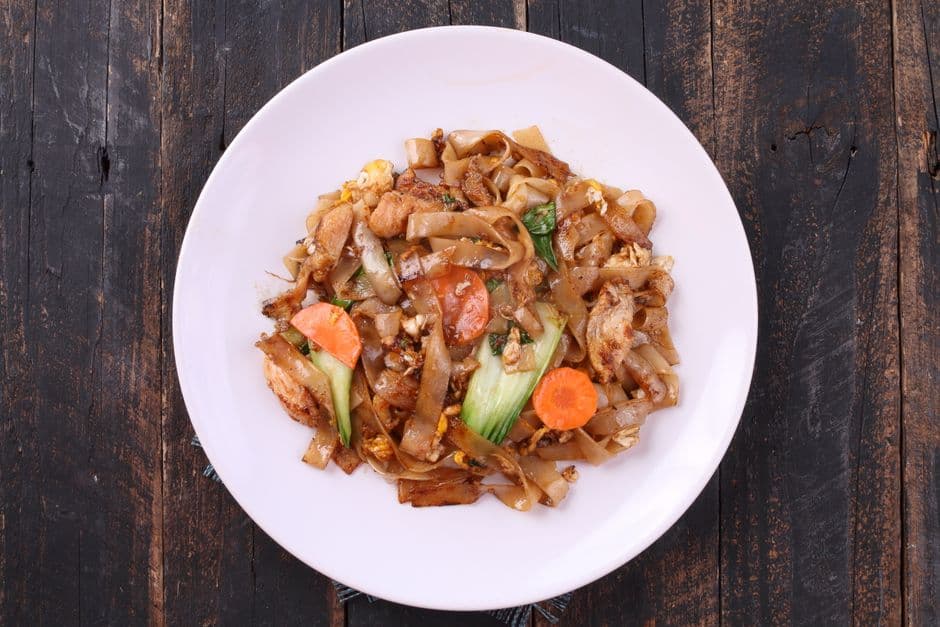
Pad See Ew
Thailand's most comforting wok noodle dish — wide rice noodles stir-fried with sweet soy sauce, egg, tender chicken and crisp Chinese broccoli.
About This Recipe
Pad See Ew (ผัดซีอิ๊ว, 'fried soy sauce') is Thailand's great wok noodle dish and the everyday counterpart to the more widely known Pad Thai. Where Pad Thai is tangy and complex, Pad See Ew is deeply savoury and satisfying: wide fresh rice noodles (sen yai) are wok-fried at scorching heat with sweet dark soy sauce, egg and a protein — most often chicken, pork or beef — until the noodles develop charred, caramelised patches from the wok's intense heat. The dish is finished with a scattering of crispy Chinese broccoli (gai lan) and seasoned simply with fish sauce, oyster sauce and a pinch of white pepper. The secret is the wok hei — the smoky, slightly burnt quality that only a screaming-hot wok can produce. Pad See Ew is found in every Thai restaurant and street stall and is especially beloved as a late-night comfort food.
Ingredients
Serves 2
- 300 gwide fresh rice noodles (sen yai)(or dried wide rice noodles, soaked)
- 250 gchicken thigh(thinly sliced)
- 150 gChinese broccoli (gai lan)(stems and leaves separated, cut into 5cm pieces)
- 2eggs
- 3 tablespoonssweet dark soy sauce (see ew dam)
- 1 tablespoonoyster sauce
- 1 tablespoonfish sauce
- 1 teaspoonlight soy sauce
- 1 teaspoonsugar
- 3 clovesgarlic(minced)
- 3 tablespoonsvegetable oil
- 0.5 teaspoonwhite pepper
Instructions
- 1
Prepare the sauce and noodles
Mix together the sweet dark soy sauce, oyster sauce, fish sauce, light soy sauce and sugar in a small bowl. If using dried noodles, soak in hot water until pliable but still slightly firm. Separate fresh noodles gently to prevent clumping.
Sweet dark soy sauce (see ew dam) is the defining ingredient — it provides the distinctive caramelised, molasses-like flavour. Do not substitute with regular soy sauce.
- 2
Sear the chicken
Heat a wok over the highest heat possible until smoking. Add 2 tablespoons of oil. Add the chicken in a single layer and sear without stirring for 1.5 minutes until browned on one side. Toss and cook for another minute. Remove to a plate.
- 3
Fry the garlic and broccoli stems
Add the remaining oil to the wok. Add the garlic and stir-fry for 20 seconds. Add the Chinese broccoli stems and stir-fry for 1 minute until bright green and slightly charred.
- 4
Fry the noodles
Add the noodles to the wok and spread them out. Pour the sauce mixture over and toss vigorously, pressing the noodles against the hot wok surface. Let them sit for 30 seconds to develop charred patches, then toss again. Repeat this press-and-toss twice more.
- 5
Add eggs and broccoli leaves
Push the noodles to one side. Crack the eggs into the empty space and scramble briefly before mixing through the noodles. Add the broccoli leaves and cooked chicken, toss everything together and cook for 1 minute more.
- 6
Season and serve
Season with white pepper. Serve immediately with a small dish of fish sauce and sliced chilli on the side for diners to adjust seasoning.
Pro Tips
- →
The highest possible heat is the single most important factor — a domestic wok will produce good results but open-flame restaurant woks reach far higher temperatures.
- →
Cook in small portions for two people maximum to maintain heat — cooking more at once drops the temperature and the noodles steam instead of fry.
- →
Pressing the noodles against the wok creates the desirable charred spots that define great Pad See Ew.
Variations
- •
Pad See Ew Moo uses pork instead of chicken — thinly sliced pork neck is the most common choice.
- •
A vegetarian version uses extra-firm tofu and replaces fish sauce with soy sauce.
Storage
Best eaten immediately. Leftovers can be re-fried in a very hot wok for 2 minutes. Rice noodles harden when refrigerated — always reheat aggressively.
History & Origin
Pad See Ew is a Chinese-influenced dish brought to Thailand by Teochew Chinese immigrants who settled in Bangkok and Central Thailand. The use of soy sauce, wide rice noodles and wok technique are all markers of this Chinese culinary influence, fully naturalised into Thai food culture over generations.
Frequently Asked Questions
Where can I buy sweet dark soy sauce?
Thai sweet dark soy sauce (Healthy Boy or Tiparos brands are common) is available at Asian supermarkets. Indonesian kecap manis is a reasonable substitute, though slightly sweeter.
Nutrition Facts
Per serving (480g / 16.9 oz) · 2 servings total
Time Summary
Have Questions?
Ask our AI cooking assistant anything about this recipe — substitutions, techniques, scaling.
Chat with AI Chef →More Thai Recipes
Community
Join the conversation
Sign in to leave a comment and save your favourite recipes