
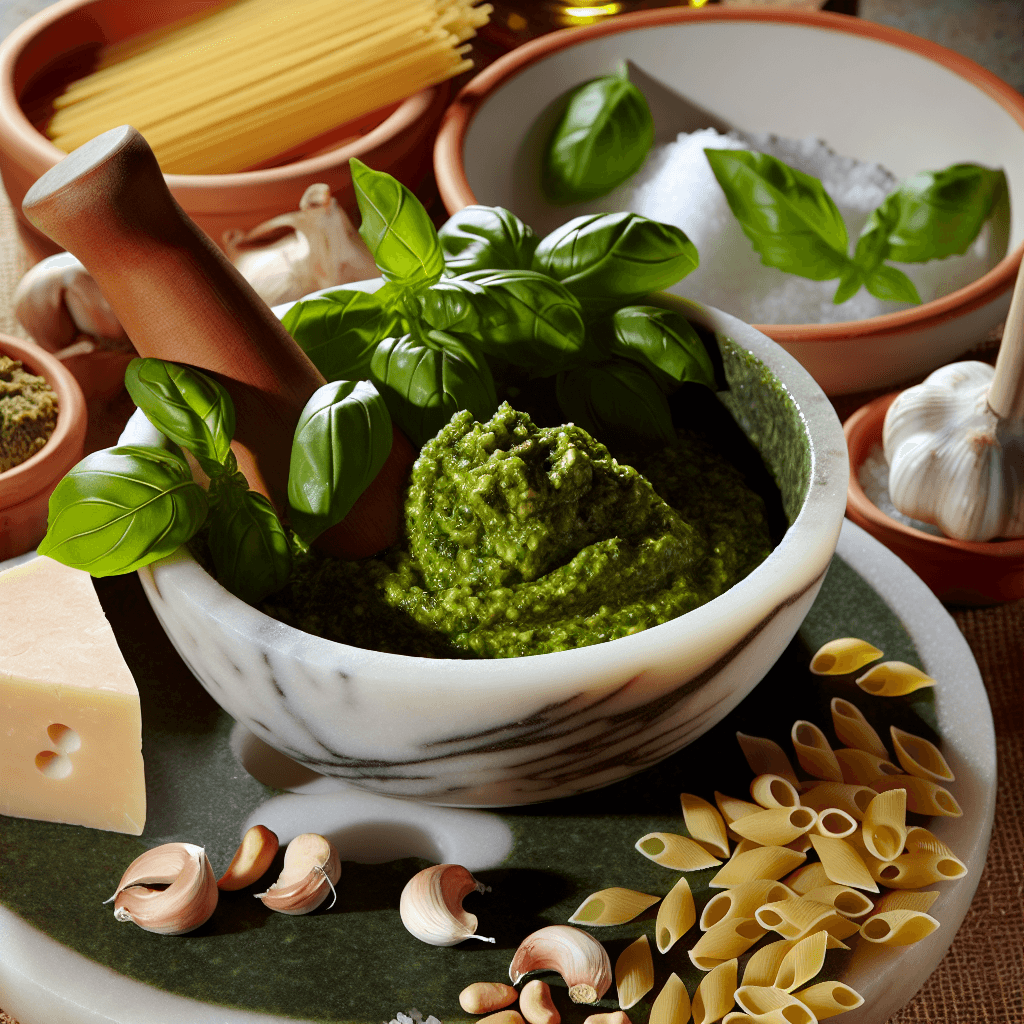
Pesto alla Genovese (Authentic Basil Pesto)
Genoa's bright green basil sauce made by hand in a mortar — fresh basil, Ligurian olive oil, pine nuts, Parmesan and Pecorino. No cooking required.
About This Recipe
Pesto alla Genovese is one of the world's most copied and most compromised sauces. The authentic version — made by hand with a marble mortar and wooden pestle — has a different texture and flavour from anything processed in a blender. The mortar tears the basil rather than shredding it, releasing volatile oils that a blender destroys through heat and oxidation. The basil should be young, small-leafed Ligurian basil (Ocimum basilicum var. Genovese DOP), though good supermarket basil works well. The other essential components are Ligurian extra-virgin olive oil (light and delicate, not peppery), pine nuts, a clove of young garlic (not pungent), coarse salt, Parmesan and Pecorino Sardo. Pesto is served with trofie (the canonical pasta), trenette or stirred into minestrone.
Ingredients
Serves 6
- 60 gfresh basil leaves (packed)
- 100 mlextra-virgin olive oil (light Ligurian-style)
- 30 gpine nuts
- 40 gParmesan, freshly grated
- 20 gPecorino Sardo or Romano, freshly grated
- 1garlic clove (small)
- pinchcoarse sea salt
Instructions
- 1
Prepare ingredients
Wash basil and dry very well — moisture dilutes the sauce. Toast pine nuts in a dry pan for 2 minutes until lightly golden. Cool completely.
- 2
Grind garlic and salt
In a mortar, pound garlic with coarse salt to a smooth paste.
- 3
Add pine nuts
Add pine nuts and pound until mostly broken down with some texture remaining.
- 4
Add basil in batches
Add basil leaves in small handfuls, grinding and pressing with a circular motion rather than pounding. Work patiently — this takes 5–8 minutes by hand.
- 5
Add cheeses
Stir in Parmesan and Pecorino. Mix well.
- 6
Add oil
Stir in olive oil gradually until you have a thick, creamy sauce. Taste and adjust seasoning.
- 7
Serve
Toss with freshly cooked pasta (add a spoonful of pasta water to loosen). Do not heat the pesto.
Did you make this?
Rate it and help other cooks find the recipes that actually work.
One tap to sign in, and we'll save the rating you just picked.
Everything you need to plan your week — free
- Meal calendar
- Grocery list
- AI recipe ideas
Cook this hands-free
Get AI meal plans, step-by-step cooking mode, and your saved recipes in the free Bento app.
Pro Tips
- →
Never heat pesto — it turns brown and bitter. Toss with hot pasta off the heat.
- →
Add a spoonful of pasta water when mixing with pasta — it emulsifies the sauce.
- →
To preserve colour, press plastic wrap directly against the surface of the pesto when storing.
- →
Taste and adjust salt at the very end — flavors concentrate as liquids reduce, and a final pinch of flaky salt sharpens the whole dish.
Variations
- •
Blender pesto: blend all ingredients on short pulses, keeping the food processor cold in the fridge beforehand.
- •
Substitute walnuts for pine nuts for a less expensive, earthier version.
- •
Vegetarian: swap the protein for roasted king oyster mushrooms, smoked tofu or cooked chickpeas — adjust seasoning slightly upward to compensate.
- •
Spicier: add a finely chopped fresh chile or a teaspoon of crushed Aleppo/Urfa pepper to the aromatics for warm, layered heat instead of a single sharp hit.
Storage
Keeps in the fridge under a layer of olive oil for up to 5 days. Freezes well for up to 3 months.
History & Origin
Pesto originated in Genoa, Liguria. It evolved from earlier moretum-style herb sauces of ancient Rome. The name comes from the Italian verb 'pestare' (to pound). The Protected Designation of Origin (PDO) for Ligurian basil protects the ingredient used in authentic pesto.
Frequently Asked Questions
Can I substitute walnuts for pine nuts?
Yes — walnuts produce a slightly more bitter, earthier pesto. Almonds or cashews also work.
Why does my pesto turn black?
Oxidation. Keep pesto covered with olive oil, press plastic wrap onto the surface and use quickly. Blanching the basil for 5 seconds before making pesto also preserves colour.
Can I make this ahead of time?
Yes — most of the components can be prepared up to a day in advance and refrigerated separately. Reheat gently and assemble just before serving so textures stay distinct.
What can I substitute if I don't have all the ingredients?
Stay close to the role each ingredient plays: swap aromatics for similar ones (shallot for onion, lime for lemon), and keep the fat-acid-salt balance intact. Spice blends can usually be approximated with what's in the cupboard.
Nutrition Facts
Per serving · 6 servings total
Time Summary
Have Questions?
Ask our AI cooking assistant anything about this recipe — substitutions, techniques, scaling.
Chat with AI Chef →Featured in Guides
This recipe is featured in the following curated guides:
More Italian Recipes
You Might Also Like
Similar dishes from other cuisines around the world.
Browse by Ingredient
More recipes built around the same core ingredients.
Free Kitchen Tools
Calculators and converters that pair with this page — no signup needed.
Put This Into a Plan
Schedule it, shop for it, and track what you already have.
Read Next
Longer reads that go deeper on the ideas behind this dish.
Community
Join the conversation
Sign in to leave a comment and save your favourite recipes