
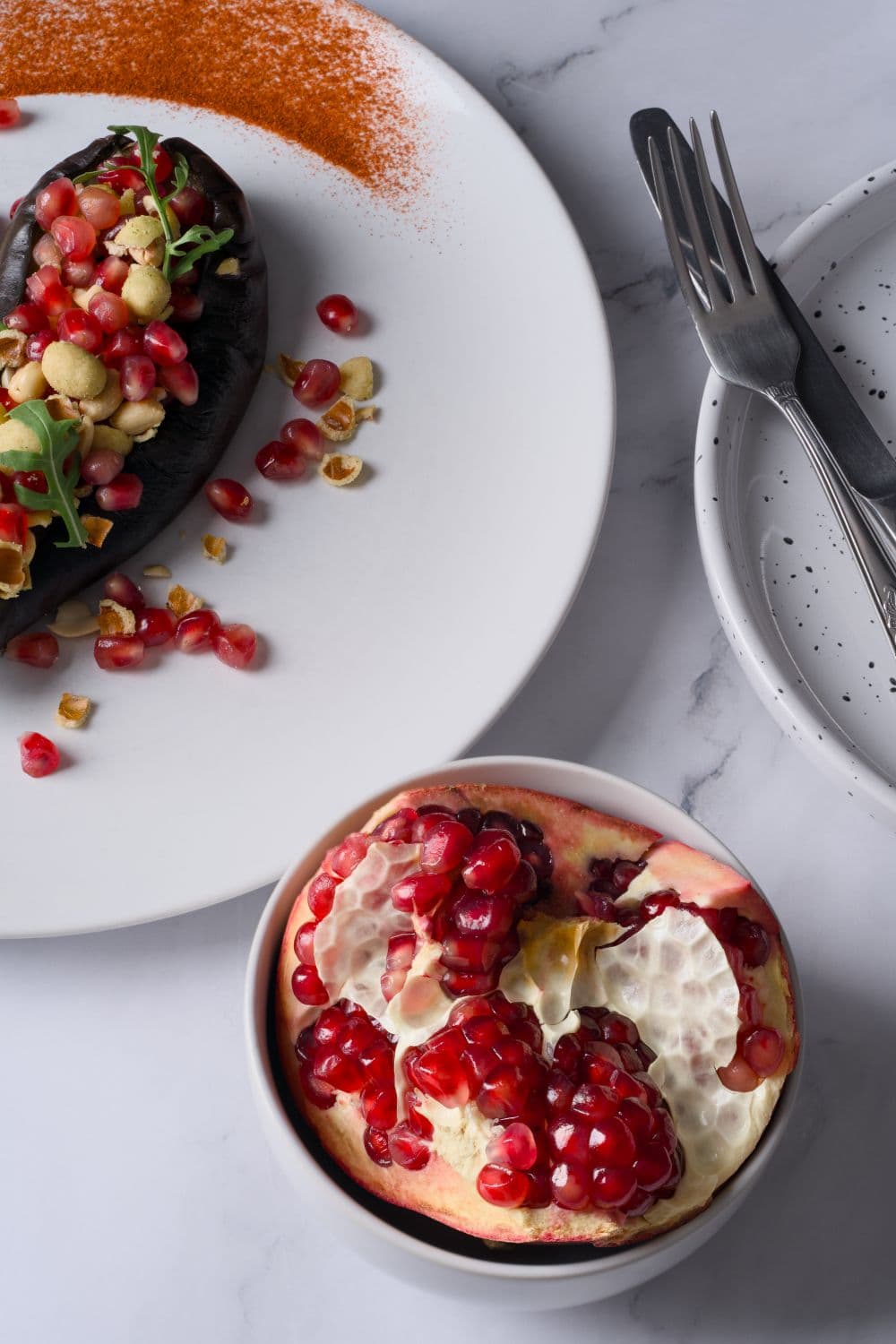
Pomegranate-Glazed Eggplant — Malouf-Inspired
Charred eggplant halves brushed with pomegranate molasses, tahini drizzle, walnuts and pomegranate seeds — Levantine fine dining at home.
⭐Inspired by Greg Malouf · 🇱🇧 LebanonAbout This Recipe
This recipe is inspired by Chef Greg Malouf's career-long mission to translate the home cooking of Lebanon, Syria and Persia into fine-dining preparations without losing its soul. His cookbooks — Saha, Saraban, Arabesque — are widely regarded as the leading English-language references on modern Middle Eastern cuisine. This dish channels his approach: a humble Levantine eggplant preparation elevated through care, contrast (charred vs. silky, sweet vs. tart) and meticulous garnishing. The technique hinges on getting a genuinely deep char on the eggplant's cut side, either under a very hot grill or directly over a flame, since it's that char that builds the smoky bitterness the sweet pomegranate molasses glaze is designed to play against — a lightly browned eggplant reads as merely cooked, not transformed. Scoring the flesh in a crosshatch before charring helps it cook through evenly and lets the glaze and tahini soak into the cuts rather than sitting only on the surface. Pomegranate molasses itself needs a light hand: its concentrated sweet-tart intensity means a thin brushing, applied toward the end of cooking so it caramelises rather than burns, is enough to coat the eggplant without turning the dish cloying. The final scatter of walnuts and fresh pomegranate seeds isn't just decorative — the nuts' crunch and the seeds' juicy pop are the textural counterpoint that makes the eggplant's soft, silky centre register as luxurious rather than mushy.
Ingredients
Serves 4
- 4medium eggplants(halved lengthwise)
- 60 mlextra-virgin olive oil
- 3 tbsppomegranate molasses
- 2 tbsphoney(or maple syrup)
- 1 tspground cumin
- 0.5 tspground cinnamon
- 0.5 tspAleppo pepper
- 120 gtahini paste
- 1lemon(juiced)
- 1 clovegarlic(minced into paste)
- 60 mlice water(for the tahini sauce)
- 60 gwalnuts(toasted and roughly chopped)
- 100 gpomegranate seeds
- 0.25 bunchfresh mint(leaves)
- 0.25 bunchfresh flat-leaf parsley(leaves)
- Maldon sea salt and freshly cracked black pepper
Instructions
- 1
Score and salt
Score the cut surface of each eggplant half in a deep crosshatch pattern. Salt generously and rest 20 minutes — this draws out moisture and bitterness. Pat dry.
- 2
Make the glaze
Whisk olive oil, pomegranate molasses, honey, cumin, cinnamon, Aleppo pepper and a generous pinch of salt. Reserve half.
- 3
Roast hot
Preheat the oven to 220°C. Brush the cut surface of the eggplants generously with half the glaze. Place cut-side up on a tray. Roast 30–35 minutes until deeply caramelised, tender all the way through, and lightly charred at the edges. Brush again with the remaining glaze in the last 5 minutes.
- 4
Make the tahini sauce
In a bowl, whisk the tahini with lemon juice and garlic — it will seize. Slowly whisk in ice water 1 tablespoon at a time — the sauce will magically loosen and turn pale and silky. Season with salt and pepper.
- 5
Plate Malouf-style
Place 2 eggplant halves on each warm plate. Drizzle generously with tahini sauce. Scatter with toasted walnuts and pomegranate seeds. Finish with mint and parsley leaves and a final drizzle of pomegranate molasses. Serve with warm pita.
Did you make this?
Rate it and help other cooks find the recipes that actually work.
One tap to sign in, and we'll save the rating you just picked.
Everything you need to plan your week — free
- Meal calendar
- Grocery list
- AI recipe ideas
Cook this hands-free
Get AI meal plans, step-by-step cooking mode, and your saved recipes in the free Bento app.
Pro Tips
- →
Score deeply — the glaze must penetrate to the centre.
- →
Don't skip the salting — it's what makes the flesh creamy rather than spongy.
- →
Ice water is the secret to silky tahini sauce — never use warm or room temperature.
Variations
- •
With Yogurt: substitute thick Greek yogurt for the tahini sauce.
- •
Stuffed Version: scoop the cooked flesh, mix with tomato and herbs, stuff back, top with feta — a heartier dish.
Storage
Components keep separately for 3 days. Tahini sauce thickens on standing — loosen with water.
History & Origin
Eggplant is one of the foundational vegetables of Levantine cuisine, used across Lebanon, Syria, Palestine and Turkey in dozens of preparations. Greg Malouf's cookbooks have done more than almost any other to introduce these traditions to English-language audiences.
Frequently Asked Questions
What is pomegranate molasses?
Pomegranate molasses is a thick, dark, intensely tart-sweet syrup made by reducing pomegranate juice. Foundational across Lebanese, Syrian and Persian cooking. Sold at Middle Eastern groceries and increasingly major supermarkets; cannot be substituted exactly with regular pomegranate juice.
Why are Greg Malouf's cookbooks important?
His Saha, Saraban, Arabesque, Turquoise and New Feast are widely regarded as the leading English-language references on modern Middle Eastern cuisine. Combining careful regional research, accurate technique and beautifully written context, they have won multiple international cookbook awards including IACP and World Cookbook honours.
What makes Levantine eggplant cooking distinctive?
Eggplant is treated with reverence — salted, often charred over flame, then dressed with abundant tahini, pomegranate and olive oil. The flavour profile combines smoky, creamy and tart — distinct from Italian or Greek eggplant traditions which lean tomato-based.
Where do I buy pomegranate molasses?
Middle Eastern grocers carry it in plastic bottles. Increasingly available at major supermarkets in the international aisle. Brands vary in sweetness — taste before using; you may want to reduce honey if your molasses is on the sweeter side.
Nutrition Facts
Per serving (320g / 11.3 oz) · 4 servings total
Time Summary
Have Questions?
Ask our AI cooking assistant anything about this recipe — substitutions, techniques, scaling.
Chat with AI Chef →Featured in Guides
This recipe is featured in the following curated guides:
More Lebanese Recipes
You Might Also Like
Similar dishes from other cuisines around the world.
Browse by Ingredient
More recipes built around the same core ingredients.
Free Kitchen Tools
Calculators and converters that pair with this page — no signup needed.
Put This Into a Plan
Schedule it, shop for it, and track what you already have.
Read Next
Longer reads that go deeper on the ideas behind this dish.
Community
Join the conversation
Sign in to leave a comment and save your favourite recipes