
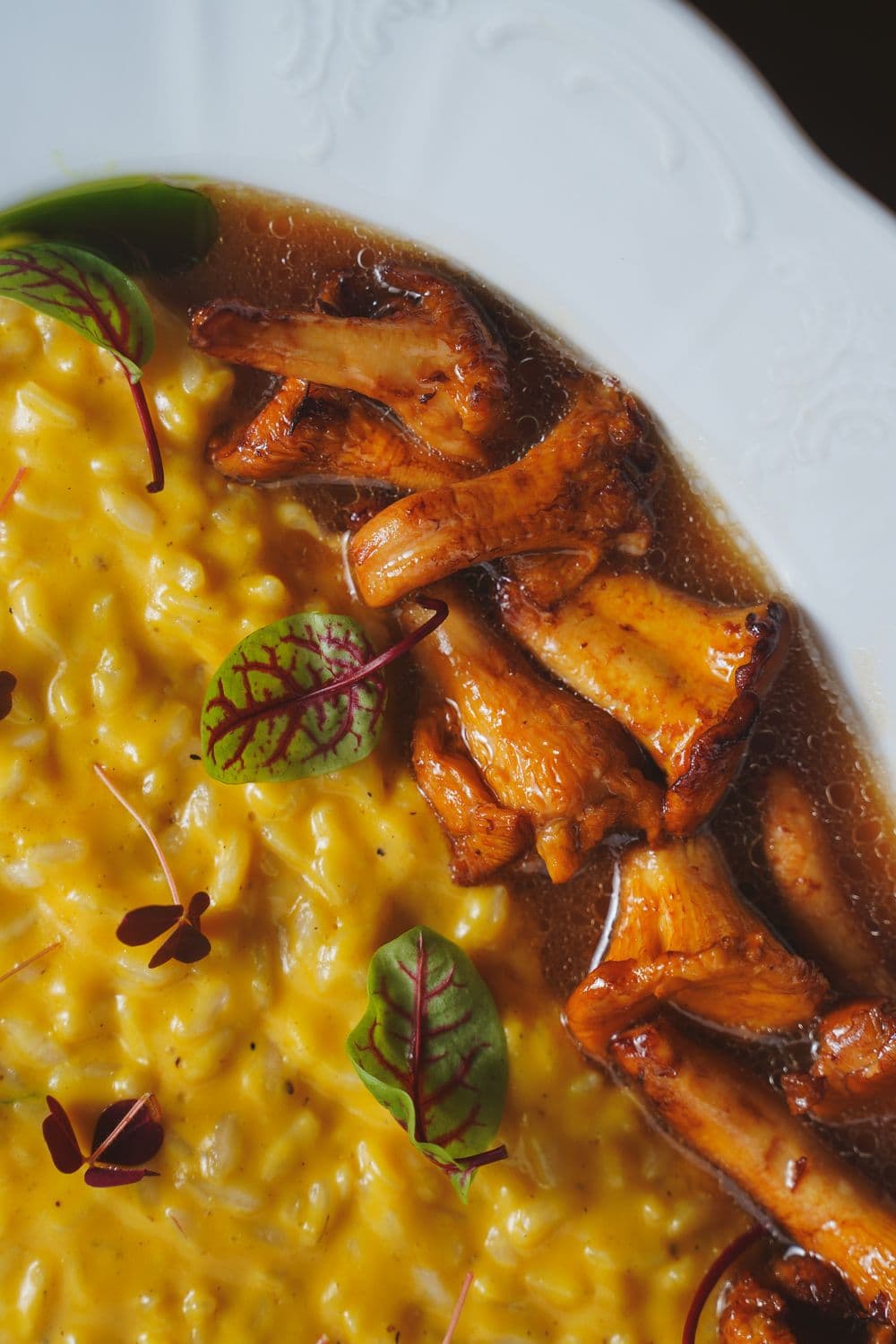
Risotto alla Milanese (Saffron Risotto)
Milan's golden risotto tinted and perfumed with saffron — creamy, buttery and deeply savoury, the classic partner to ossobuco.
About This Recipe
Risotto alla Milanese is the jewel of Lombardy's culinary heritage. Arborio or Carnaroli rice is cooked slowly in stock with white wine, beef bone marrow (in the classical version), saffron and finished with a generous amount of cold butter and Parmesan in the mantecatura — the vigorous stirring-in of cold butter off the heat that gives risotto its characteristic wave-like (all'onda) consistency. The saffron, traditionally steeped in warm white wine or stock before adding, turns the whole dish deep golden yellow and imparts a subtle floral perfume. In Milan, this risotto is inseparable from ossobuco — the braised veal shank — and together they form one of Italy's most iconic pairings. Making risotto demands presence: you cannot walk away for 18 minutes.
Ingredients
Serves 4
- 320 gCarnaroli or Arborio rice
- 1.2 litregood beef or chicken stock, hot
- 150 mldry white wine
- 0.5 gsaffron threads
- 2shallots or onion, finely diced
- 80 gbutter
- 80 gParmesan, finely grated
- 30 gbone marrow (optional, classical)
- to tastesalt
Instructions
- 1
Steep saffron
Steep saffron threads in 3 tablespoons of hot stock or white wine for 10 minutes. Set aside.
- 2
Sauté shallots
Melt 30 g butter (and bone marrow if using) in a wide heavy pan over medium heat. Sauté shallots until soft and translucent, about 5 minutes.
- 3
Toast the rice
Add the rice and stir for 2 minutes until the grains look translucent at the edges and smell toasted.
- 4
Add wine
Pour in the wine and stir until completely absorbed.
- 5
Add stock gradually
Add hot stock one ladleful at a time, stirring constantly and waiting until each addition is absorbed before adding the next. After 12 minutes, stir in the saffron liquid.
- 6
Check texture
Continue adding stock for a total of 18 minutes cooking time. The rice should be al dente — tender but with a slight bite. The mixture should flow like slow lava (all'onda).
- 7
Mantecatura
Remove from heat. Add cold butter (cut into cubes) and Parmesan. Stir and fold vigorously for 1–2 minutes until creamy, glossy and emulsified. Taste and season.
- 8
Serve immediately
Risotto waits for no one. Serve at once in warm bowls.
Did you make this?
Rate it and help other cooks find the recipes that actually work.
One tap to sign in, and we'll save the rating you just picked.
Everything you need to plan your week — free
- Meal calendar
- Grocery list
- AI recipe ideas
Cook this hands-free
Get AI meal plans, step-by-step cooking mode, and your saved recipes in the free Bento app.
Pro Tips
- →
Use warm stock — cold stock lowers the pan temperature and extends cooking time unevenly.
- →
Never stop stirring — risotto needs constant agitation to release starch and build creaminess.
- →
The mantecatura (butter finish) is non-negotiable for authentic creaminess.
- →
Taste and adjust salt at the very end — flavors concentrate as liquids reduce, and a final pinch of flaky salt sharpens the whole dish.
Variations
- •
Serve alongside braised veal ossobuco for the classic Milanese combination.
- •
Add 100 g gorgonzola instead of Parmesan for a rich blue-cheese version.
- •
Vegetarian: swap the protein for roasted king oyster mushrooms, smoked tofu or cooked chickpeas — adjust seasoning slightly upward to compensate.
- •
Spicier: add a finely chopped fresh chile or a teaspoon of crushed Aleppo/Urfa pepper to the aromatics for warm, layered heat instead of a single sharp hit.
Storage
Risotto is best eaten immediately. Leftover risotto can be fried into arancini (rice balls).
History & Origin
Saffron risotto dates to at least the 16th century in Milan. Legend attributes its creation to a Flemish glassmaker working on the Duomo who used saffron (then used as a pigment) in a wedding feast rice dish as a joke, creating an accidental masterpiece.
Frequently Asked Questions
Can I use a cheaper saffron substitute?
Turmeric can mimic the colour but not the flavour. For true risotto alla Milanese, saffron is non-negotiable.
What rice should I use?
Carnaroli is preferred by most Italian chefs for its ability to absorb stock while keeping a firm centre. Arborio is easier to find and also excellent.
Can I make this ahead of time?
Yes — most of the components can be prepared up to a day in advance and refrigerated separately. Reheat gently and assemble just before serving so textures stay distinct.
What can I substitute if I don't have all the ingredients?
Stay close to the role each ingredient plays: swap aromatics for similar ones (shallot for onion, lime for lemon), and keep the fat-acid-salt balance intact. Spice blends can usually be approximated with what's in the cupboard.
Nutrition Facts
Per serving · 4 servings total
Time Summary
Have Questions?
Ask our AI cooking assistant anything about this recipe — substitutions, techniques, scaling.
Chat with AI Chef →Featured in Guides
This recipe is featured in the following curated guides:
More Italian Recipes
You Might Also Like
Similar dishes from other cuisines around the world.
Browse by Ingredient
More recipes built around the same core ingredients.
Free Kitchen Tools
Calculators and converters that pair with this page — no signup needed.
Put This Into a Plan
Schedule it, shop for it, and track what you already have.
Read Next
Longer reads that go deeper on the ideas behind this dish.
Community
Join the conversation
Sign in to leave a comment and save your favourite recipes