
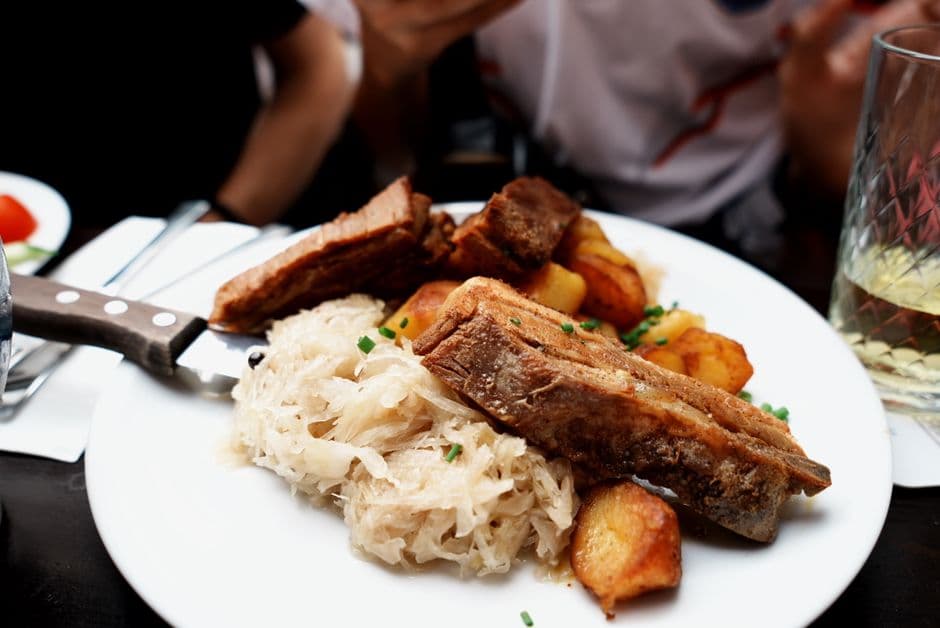
Sauerbraten
Germany's celebrated sweet-and-sour pot roast — beef marinated for days in a spiced wine vinegar pickle, then braised until tender and finished with a rich, tangy gravy.
About This Recipe
Sauerbraten is one of Germany's most storied dishes, a pot roast with ancient origins that is as much about patience and planning as it is about cooking. The name translates as 'sour roast' — the defining step is a long marinade in a mixture of wine, vinegar, vegetables and spices that tenderises the meat and infuses it with a complex, sweet-and-sour character that is unlike any other pot roast in the world. After marinating for two to seven days, the beef is braised low and slow in the same liquid, which is then thickened with crushed gingerbread (Lebkuchen) or raisins and spices to create the distinctive sweet-sour gravy that makes Sauerbraten unforgettable. Regional variations abound across Germany — Rhineland Sauerbraten uses more raisins and wine, while Swabian versions are more vinegary — but all share that remarkable depth of flavour.
Ingredients
Serves 6
- 1.5 kgbeef topside or chuck roast
- 400 mlred wine vinegar
- 400 mldry red wine
- 400 mlwater
- 2 mediumonions(sliced)
- 2carrots(sliced)
- 2 stalkscelery(sliced)
- 8whole cloves
- 8black peppercorns
- 4bay leaves
- 1 teaspoonjuniper berries(lightly crushed)
- 2 tablespoonsvegetable oil
- 3 tablespoonssugar
- 60 gLebkuchen or gingerbread biscuits(crushed, for the gravy)
- 50 graisins(for the Rhineland-style gravy)
Instructions
- 1
Prepare the marinade
Combine the vinegar, red wine, water, onions, carrots, celery, cloves, peppercorns, bay leaves and juniper berries in a large saucepan. Bring to a boil, simmer for 5 minutes, then cool completely.
- 2
Marinate the beef
Place the beef in a non-reactive container (glass or ceramic). Pour the cooled marinade over it — the beef should be mostly submerged. Cover and refrigerate for 3–5 days (minimum 2 days), turning the meat once or twice daily.
Longer marinating gives a more pronounced sour flavour and more tender meat. 5 days is ideal.
- 3
Brown the beef
Remove the beef from the marinade and pat dry. Strain and reserve the marinade. Heat oil in a large Dutch oven over medium-high heat. Brown the beef well on all sides, about 5 minutes per side.
- 4
Braise
Add the strained vegetables from the marinade and pour in enough of the strained marinade liquid to come halfway up the meat. Bring to a boil, cover tightly, and cook in an oven at 160°C (320°F) for 2.5–3 hours until very tender. Turn the meat halfway through.
- 5
Make the gravy
Remove the meat and rest under foil. Strain the braising liquid into a saucepan, discarding the vegetables. Bring to a boil and add the crushed gingerbread, raisins and sugar. Simmer for 10 minutes, stirring, until the gravy is thick, glossy and sweet-sour. Adjust seasoning.
- 6
Slice and serve
Slice the beef against the grain into thick portions. Ladle the gravy over the meat. Serve with Kartoffelklöße (potato dumplings), Rotkohl (braised red cabbage) and Spatzle or boiled potatoes.
Did you make this?
Rate it and help other cooks find the recipes that actually work.
One tap to sign in, and we'll save the rating you just picked.
Everything you need to plan your week — free
- Meal calendar
- Grocery list
- AI recipe ideas
Cook this hands-free
Get AI meal plans, step-by-step cooking mode, and your saved recipes in the free Bento app.
Pro Tips
- →
Do not rush the marinade — the unique sweet-sour character only develops over days, not hours.
- →
Crushed gingerbread (Lebkuchen) is the traditional thickener for the Rhineland gravy — it adds sweetness, spice and body simultaneously.
- →
The gravy should have a clear sweet-sour balance — add more sugar or a splash of vinegar at the end to fine-tune.
- →
Taste and adjust salt at the very end — flavors concentrate as liquids reduce, and a final pinch of flaky salt sharpens the whole dish.
Variations
- •
Rhineland style: more raisins and a sweeter gravy, sometimes with a small piece of Pumpernickel.
- •
Swabian style: less sweet, more vinegary, served with Spätzle.
- •
Some households use horsemeat (Pferdefleisch) in the traditional recipe — still found in some German regions.
- •
Vegetarian: swap the protein for roasted king oyster mushrooms, smoked tofu or cooked chickpeas — adjust seasoning slightly upward to compensate.
Storage
Sauerbraten actually improves after 1–2 days in the fridge as the flavours meld. Refrigerate for up to 4 days. Reheat gently in the gravy. Freezes well for up to 3 months.
History & Origin
Sauerbraten is one of Germany's oldest recorded dishes, with roots in medieval preservation techniques — the vinegar marinade was originally a practical way to preserve meat and tenderise tough cuts before refrigeration. The dish appears in German cookbooks from the 16th century. Different regions developed their own versions over the centuries, with Rhineland (Düsseldorf) and Swabia (Stuttgart area) being the most famous. Sauerbraten is considered by many Germans and culinary historians to be Germany's national dish, appearing alongside Schnitzel and Bratwurst as the cornerstones of German gastronomy.
Frequently Asked Questions
Can I speed up the marinade to just overnight?
An overnight (12-hour) marinade will give some flavour, but the signature sweet-sour depth and tenderising effect of Sauerbraten requires at least 48 hours and ideally 3–5 days. This is not a dish to rush.
What if I cannot find Lebkuchen?
Crush any spiced gingerbread biscuit — the flavour profile is similar. Alternatively, use 2 tablespoons of dark brown sugar plus a pinch each of cinnamon, cloves and allspice to approximate the effect.
Can I make this ahead of time?
Yes — most of the components can be prepared up to a day in advance and refrigerated separately. Reheat gently and assemble just before serving so textures stay distinct.
What can I substitute if I don't have all the ingredients?
Stay close to the role each ingredient plays: swap aromatics for similar ones (shallot for onion, lime for lemon), and keep the fat-acid-salt balance intact. Spice blends can usually be approximated with what's in the cupboard.
Nutrition Facts
Per serving (420g / 14.8 oz) · 6 servings total
Time Summary
Have Questions?
Ask our AI cooking assistant anything about this recipe — substitutions, techniques, scaling.
Chat with AI Chef →Featured in Guides
This recipe is featured in the following curated guides:
More German Recipes
You Might Also Like
Similar dishes from other cuisines around the world.
Browse by Ingredient
More recipes built around the same core ingredients.
Free Kitchen Tools
Calculators and converters that pair with this page — no signup needed.
Put This Into a Plan
Schedule it, shop for it, and track what you already have.
Read Next
Longer reads that go deeper on the ideas behind this dish.
Community
Join the conversation
Sign in to leave a comment and save your favourite recipes