
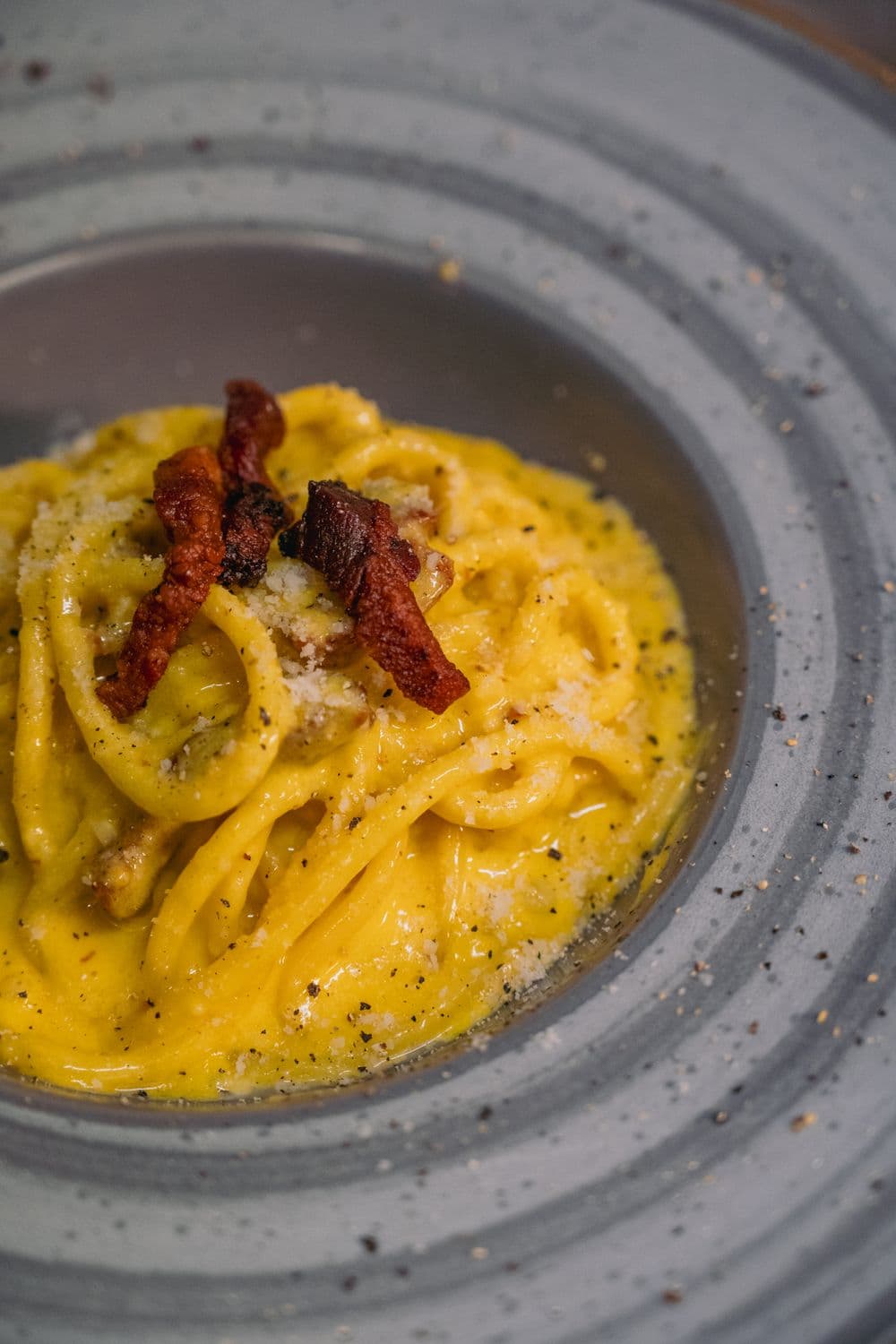
Spaghetti Carbonara (Authentic Roman Recipe)
The real Roman carbonara — silky egg and Pecorino Romano sauce, crispy guanciale, no cream ever. A masterclass in technique over ingredients.
About This Recipe
Authentic Roman carbonara has exactly five ingredients: spaghetti, guanciale, eggs (whole plus yolks), Pecorino Romano and black pepper. No cream, no garlic, no onion, no peas. The sauce is created by the emulsification of beaten eggs and cheese with starchy pasta water and the residual heat of the cooked pasta — never direct heat, which would scramble the eggs. The result is a glossy, rich, deeply savoury coating that clings to every strand. Guanciale (cured pig's cheek) renders out its fat and becomes crispy-edged with a yielding centre, quite unlike pancetta or bacon. The technique sounds simple but requires confidence: add the egg mixture off the heat, working quickly and tossing constantly to build the emulsion. Carbonara is one of Rome's four canonical pasta dishes (along with cacio e pepe, gricia and amatriciana) and is a source of fierce civic pride.
Ingredients
Serves 4
- 400 gspaghetti
- 200 gguanciale (or pancetta as substitute)
- 4egg yolks
- 2whole eggs
- 100 gPecorino Romano, finely grated
- 50 gParmesan, finely grated (optional blend)
- 2 tspfreshly ground black pepper
- to tastefine salt for pasta water
Instructions
- 1
Prepare egg mixture
Beat egg yolks and whole eggs together in a bowl. Add most of the Pecorino (reserving some for serving) and plenty of black pepper. Mix into a thick paste — it will loosen later with pasta water.
- 2
Cook guanciale
Cut guanciale into lardons or strips. Cook in a large frying pan over medium heat with no added oil — the fat will render out naturally. Cook until golden and crispy at the edges, about 8–10 minutes. Remove from heat and set the pan aside (keep the rendered fat in the pan).
- 3
Cook pasta
Cook spaghetti in well-salted boiling water until al dente. Reserve at least 200 ml of starchy pasta water before draining.
- 4
Combine pasta and guanciale
Transfer drained pasta immediately into the pan with the guanciale and rendered fat. Toss over low heat for 30 seconds to coat the pasta in the fat.
- 5
Add egg mixture
Remove the pan completely from the heat. Add the egg-cheese mixture and 3–4 tablespoons of pasta water. Toss vigorously and continuously for 1–2 minutes, adding pasta water a splash at a time until the sauce is glossy, creamy and coats every strand. The residual heat cooks the eggs — do not put back on the flame.
- 6
Serve immediately
Divide between warm bowls. Top with the remaining Pecorino and a final grind of black pepper. Serve at once.
Did you make this?
Rate it and help other cooks find the recipes that actually work.
One tap to sign in, and we'll save the rating you just picked.
Everything you need to plan your week — free
- Meal calendar
- Grocery list
- AI recipe ideas
Cook this hands-free
Get AI meal plans, step-by-step cooking mode, and your saved recipes in the free Bento app.
Pro Tips
- →
Temperature control is everything — if the eggs scramble, the pan was too hot. Work quickly off the heat.
- →
Starchy pasta water is your secret weapon: it both loosens and emulsifies the sauce.
- →
Use freshly grated (not pre-grated) Pecorino — the texture and flavour are completely different.
- →
Taste and adjust salt at the very end — flavors concentrate as liquids reduce, and a final pinch of flaky salt sharpens the whole dish.
Variations
- •
Rigatoni carbonara: a valid Roman alternative, with the sauce collecting inside the tubes.
- •
All-yolk carbonara: using only yolks (6–8 for 4 servings) produces a richer, more stable sauce.
- •
Vegetarian: swap the protein for roasted king oyster mushrooms, smoked tofu or cooked chickpeas — adjust seasoning slightly upward to compensate.
- •
Spicier: add a finely chopped fresh chile or a teaspoon of crushed Aleppo/Urfa pepper to the aromatics for warm, layered heat instead of a single sharp hit.
Storage
Carbonara is a dish that must be eaten immediately — it does not reheat or store well.
History & Origin
Carbonara's exact origin is debated. The most credible theory places it in Rome after World War II, when American soldiers introduced bacon and eggs to local cooks. The Roman culinary establishment absorbed it and refined it, replacing bacon with guanciale and removing the eggs' American influence toward the pure, severe version known today.
Frequently Asked Questions
Can I use cream?
No. Adding cream is widely considered the cardinal sin of carbonara. The creaminess comes entirely from correctly emulsified eggs and cheese.
Can I substitute pancetta for guanciale?
Yes, pancetta is an acceptable substitute. Bacon works in a pinch but has a smoked flavour that alters the dish significantly.
My eggs scrambled — what went wrong?
The pan was too hot when you added the egg mixture. Always remove completely from heat before adding, and work fast while tossing.
Can I make this ahead of time?
Yes — most of the components can be prepared up to a day in advance and refrigerated separately. Reheat gently and assemble just before serving so textures stay distinct.
Nutrition Facts
Per serving · 4 servings total
Time Summary
Have Questions?
Ask our AI cooking assistant anything about this recipe — substitutions, techniques, scaling.
Chat with AI Chef →Featured in Guides
This recipe is featured in the following curated guides:
More Italian Recipes
You Might Also Like
Similar dishes from other cuisines around the world.
Browse by Ingredient
More recipes built around the same core ingredients.
Free Kitchen Tools
Calculators and converters that pair with this page — no signup needed.
Put This Into a Plan
Schedule it, shop for it, and track what you already have.
Read Next
Longer reads that go deeper on the ideas behind this dish.
Community
Join the conversation
Sign in to leave a comment and save your favourite recipes