
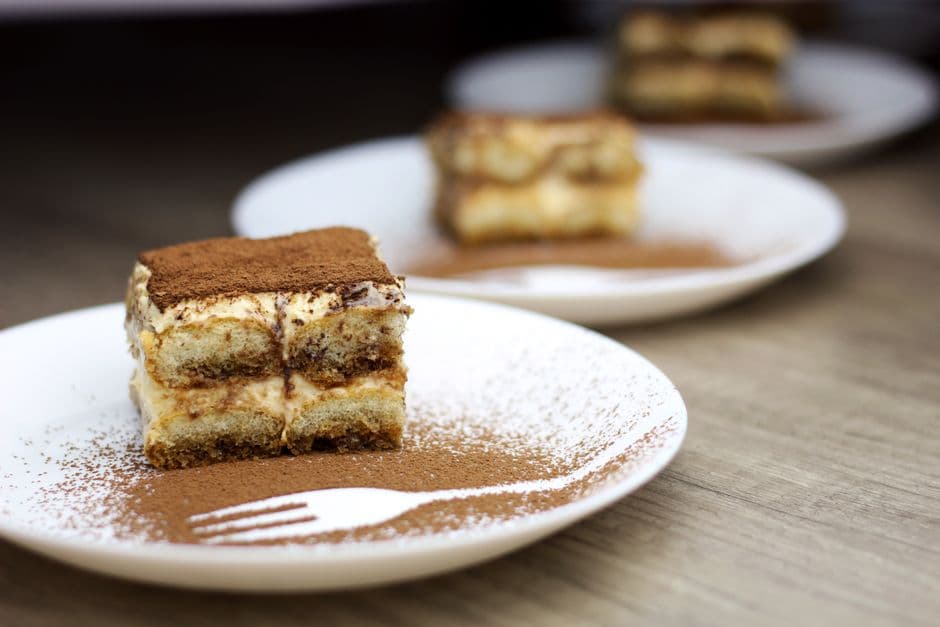
Classic Tiramisu
The ultimate Italian coffee dessert — layers of espresso-soaked ladyfingers and whipped mascarpone cream, dusted with bittersweet cocoa.
About This Recipe
Tiramisu, meaning 'pick me up' in Italian, is one of Italy's most beloved exports. Born in the Veneto region in the 1960s or 70s, it layers delicate savoiardi biscuits drenched in strong espresso with a cloud-like mascarpone cream enriched with egg yolks and marsala wine. The dessert must be made ahead and chilled, allowing the flavours to meld into something far greater than the sum of its parts. No baking required, yet the result is a masterpiece of Italian pastry tradition.
Ingredients
Serves 8
- 6large egg yolks
- 120 gcaster sugar
- 500 gmascarpone cheese(room temperature)
- 300 mldouble cream
- 3 tbspmarsala wine or dark rum
- 300 mlstrong espresso(cooled)
- 2 tbspespresso liqueur or coffee liqueur(optional)
- 200 gsavoiardi ladyfinger biscuits(about 24–28 biscuits)
- 3 tbspgood-quality cocoa powder(for dusting)
- 30 gdark chocolate(optional, finely grated)
Instructions
- 1
Whip the egg yolk base
In a large heatproof bowl set over a pan of barely simmering water (bain-marie), whisk the egg yolks and caster sugar together vigorously for 8–10 minutes until the mixture is pale, thick and has doubled in volume. The whisk should leave a ribbon trail when lifted. Remove from heat and stir in the marsala wine. Allow to cool for 10 minutes.
The bain-marie gently cooks the yolks to a safe temperature while keeping them smooth and creamy. Do not let the bowl touch the water.
- 2
Fold in mascarpone
Add the room-temperature mascarpone to the cooled yolk mixture. Using a spatula or hand mixer on low speed, fold until completely smooth with no lumps. Ensure the mascarpone is at room temperature or it will create lumps when mixed with the yolks.
- 3
Whip and fold in cream
In a separate cold bowl, whip the double cream to soft peaks — it should hold its shape but still look silky and light. Gently fold the whipped cream into the mascarpone mixture in two stages, using a large metal spoon in a figure-eight motion to retain as much air as possible. The cream should be well combined but still airy.
- 4
Prepare the coffee soak
Combine the cooled espresso with the coffee liqueur in a shallow dish wide enough to dip the biscuits. The soak should be coffee-forward but not overpowering. Taste it — if using unsweetened espresso you may add a teaspoon of sugar to balance the bitterness.
Dip each biscuit for just 1–2 seconds per side. Over-soaking makes the layers soggy and the tiramisu will collapse when served.
- 5
Layer the tiramisu
Working quickly, dip ladyfingers one at a time and arrange them in a single layer in the base of a 23×33cm (9×13-inch) dish or individual glasses. Spread half the mascarpone cream evenly over the biscuit layer. Repeat with a second layer of dipped biscuits, then cover with the remaining cream, smoothing the top flat with a palette knife.
- 6
Chill and dust
Cover the dish tightly with clingfilm and refrigerate for at least 6 hours, ideally overnight. The resting time is essential — it allows the biscuits to fully absorb the cream and coffee, creating the characteristic melt-in-the-mouth texture. Just before serving, dust generously with cocoa powder through a fine-mesh sieve and scatter grated dark chocolate if using.
Did you make this?
Rate it and help other cooks find the recipes that actually work.
One tap to sign in, and we'll save the rating you just picked.
Everything you need to plan your week — free
- Meal calendar
- Grocery list
- AI recipe ideas
Cook this hands-free
Get AI meal plans, step-by-step cooking mode, and your saved recipes in the free Bento app.
Pro Tips
- →
Use genuine Italian savoiardi (Pavesini are too thin and collapse). The thicker biscuits absorb the coffee without becoming mushy.
- →
Make it the day before serving — tiramisu genuinely improves overnight as the layers meld.
- →
If serving to children or those avoiding alcohol, replace marsala with 2 extra tablespoons of espresso and a teaspoon of vanilla extract.
- →
For clean slices, run a warm knife under hot water and wipe dry between each cut.
Variations
- •
Strawberry tiramisu: replace coffee with strawberry coulis and add fresh sliced strawberries between layers.
- •
Limoncello tiramisu: use limoncello in place of marsala and add lemon zest to the mascarpone cream for a bright, summery version.
- •
Chocolate tiramisu: spread a thin layer of Nutella between the mascarpone layers for an indulgent chocolate twist.
- •
Vegetarian: swap the protein for roasted king oyster mushrooms, smoked tofu or cooked chickpeas — adjust seasoning slightly upward to compensate.
Storage
Store covered in the refrigerator for up to 3 days. The texture remains best within the first 48 hours. Tiramisu can be frozen (without the cocoa topping) for up to 1 month — thaw overnight in the fridge and dust with cocoa just before serving.
History & Origin
The origins of tiramisu are passionately disputed between Treviso and Friuli-Venezia Giulia. The most cited origin story credits Le Beccherie restaurant in Treviso, where pastry chef Loli Linguanotto allegedly created it in the early 1970s. The dessert became a global phenomenon in the 1980s as Italian restaurants spread worldwide, and it remains one of the most searched-for dessert recipes on the internet.
Frequently Asked Questions
Is tiramisu safe to eat with raw eggs?
Traditional tiramisu uses a cooked sabayon method (egg yolks over a bain-marie), which brings the yolks to a safe temperature above 70°C (160°F). This recipe follows that approach. If you are pregnant, immunocompromised, or serving very young children, use pasteurised eggs as an extra precaution. Alternatively, use a fully cooked custard base as a safe substitute for the yolk mixture.
Can I make tiramisu without mascarpone?
Mascarpone is central to authentic tiramisu and hard to replicate exactly. In a pinch, you can blend 225g full-fat cream cheese with 60ml sour cream and 60ml double cream to approximate the richness and tang of mascarpone. The flavour will be slightly tangier and the texture a little denser, but the result is still delicious. Avoid substituting with ricotta, which is too grainy.
Why is my tiramisu too runny or too stiff?
Runny tiramisu is usually caused by over-soaking the biscuits, under-whipping the cream, or mascarpone that was too warm. Stiff or grainy tiramisu typically results from over-whipping the cream to stiff peaks or cold mascarpone that seizes when folded. Whip the cream to soft peaks only, ensure the mascarpone is room temperature, and keep all components cool but not cold when assembling.
Can I make this ahead of time?
Yes — most of the components can be prepared up to a day in advance and refrigerated separately. Reheat gently and assemble just before serving so textures stay distinct.
Nutrition Facts
Per serving (180g / 6.3 oz) · 8 servings total
Time Summary
Have Questions?
Ask our AI cooking assistant anything about this recipe — substitutions, techniques, scaling.
Chat with AI Chef →Featured in Guides
This recipe is featured in the following curated guides:
More Italian Recipes
You Might Also Like
Similar dishes from other cuisines around the world.
Browse by Ingredient
More recipes built around the same core ingredients.
Free Kitchen Tools
Calculators and converters that pair with this page — no signup needed.
Put This Into a Plan
Schedule it, shop for it, and track what you already have.
Read Next
Longer reads that go deeper on the ideas behind this dish.
Community
Join the conversation
Sign in to leave a comment and save your favourite recipes