
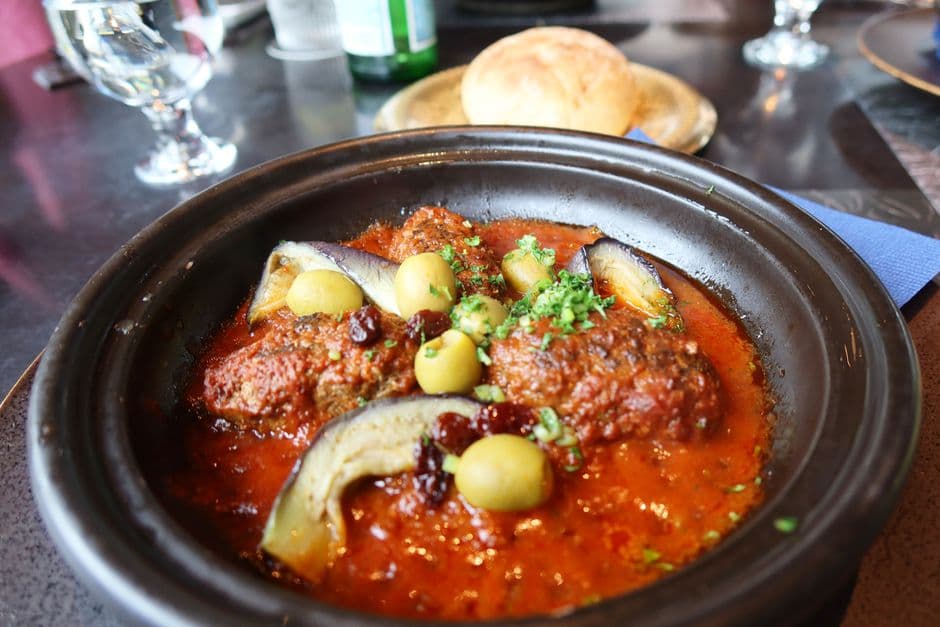
Lamm-Tagine mit konservierter Zitrone & Oliven
Ein langsam-geschmortes marokkanisches Lamm-Eintopf perfumiert mit warmen Gewürzen, konservierter Zitrone und grüner Oliven.
Über dieses Rezept
Die Tagine ist Marokkos am meisten charakteristisches Gericht — beide der Name des Ton-konischen Kochgefäßes und der langsam-geschmorten Eintopf gekocht innerhalb davon. Die einzigartige Form des Tagine-Deckels erlaubt Wasserdampf zu zirkulieren und zu kondensieren, Feuchte zum Eintopf zurück zu bringen und außergewöhnlich tendering Fleisch mit minimalem Flüssigkeit zu produzieren. Diese Lamm-Version mit konservierter Zitrone und grüner Oliven ist ein Klassiker von marokkanischen Haushalts-Kochen, besonders um die Städte Fez und Marrakech. Die konservierten Zitronen, mit Salz und ihrem eigenen Saft Dutzende geheilt, bieten eine komplexe, mellow Zitrus-Geschmack, den frische Zitrone nicht replizieren kann.
Zutaten
Dient 4
- 800 gLamm-Schulter mit Knochen(in große Stücke schneiden)
- 3 ELOlivenöl
- 2 mittlereZwiebeln(gerieben oder fein gehackt)
- 4 ZehenKnoblauch(gehackt)
- 1 TLgemahlene Ingwer
- 1 TLgemahlene Kreuzkümmel
- 1 TLgemahlene Koriander
- 0.5 TLgemahlene Kurkuma
- 0.5 TLgemahlene Zimt
- 0.5 TLschwarzer Pfeffer
- 0.25 TLCayenne-Pfeffer
- 400 mlHuhn oder Lamm-Brühe
- 1 ganzkonservierte Zitrone(nur Haut, gespült und fein geschnitten)
- 150 ggrüne Oliven(entkernt)
- 1 großeBund frischer Koriander(gehackt)
- 1 großeBund frischer flach-Blatt-Petersilie(gehackt)
- 1 TLSalz(zum Abschmecken)
Anleitung
- 1
Braun das Lamm
Olivenöl in einer Tagine oder schwerem Topf über mittlerer-hoher Hitze erhitzen. Lamm-Stücke mit Salz und das halbe würze-Blend würzen. In Chargen auf allen Seiten für 4–5 Minuten braten, bis tief golden. Entfernen und beiseite legen. Beilen Sie diesen Schritt nicht — die karamelisierte Kruste fügt essentiell-Tiefe hinzu.
In Chargen braten verhindert das Drängen und Dämpfen; Sie wollen einen Sear, nicht einen Eintopf in dieser Phase.
- 2
Bauen Sie die würzige Zwiebel-Basis
Im selben Gefäß, Hitze mittler reduzieren und geriebene Zwiebeln hinzufügen. 8 Minuten kochen, rührend, bis weich und golden. Knoblauch und verbleibende Gewürze hinzufügen, für 1–2 Minuten rührend, bis duftend. Die würzige Zwiebel-Basis ist das Herz des Tagine-Geschmacks.
- 3
Schmoren Sie das Lamm
Gebratenes Lamm zurück zum Topf bringen. Über der Brühe ausgießen — die Flüssigkeit sollte etwa halbwegs bis zum Fleisch reichen. Halbe des gehackten Krautes hinzufügen. Zum Köcheln bringen, fest bedecken und über sehr niedriger Hitze für 1 Stunde 30 Minuten kochen, bis das Lamm sehr tendering und fast fällt.
- 4
Konservierte Zitrone und Oliven hinzufügen
Die geschnittene konservierte Zitrone-Haut und grüne Oliven zur Tagine hinzufügen. Sanft rühren und für weitere 15 Minuten kochen, um den Sauce zu reduzieren und die Geschmäcke zu melden. Die Oliven sollten durchgewärmt werden und die Zitrone über den ganzen verteilt werden.
Verwenden Sie nur die Haut der konservierten Zitrone — verwerfen Sie das Pulpe, welche bitter und zu salzig sein kann.
- 5
Finish und servieren
Probieren und würzung anpassen. Zerstreuer verbleiben frische Krautes über der Oberseite. Direkt aus der Tagine oder einem großen Servier-Gericht servieren, begleitet durch Couscous oder warmen Flatbread, um die würzige Sauce zu einweichen.
Haben Sie das gekocht?
Bewerte es und hilf anderen, die Rezepte zu finden, die wirklich funktionieren.
Einmal anmelden, und wir speichern die Bewertung, die Sie gerade gewählt haben.
Alles, was Sie für Ihre Wochenplanung brauchen — kostenlos
- Essensplaner
- Einkaufsliste
- KI-Rezeptideen
Behalten Sie im Blick, was Sie essen
Fotografieren Sie Ihre Mahlzeit, um Kalorien und Makros zu erfassen, nutzen Sie Fasten-Timer und tracken Sie Ihr Wasser – in der kostenlosen SnapCal-App.
Profi-Tipps
- →
Wenn eine Ton-Tagine verwenden, 24 Stunden in Wasser einweichen, bevor zum ersten Mal verwenden, um Risse zu vermeiden.
- →
Über die niedrigst mögliche Hitze kochen — eine Tagine sollte kaum köcheln, nicht köcheln.
- →
Konservierte Zitronen sind an Nahost- und Spezial-Lebensmittelgeschäften erhältlich; 4 Wochen vor machen Sie Ihre eigene.
- →
Lamm-Schulter ist präferiert über-Bein — sie hat mehr Fett und verbindetes Gewebe, das in Reichtum schmilzt.
Variationen
- •
Huhn-Tagine: Ersetzen Sie Lamm mit Huhn mit Knochen-Schenkel und reduzieren Sie die Kochzeit auf 45 Minuten.
- •
Lamm und Kichererbse-Tagine: Fügen Sie eine kann entwässerte Kichererbsen in den finalen 20 Minuten für extra Herzhaftheit hinzu.
- •
Gemüse-Tagine: Ersetzen Sie Lamm mit Wurzel-Gemüse (Pastinake, Süßkartoffel, Möhre) und verdoppeln Sie die Gewürze.
- •
Vegetarisch: Tauschen Sie das Protein für geröstete König-Austernpilze, geräucherten Tofu oder gekochte Kichererbsen — würzen Sie leicht nach oben, um auszugleichen.
Lagerung
Tagine verbessert sich über Nacht, da die Geschmäcke vertieften. Gekühlt für bis zu 3 Tage. Sanft erneut erhitzen über niedriger Hitze mit einem Hauch Wasser. Friert gut für bis zu 2 Monate — Oliven frisch beim Erneut-Erhitzen hinzufügen.
Geschichte und Herkunft
Tagine-Kochen stammt mindestens ein tausend Jahre zurück in Nordafrika, mit dem Ton-Gefäß idealerweise für die offene Feuer- oder Holzkohle-Brasero-Kochmethoden der Berber-Gemeinden geeignet. Die Kombination von Lamm, konservierter Zitrone und Oliven spiegelt die marokkanische Tradition der Verwendung von fermentierten und konservierten Zutaten wider, die für Wüsten-Klima-Konservierung entwickelt. Das Gericht bleibt zentral zu marokkanischen sozialen Gelegenheiten und Familien-Versammlungen.
Häufig gestellte Fragen
Brauche ich einen echten Tagine-Topf, um dieses Gericht zu machen?
Nein — eine schwere-unterstützte Kasserolle oder Holländischer Ofen mit fest-sitzendes Deckel arbeitet sehr gut. Der Schlüssel behält eine konsistente, sehr niedriger Hitze und verhindert Wasserdampf vom Entkommen. Ein echtes Ton-Tagine fügt eine subtile Irdische hinzu und erlaubt noch niedrigere Hitze-Verteilung, aber die Ergebnisse sind in einem guten emalierten Guss-Eisen-Topf ausgezeichnet.
Kann ich konservierte Zitrone mit frische Zitrone ersetzen?
Frische Zitrone-Saft und -Zest replizieren nicht die komplexe, mellow, fermentierte Geschmack der konservierten Zitronen. Sie können eine raue Näherung machen, indem Sie frische Zitrone-Zest in gesalzenem Wasser für 10 Minuten köcheln lassen, aber es ist ziemlich anders. Für das authentischste Ergebnis, bereiten Sie konservierte Zitronen 4 Wochen voraus vor oder kaufen Sie — sie sind eine transformative Zutat lohnenswert zu haben.
Warum ist meine Tagine-Sauce zu wassrig?
Eine wassrig-Sauce bedeutet normalerweise zu viel Flüssigkeit wurde hinzugefügt oder die Hitze war zu hoch, verhindernde Sache Konzentration. Für den finalen 20–30 Minuten, entfernen Sie den Deckel und Hitze-Erhöhung leicht, um zu reduzieren. Die Sauce sollte eine glänzende, reiche Überzug-Konsistenz statt einer dünnen Brühe sein. Geriebene Zwiebel (statt gehackt) hilft auch tendering die Basis natürlich.
Kann ich dies im Voraus machen?
Ja — die meisten Komponenten können bis zu 1 Tag vor und separat gekühlt werden. Sanft erneut erhitzen und kurz vor dem Servieren zusammenstellen, damit Texturen unterschiedlich bleiben.
Nährwertangaben
Pro Portion (380g) · 4 Portionen insgesamt
Zeitzusammenfassung
Haben Sie Fragen?
Fragen Sie unseren KI-Kochassistenten zu diesem Rezept – Ersetzungen, Techniken, Skalierung.
Chatten Sie mit AI Chef →In Reiseführern vorgestellt
Dieses Rezept ist in den folgenden kuratierten Leitfäden enthalten:
Weitere Marokkanische Rezepte
Das könnte Ihnen auch gefallen
Ähnliche Gerichte aus anderen Küchen der Welt.
Nach Zutat stöbern
Weitere Rezepte rund um dieselben Hauptzutaten.
Kostenlose Küchen-Tools
Rechner und Umrechner, die zu dieser Seite passen — ohne Anmeldung.
Daraus einen Plan machen
Einplanen, einkaufen und im Blick behalten, was schon da ist.
Weiterlesen
Ausführliche Artikel zu den Ideen hinter diesem Gericht.
Gemeinschaft
Beteiligen Sie sich an der Unterhaltung
Melden Sie sich an, um einen Kommentar zu hinterlassen und Ihre Lieblingsrezepte zu speichern