
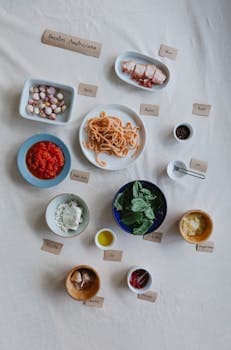
Pasta all'Amatriciana (Römische Tomaten- und Guanciale-Pasta)
Roms anderes großes Pasta — rauchiger Guanciale, San Marzano-Tomaten, Pecorino Romano und eine Prise Chile. Kühn, einfach und zutiefst befriedigend.
Über dieses Rezept
Amatriciana stammt aus Amatrice, einer Stadt in den Bergen östlich von Rom, und ist eine der kanonischen Pastasaucen von Rom (neben Carbonara, Cacio e Pepe und Gricia). Die Basis ist Guanciale (gepökeltes Schweinewangenfleisch), das in seinem eigenen Fett mit einem Spritzer Weißwein gerendert wird, kombiniert mit San Marzano-Tomaten, Pecorino Romano und getrockneter Chile (Peperoncino). Die Pasta der Wahl ist Rigatoni in Rom; in Amatrice selbst ist es Spaghetti. Die Sauce ist relativ schnell zuzubereiten, aber die Qualität des Guanciale ist transformativ — sein Fett ist seideweicher und geschmackvoller als Pancetta. Amatriciana wurde international berühmt, nachdem das verheerendes Erdbeben von 2016 viel von Amatrice zerstörte, was zu einer weltweiten Würdigung der Stadt durch ihr berühmtestes Gericht führte.
Zutaten
Dient 4
- 400 gRigatoni oder Spaghetti
- 200 gGuanciale, in Lardons geschnitten
- 400 gkonservierte San Marzano-Tomaten, gequetscht
- 80 gPecorino Romano, gerieben
- 100 mltrockener Weißwein
- 0.5 TLgetrocknete Chilischoten (Peperoncino)
- nach GeschmackSalz
Anleitung
- 1
Guanciale auslassen
Guanciale in einer großen Pfanne über mittlerer Hitze ohne hinzugefügtes Fett kochen. Langsam auslassen, bis das Fett transluzent ist und das Fleisch an den Rändern knusprig ist, etwa 8 Minuten.
- 2
Wein hinzufügen
Weißwein hinzufügen und etwa 2 Minuten köcheln, bis verdunstet. Chilischoten hinzufügen.
- 3
Tomaten hinzufügen
Gequetschte Tomaten hinzufügen und mit einer Prise Salz würzen (Pecorino ist salzig — seien Sie konservativ). 15 Minuten köcheln lassen, bis die Sauce leicht eindickt.
- 4
Pasta kochen
Pasta in gut gesalzenem kochendem Wasser bis al dente kochen. 100 ml Pastenwasser vor dem Abgießen reservieren.
- 5
Kombinieren
Abgetropfte Pasta zur Sauce hinzufügen und 1–2 Minuten über niedriger Hitze werfen, ein wenig Pastenwasser hinzufügen, wenn nötig, um zu lockern.
- 6
Servieren
Zwischen Schüsseln verteilen und mit geriebener Pecorino und optionaler zusätzlicher Chile oben servieren.
Haben Sie das gekocht?
Bewerte es und hilf anderen, die Rezepte zu finden, die wirklich funktionieren.
Einmal anmelden, und wir speichern die Bewertung, die Sie gerade gewählt haben.
Alles, was Sie für Ihre Wochenplanung brauchen — kostenlos
- Essensplaner
- Einkaufsliste
- KI-Rezeptideen
Behalten Sie im Blick, was Sie essen
Fotografieren Sie Ihre Mahlzeit, um Kalorien und Makros zu erfassen, nutzen Sie Fasten-Timer und tracken Sie Ihr Wasser – in der kostenlosen SnapCal-App.
Profi-Tipps
- →
Fügen Sie kein Olivenöl hinzu — Guanciale liefert das ganze Fett, das die Sauce braucht.
- →
Ersetzen Sie niemals Speck durch Guanciale, wenn Sie können — der Geschmack ist grundlegend anders.
- →
Die Sauce sollte die Pasta leicht überziehen — es ist keine schwere, dicke Sauce.
- →
Kosten und passen Sie Salz am Ende an — Geschmäcke konzentrieren sich, wenn Flüssigkeiten reduzieren, und eine abschließende Prise grobem Salz schärft das ganze Gericht.
Variationen
- •
Fügen Sie eine ganze getrocknete Chile hinzu, während Sie den Guanciale sautieren, und entfernen Sie vor dem Servieren für eine subtilere Hitze.
- •
Vegetarisch: tauschen Sie das Protein gegen gebratene Königsausternpilze, geräucherten Tofu oder gekochte Kichererbsen — würzen Sie die Würzung leicht nach oben, um auszugleichen.
- •
Würziger: fügen Sie eine fein gehackte frische Chile oder einen Teelöffel gemahlenes Aleppo/Urfa-Pfeffer zu den Aromaten für warme, geschichtete Hitze statt eines einzelnen scharfen Schlags hinzu.
- •
Leichter: reduzieren Sie das Fett um ein Drittel und beenden Sie mit einer Zitrusspritze oder einem Spritzer Essig, um Helligkeit ohne Verlust von Körper zu halten.
Lagerung
Die Sauce hält sich im Kühlschrank 3 Tage. Pasta frisch kochen.
Geschichte und Herkunft
Amatriciana entwickelte sich aus Gricia (dem gleichen Gericht ohne Tomate), das dem Eintreffen von Tomaten in Italien vorausgeht. Tomaten wurden im 18. oder 19. Jahrhundert hinzugefügt, was die Sauce schuf, die wir heute kennen. Nach dem Erdbeben von 2016 in Amatrice fügten Restaurants weltweit das Gericht ihren Menüs als Würdigung hinzu.
Häufig gestellte Fragen
Kann ich Pancetta statt Guanciale verwenden?
Ja, aber der Geschmack wird magerer und weniger komplex sein. Guanciales hoher Fettgehalt ist grundlegend für die Charakter der Sauce.
Sollte ich Knoblauch oder Zwiebel hinzufügen?
Authentisches Amatriciana enthält keinen von beiden. Beide werden als inauthenische Zusätze betrachtet.
Kann ich das voraus machen?
Ja — die meisten Komponenten können bis zu einen Tag im Voraus zubereitet und separat gekühlt werden. Sanft wieder aufwärmen und kurz vor dem Servieren zusammensetzen, damit Texturen unterschiedlich bleiben.
Was kann ich ersetzen, wenn ich nicht alle Zutaten habe?
Bleiben Sie nah bei der Rolle jeder Zutat: tauschen Sie Aromaten gegen ähnliche (Schalotte gegen Zwiebel, Limone gegen Zitrone), und behalten Sie das Fett-Säure-Salz-Gleichgewicht. Gewürzmischungen können normalerweise mit dem approximiert werden, was im Schrank ist.
Nährwertangaben
Pro Portion · 4 Portionen insgesamt
Zeitzusammenfassung
Haben Sie Fragen?
Fragen Sie unseren KI-Kochassistenten zu diesem Rezept – Ersetzungen, Techniken, Skalierung.
Chatten Sie mit AI Chef →Weitere Italienische Rezepte
Das könnte Ihnen auch gefallen
Ähnliche Gerichte aus anderen Küchen der Welt.
Nach Zutat stöbern
Weitere Rezepte rund um dieselben Hauptzutaten.
Kostenlose Küchen-Tools
Rechner und Umrechner, die zu dieser Seite passen — ohne Anmeldung.
Rezept-Umrechner
Halbieren oder verdoppeln Sie jede Menge in diesem Rezept – ganz ohne Kopfrechnen.
Maßeinheiten-Umrechner
Rechnen Sie Cups, Gramm, Unzen und Milliliter in beide Richtungen um.
Heißluftfritteusen-Umrechner
Rechnen Sie Backofenzeit und -temperatur in Einstellungen für die Heißluftfritteuse um.
Daraus einen Plan machen
Einplanen, einkaufen und im Blick behalten, was schon da ist.
Weiterlesen
Ausführliche Artikel zu den Ideen hinter diesem Gericht.
Gemeinschaft
Beteiligen Sie sich an der Unterhaltung
Melden Sie sich an, um einen Kommentar zu hinterlassen und Ihre Lieblingsrezepte zu speichern