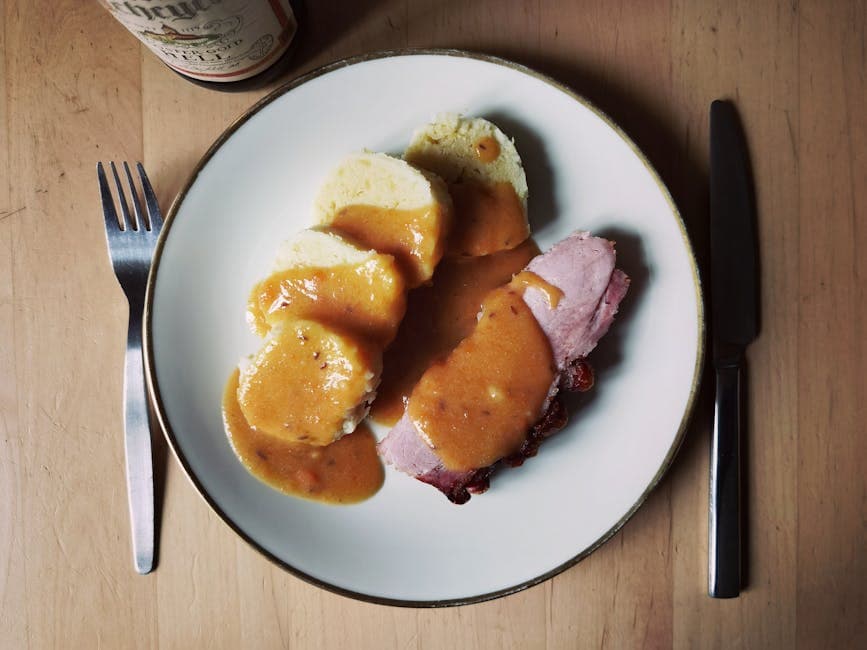
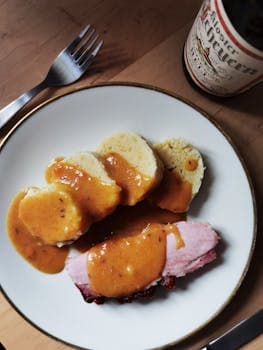
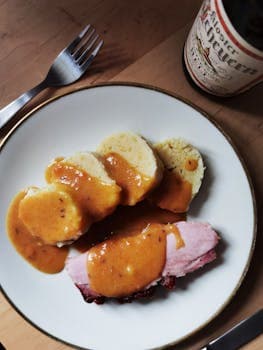
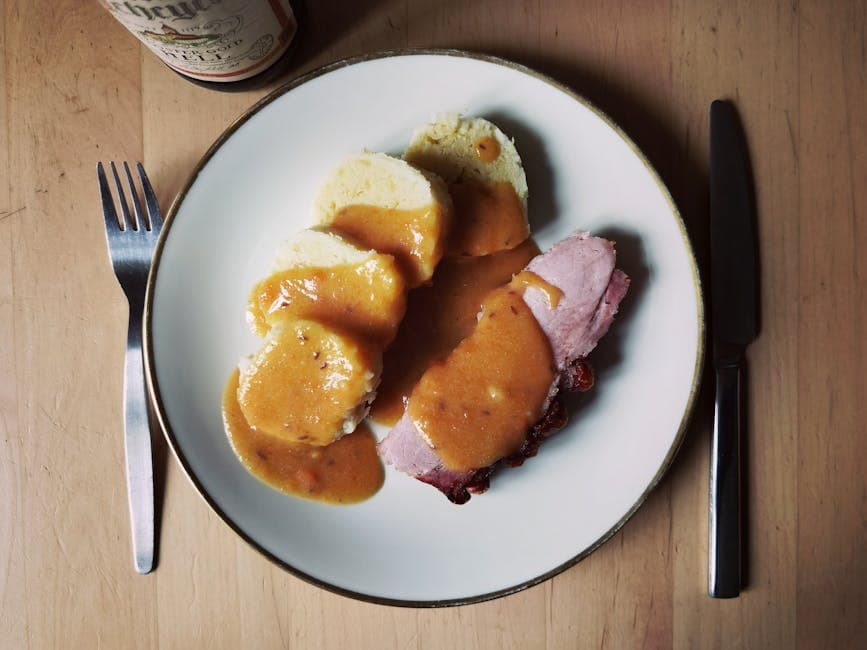
Svíčková na Smetaně (Czech Beef Sirloin in Cream Sauce)
Czechia's most beloved Sunday dish — braised beef sirloin in a silky root vegetable cream sauce, served with bread dumplings, cranberries and whipped cream.
Svíčková, Gulasch, Koláče – herzhafte böhmische Küche mit Semmelknödel und Pilsner.
Die tschechische Küche ist eine mitteleuropäische Hausmannskost, die von der österreichisch-ungarischen Küche und der böhmischen ländlichen Tradition geprägt ist, wobei der Knedlík – der gekochte Brot- oder Kartoffelknödel, der in Scheiben geschnitten und zum Aufsaugen von Soße serviert wird – das wichtigste Grundnahrungsmittel ist. Das kanonische Nationalgericht ist Vepřo Knedlo Zelo: Schweinebraten mit Semmelknödel und geschmortem Sauerkraut, während Svíčková na Smetaně – Rinderfilet in einer cremigen Wurzelgemüsesauce mit Preiselbeeren und einer Zitronenscheibe – der festliche Maßstab ist, an dem tschechische Köche gemessen werden.
Saucen und Suppen prägen die Küche: Die Gerichte werden traditionell mit Polévka (Knoblauchsuppe česnečka, Kartoffelsuppe Bramboračka, Kuttelsuppe Dršťková) eröffnet, und die Hauptgerichte basieren auf in Mehl eingedicktem, langsam gekochtem Omáčky – Dillsauce (Koprovka), Tomate, Pilz. Guláš, aus Ungarn entlehnt und dicker und milder gemacht, ist ebenso Pub-Essen wie Hausmannskost, immer mit Knödeln und rohen Zwiebeln, idealerweise zusammen mit Lagerbier nach Pilsner-Art – die Tschechen trinken pro Kopf mehr Bier als jedes andere Volk auf der Erde.
Backen ist die süßere Hälfte der Identität: Kolache (Koláče) garniert mit Tvaroh-Bauernkäse, Mohn oder Pflaumen-Povidla; Ovocné Knedlíky, mit Früchten gefüllte Teigtaschen mit geschmolzener Butter, Tvaroh und Zucker, die durchaus als Hauptgericht dienen können; und weihnachtliches Vánočka-Zopfbrot. Hobbyköche behalten Kümmel, Majoran und Knoblauch als zentrales Gewürztrio bei, und das Sonntagsessen – Suppe, Braten, Knödel, Bier – bleibt die Ankermahlzeit der Woche.
Knedlíky (Knödel)
Gekochte Semmel- oder Kartoffelknödel, in Laibscheiben geschnitten – die unverzichtbare Beilage zum Einweichen der Soße und in mit Früchten gefüllter Form ein süßes Hauptgericht.
Omáčky (Soßen)
Cremige, mit Mehl angedickte Saucen – Svíčková-Wurzelgemüsecreme, Dill-Koprovka, Tomate – definieren, wie tschechische Hauptgerichte zubereitet werden.
Schweinebraten und Sauerkraut
Vepřo knedlo zelo, Schweinebraten mit Knödeln und geschmortem Zelí, ist das allgemein anerkannte Nationalgericht Böhmens.
Suppen (polévky)
Knoblauch-Cesnečka, Kartoffel-Bramboračka und Rinderbrühe mit Leberknödeln eröffnen traditionell jedes richtige tschechische Mittagessen.
Bierkultur
Pilsner Lagerbier, 1842 in Pilsen erfunden, wird als Teil der Mahlzeit serviert; Beim Pro-Kopf-Verbrauch sind die Tschechen weltweit führend.
Süßes Backen
Tvaroh-Mohn-Kolache, Pflaumenmarmelade-Buchty und geflochtene Vánočka sind Ausdruck der böhmischen Konditortradition.
Freihändig kochen
Hol dir KI-Essenspläne, einen Schritt-für-Schritt-Kochmodus und deine gespeicherten Rezepte in der kostenlosen Bento-App.
Plane deine Mahlzeiten, verfolge dein Fasten und erstelle deine Einkaufsliste — kostenlos
Das MyCookingCalendar-Dashboard läuft direkt in deinem Browser, kein Download nötig.

Czechia's most beloved Sunday dish — braised beef sirloin in a silky root vegetable cream sauce, served with bread dumplings, cranberries and whipped cream.

The Czech interpretation of goulash — beef slow-braised with enormous quantities of onions and paprika into a thick, deeply savoury sauce. Served with bread dumplings and always with a dark beer.

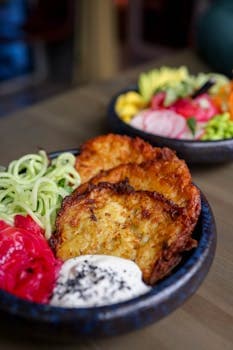
Czech potato pancakes — coarsely grated potato, egg, garlic and marjoram fried in lard until golden and crispy at the edges. Simple, addictive, and the street food of Czech markets.

Czech Republic's beloved hangover cure — a clear broth intensely flavoured with garlic, caraway and marjoram, poured over toasted bread and a poached or fried egg. Simple and restorative.

Czech spiral pastry wrapped around a rod and grilled over open flame, dusted with cinnamon sugar.

Creamy Czech soup with mushrooms, dill, potatoes and a poached egg — a Bohemian classic.

The Czech national dish — roast pork with bread dumplings and braised sauerkraut.

Czech sweet dumplings filled with plum jam, rolled in toasted breadcrumbs and butter — a traditional dessert.

Czech barley and mushroom bake — a humble, earthy Christmas Eve dish of Bohemian peasant tradition.

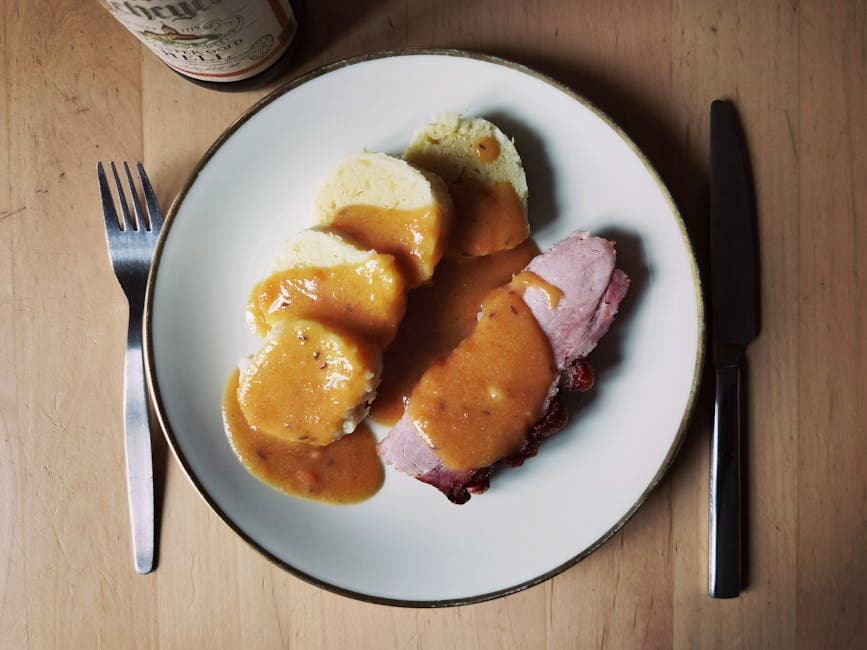
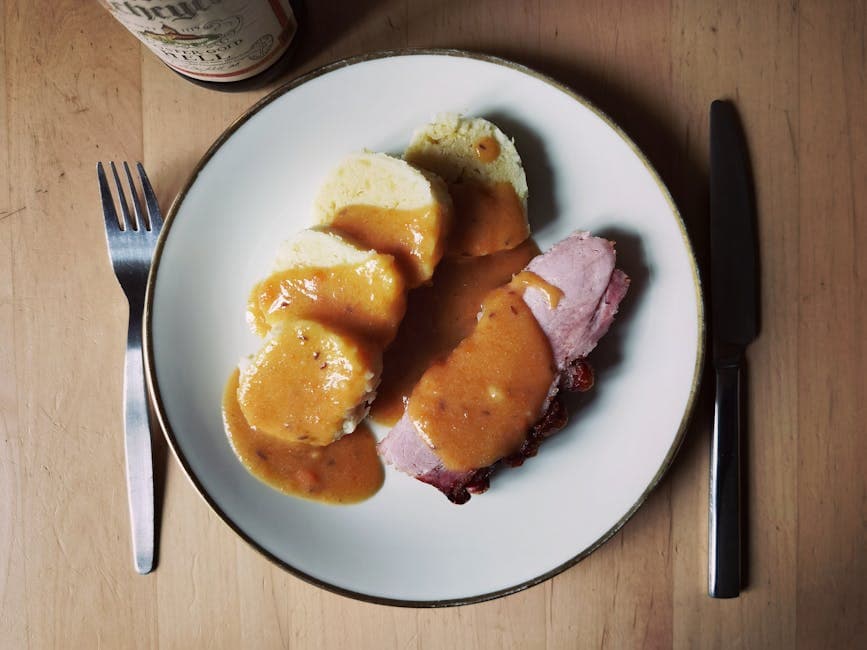
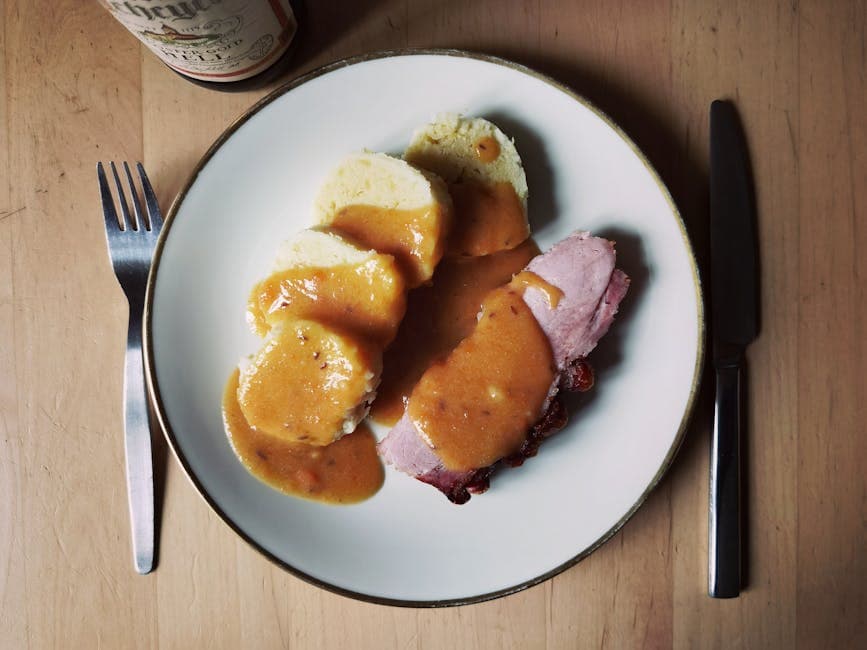
Marinated beef sirloin in a silky vegetable-cream sauce, served with bread dumplings, cranberries and whipped cream — Czechia's national dish.

Slow-cooked beef and onion stew with paprika, caraway and bread dumplings — Bohemia's hearty answer to Hungarian goulash.

Roast pork with bread dumplings and sweet-sour sauerkraut — the iconic Czech pub trio.

Soft, round Czech pastries with a sweet poppy seed, plum or curd cheese filling — Bohemia's most beloved sweet.

Creamy potato-mushroom soup with dill, vinegar and a poached egg — the comfort soup of Czech farmhouses.

Sweet-and-sour tomato sauce served over beef and bread dumplings — the comfort food of every Czech childhood.

Breaded fried Edam cheese — Czechia's favourite vegetarian fast food, served with tartar sauce and chips.

Soft potato-dough dumplings filled with whole plums, strawberries or apricots — Czech summer dessert at its best.

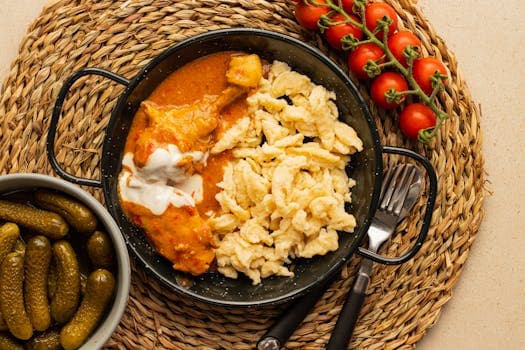
Tender chicken in a velvety sour cream-paprika sauce — Czechia's lighter cousin of the Hungarian classic, served with bread dumplings.

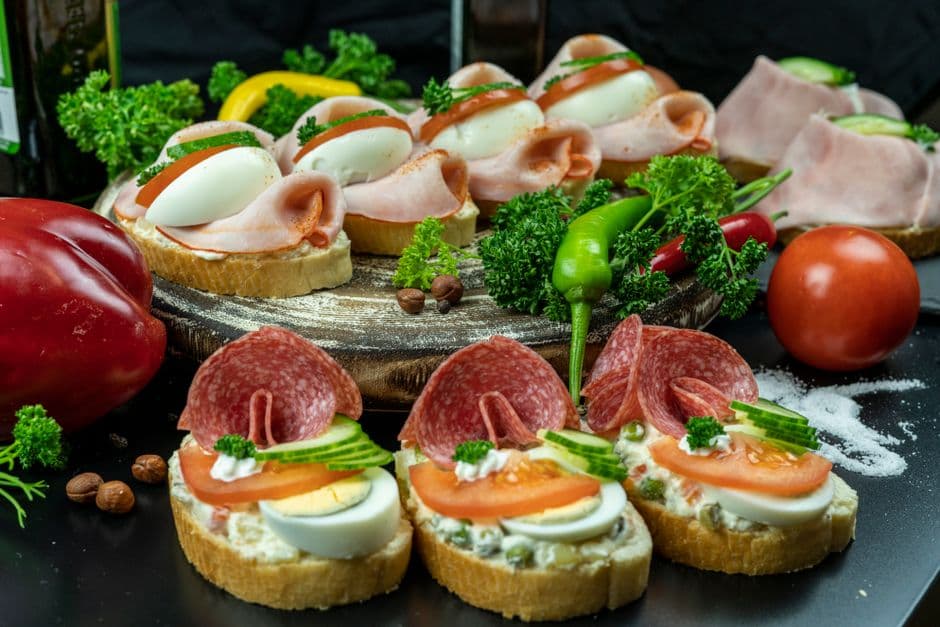
Open-face sandwiches on slices of veka bread topped with elaborate decorations — the iconic Czech party food.

Czech marinated beef in root-vegetable cream sauce, served with bread dumplings, cranberries, and lemon.

Czech Sunday-lunch icon — marinated beef in a silky root-vegetable cream sauce with bread dumplings, cranberry, and lemon.

Czech-Moravian national dish — beef sirloin slow-braised with root vegetables, blended into a velvety cream sauce, served with bread dumplings.

The Czech national dish — beef sirloin braised in a vegetable-cream sauce, sliced and served with bread dumplings, cranberry jam and whipped cream.
Czech Market Lemon Herb Rice Bowl brings czech flavor to a practical rice bowl built with chicken thighs, caraway, paprika, beer and sour cream, and a fresh parsley finish.
Czech Village Smoky Tomato Soup brings czech flavor to a practical soup built with mushrooms, caraway, paprika, beer and sour cream, and a fresh parsley finish.
Czech Garden Sesame Lime Skillet brings czech flavor to a practical skillet dinner built with cauliflower, caraway, paprika, beer and sour cream, and a fresh parsley finish.
Czech Harbor Charred Pepper Noodles brings czech flavor to a practical noodle dish built with rice noodles, caraway, paprika, beer and sour cream, and a fresh parsley finish.
Czech Mountain Green Herb Salad brings czech flavor to a practical salad built with grilled chicken, caraway, paprika, beer and sour cream, and a fresh parsley finish.
Czech Festival Lemon Herb Flatbread brings czech flavor to a practical flatbread built with flatbread dough, caraway, paprika, beer and sour cream, and a fresh parsley finish.
Czech Homestyle Smoky Tomato Traybake brings czech flavor to a practical traybake built with sweet potatoes, caraway, paprika, beer and sour cream, and a fresh parsley finish.
Czech Street Sesame Lime Fritters brings czech flavor to a practical fritters built with salted fish, caraway, paprika, beer and sour cream, and a fresh parsley finish.
Czech Golden Charred Pepper Breakfast Plate brings czech flavor to a practical breakfast plate built with beans, caraway, paprika, beer and sour cream, and a fresh parsley finish.
Czech Weeknight Green Herb Dessert brings czech flavor to a practical dessert built with coconut, caraway, paprika, beer and sour cream, and a fresh parsley finish.
Beef sirloin slow-braised with root vegetables until the sauce turns silky and slightly sweet, served with bread dumplings and cranberries.
Grated potato pancakes seasoned with garlic and marjoram, fried until deeply golden and crisp at the edges, a beloved Czech street food.
Slow-roasted pork shoulder served with soft bread dumplings and tangy braised sauerkraut, the quintessential Czech Sunday dinner.
A thick, dark beef stew flavored with paprika and caraway, distinctly less soupy than Hungarian gulyás, served with bread dumplings.
A yeasted dough wound around a wooden spit, roasted over open flame until golden, and rolled in cinnamon sugar and walnuts.
A thick slab of breaded, deep-fried cheese with a molten interior, served in a bun with tartar sauce, a beloved Czech fast-food staple.
A hearty, slightly tangy potato soup studded with mushrooms and marjoram, a beloved everyday Czech comfort food.
Soft potato or quark dough wrapped around whole plums or apricots, boiled, then rolled in buttery breadcrumbs and dusted with sugar.
Halved sausages pickled in a spiced vinegar brine with onions, a tangy, beer-friendly pub snack served cold.
A tangy, creamy potato and mushroom soup finished with fresh dill and a poached egg, a beloved South Bohemian specialty.
Tender beef simmered in a sweet-tangy tomato sauce, a nostalgic Czech comfort dish often served with bread dumplings or rice.
A yeasted bread dough studded with cubed bread, poached whole and sliced, the essential starchy side for nearly every Czech braise.
Pork simmered with sauerkraut in a paprika sauce finished with sour cream, a tangy, comforting Czech take on goulash.
Soft, pillowy yeasted buns with a hollowed center filled with fruit jam, poppy seed or farmer's cheese, and a crumbly streusel topping.
A rich, braided sweet bread studded with raisins and almonds, traditionally baked for Christmas morning breakfast across the Czech Republic.
A tangy, hearty soup of sauerkraut and smoked sausage simmered with potatoes, a warming Czech winter staple.
Small, elaborately topped open-faced sandwiches on white bread, arranged with ham, egg, cheese and vegetables, a beloved Czech party classic.
Tangy pickled sausages and onion piled on rye bread, a Czech pub classic known as utopenci, or 'drowned men,' served straight from the jar.
Crispy, garlicky grated potato pancakes fried until golden, finished with a pat of fresh herb butter, a beloved Czech street food and home dish.
A hearty baked Czech meatloaf with a whole hard-boiled egg hidden in the center, seasoned with marjoram and served sliced with potatoes.
A thick, hearty bean soup simmered with smoked pork and marjoram, a warming Czech classic served with dark bread.
A hearty pan omelet loaded with diced boiled potato, onion and fresh herbs, a simple Czech farmhouse breakfast that stretches eggs into a full meal.
Simple, nutty buckwheat groats simmered soft and finished with browned butter, a traditional Czech side dish and comfort food known as kaše.
Whole carp fillets baked with a garlic and marjoram herb butter, the fish dish central to a traditional Czech Christmas Eve dinner.
Soft potato dough wrapped around whole plums or apricots, boiled until tender and finished with melted butter and sweetened breadcrumbs.
Diced boiled potato tossed with pickles, carrot, egg and mayonnaise, the classic Czech potato salad served at Christmas alongside fried carp.
A whole chicken rubbed with marjoram, caraway and garlic, roasted until deeply golden, a Sunday classic across Czech households.
Shredded cabbage slow-braised with bacon, onion and caraway seed, then finished in the oven, a hearty Czech vegetable side turned into a bake.
Sweet yeasted dough wrapped around a rolling pin, grilled over coals and rolled in cinnamon sugar and walnuts, the popular Czech street pastry trdelník.
Crispy Czech potato pancakes flavored with garlic, marjoram and cumin, fried until golden at the edges.
A hearty Czech pearl barley and mushroom bowl seasoned with garlic and marjoram, finished with toasted sesame for crunch.
Pan-seared trout served over rice with a creamy Czech dill sauce (koprova omacka), a classic homestyle pairing.
A tangy, cumin-scented Czech lentil stew bowl finished with a splash of vinegar and served over bread or rice.
Classic Czech stuffed peppers filled with rice and beef in tomato sauce, finished with a scatter of toasted sesame.
A comforting Czech bread dumpling bake layered with smoked ham, egg custard and melted cheese.
A juicy Czech-style spiced beef patty seasoned with garlic, marjoram and cumin, served burger-style with tangy mustard.
A warm, creamy Czech semolina pudding sweetened with sugar and cinnamon, a classic homestyle dessert or breakfast.
A festive Czech roast duck plate with a browned butter pan gravy, served alongside bread dumplings and braised cabbage.
Die tschechische Küche ist bekannt für herzhafte Fleisch- und Knödelgerichte: Schweinebraten mit Sauerkraut (vepřo knedlo zelo), Svíčková-Rindfleisch in cremiger Gemüsesauce und Gulasch mit Semmelknödeln. Suppen wie Knoblauch-Cesnečka-Snacks, Kolache-Gebäck und Obstknödel decken die süße Seite ab, und Pilsner Lagerbier – erfunden in Pilsen – gilt als fester Bestandteil des Tisches.
Sie überschneiden sich bei Schweinefleisch, Kohl und Bier, aber die tschechische Küche konzentriert sich auf Soßen, während die deutsche Küche eher Braten mit Beilagen bevorzugt. Der tschechische Knedlík – ein gekochter, in Scheiben geschnittener Semmelknödel – unterscheidet sich von der deutschen Kartoffelklöße, und cremige Omáčky wie die Wurzelgemüsesauce von Svíčková haben kein direktes deutsches Gegenstück. Tschechisches Gulasch ist dicker als ungarisches und milder und als Hauptgericht dienen süße, mit Früchten gefüllte Knödel.
Svíčková na smetaně ist gespicktes und gebratenes Rinderfilet auf einer Basis aus Karotten, Knollensellerie, Petersilienwurzel und Zwiebeln, das anschließend mit Sahne zu einer samtigen, leicht süßlichen Soße püriert wird. Serviert wird es mit Semmelknödeln, Preiselbeerkompott, einer Zitronenscheibe und Schlagsahne. Es ist der festliche Standard der tschechischen Küche – das Gericht, an dem Familienrezepte und Restaurants gemessen werden.
Nein – tschechisches Essen gehört zu den mildesten Europas. Die Würze basiert auf Kümmel, Majoran, Knoblauch, süßem Paprika und Lorbeerblatt, mit einer reichhaltigen Würze aus Schweinefett, Butter und Sahne anstelle von Hitze. Selbst das in seiner ungarischen Heimat scharfe Gulasch wird in der tschechischen Variante mild und dickflüssig zubereitet. Die Schärfe kommt von Sauerkraut, Gurken, Senf und geriebenem Meerrettich, serviert mit Tafelspitz.
Tschechisches Gulasch ist die verzeihendste Variante: Rinderhackfleisch mit vielen Zwiebeln, süßem Paprika, Kümmel und Majoran dick schmoren und mit gekauften oder selbstgemachten Semmelknödeln servieren. Bramboráky – Kartoffelpuffer mit Knoblauch und Majoran – brauchen 30 Minuten und benötigen nur Zutaten aus der Vorratskammer. Sobald Sie sich wohlfühlen, probieren Sie Houskové Knedlíky (Semmelknödel), die Fertigkeit, die die ganze Küche eröffnet.