
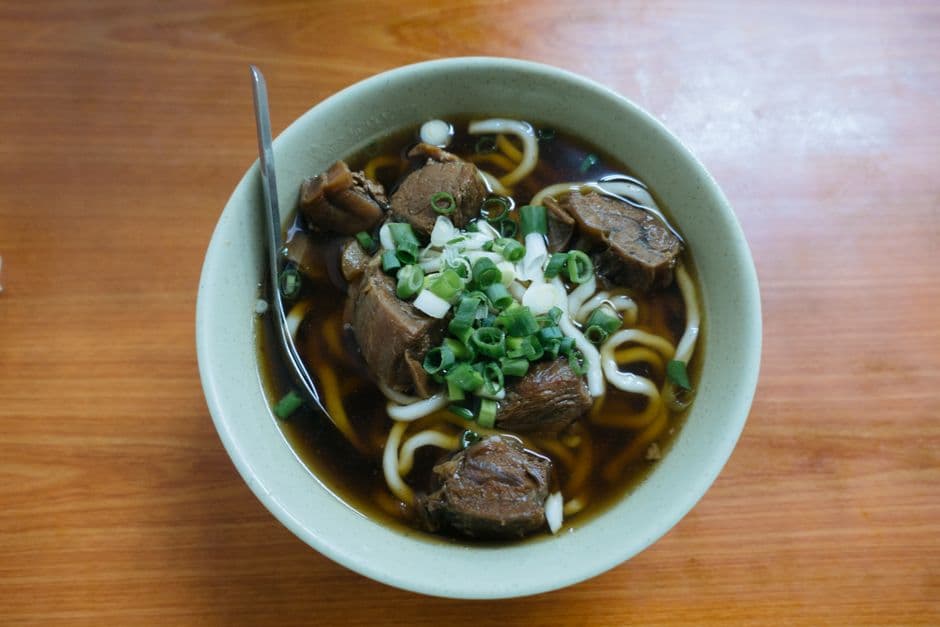
Zuppa di Noodle di Manzo Taiwanese
Il piatto nazionale di Taiwan — un ricco brodo di manzo speziato con stinco di manzo brasato tenero e noodle di frumento elastici, profumato con doubanjiang, anice stellato e salsa di soia.
A proposito di questa ricetta
Zuppa di Noodle di Manzo Taiwanese (台灣牛肉麵, niúròu miàn) è probabilmente il piatto più iconico di Taiwan ed è il soggetto di una competizione annuale a Taipei dove centinaia di ristoranti competono per il titolo del miglior piatto. Il brodo è costruito su una base di doubanjiang (pasta di fagioli di fave piccante), salsa di soia, vino Shaoxing e spezie aromatiche — anice stellato, corteccia di cassia, scorza di mandarino secco — simmerito con lo stinco di manzo brasato finché la carne non è tremendamente tenera e il brodo è scuro, complesso e profondamente salato. Gli elastici noodle di frumento spesso vengono serviti in questo magnifico brodo, conditi con il manzo brasato, le verdure di senape sottaceto (suān cài) per l'acidità, e coriandolo fresco. Il piatto ha le sue radici nella manzo brasato in rosso in stile Sichuan e Hunan portato a Taiwan dai continentali che seguirono il governo nazionalista nel 1949, trasformato nei decenni in qualcosa di uniquely taiwanese.
Ingredienti
Serve 4
- 1 kgstinco di manzo o tibia(tagliato in grossi pezzi)
- 400 gnoodle di frumento spesso(fresco o secco)
- 3 cucchiaidoubanjiang (pasta di fagioli di fave piccante)
- 4 cucchiaisalsa di soia
- 2 cucchiaisalsa di soia scura
- 3 cucchiaivino di riso Shaoxing
- 1 cucchiaiozucchero
- 3anice stellato
- 1corteccia di cassia o bastoncino di cannella
- 4 spicchiaglio(schiacciato)
- 3 cmzenzero fresco(affettato)
- 3cipollotto(più extra da guarnire)
- 1.5 litriacqua o brodo di manzo
- 100 gverdure di senape sottaceto (suan cai)(risciacquate e approssimativamente tritate, da servire)
- 1 mazzocoriandolo fresco(da guarnire)
Istruzioni
- 1
Sbollentare il manzo
Mettere il manzo in una pentola, coprire con acqua fredda e portare a ebollizione. Bollire per 5 minuti, scolare e risciacquare il manzo sotto acqua fredda. Questo rimuove il sangue e le impurità per un brodo più pulito.
- 2
Friggere il doubanjiang
Riscaldare 2 cucchiai di olio vegetale in una grande pentola pesante a fuoco medio. Aggiungere il doubanjiang e friggere, mescolando, per 2-3 minuti finché l'olio non si è trasformato in un rosso mattone profondo e la pasta è molto fragrante.
Friggere il doubanjiang è il passo più importante e singolo — trasforma la pasta di fagioli crudi in una base caramellizzata e complessa che dà al brodo la sua profondità e colore caratteristici.
- 3
Aggiungere aromi e costruire il brodo
Aggiungere l'aglio, lo zenzero e il cipollotto e friggere per 1 minuto. Aggiungere il vino Shaoxing e lasciare rosolare. Aggiungere la salsa di soia, la salsa di soia scura, lo zucchero, l'anice stellato, la corteccia di cassia e l'acqua o il brodo. Mescolare per combinare.
- 4
Brasare il manzo
Aggiungere il manzo sbollentato alla pentola. Portare a ebollizione, quindi ridurre a un leggero simmer. Coprire e cuocere per 2-2,5 ore fino a quando il manzo non è morbido come una forchetta e cedevole. Togliere il grasso in eccesso dalla superficie durante la cottura.
- 5
Cuocere i noodle e assemblare
Cuocere i noodle secondo le istruzioni del pacchetto finché non raggiungono il dente. Dividere in ciotole. Versare sopra il brodo speziato e condire con i pezzi di manzo brasato, le verdure di senape sottaceto, il cipollotto affettato e il coriandolo fresco.
L'hai preparata?
Dai un voto e aiuta gli altri a trovare le ricette che funzionano davvero.
Accedi con un tocco e salveremo il voto che hai appena scelto.
Tutto ciò che serve per pianificare la settimana — gratis
- Calendario pasti
- Lista della spesa
- Idee ricette con IA
Cucina a mani libere
Ottieni piani alimentari IA, una modalità di cottura passo-passo e le tue ricette salvate nell'app gratuita Bento.
Suggerimenti professionali
- →
Lo stinco di manzo dà il corpo gelatinoso più ricco al brodo — non sostituire con un taglio magro.
- →
Il brodo migliora dramatically il giorno dopo — farlo un giorno in anticipo per il miglior sapore.
- →
Le verdure di senape sottaceto (suān cài) sono una guarnizione essenziale — la loro acidità taglia il brodo ricco e speziato.
- →
Assaggiare e regolare il sale alla fine — i sapori si concentrano mentre i liquidi si riducono, e un pizzico finale di sale grosso affila l'intero piatto.
Variazioni
- •
Versione di brodo limpido (qīng dùn niúròu miàn) omette il doubanjiang per una zuppa più leggera e pulita.
- •
Aggiungere un cucchiaio di olio di peperoncino ad ogni ciotola per extra calore.
- •
Vegetariano: scambiare la proteina con funghi ostrica arrostiti, tofu affumicato o ceci cotti — regolare leggermente verso l'alto il condimento per compensare.
- •
Più piccante: aggiungere un peperoncino fresco finemente tritato o un cucchiaino di pepe di Aleppo / Urfa schiacciato agli aromi per un calore caldo e stratificato invece di un colpo acuto e singolo.
Stoccaggio
Il brodo e il manzo si mantengono in frigorifero per 5 giorni e si congelano bene per 3 mesi. Cuocere i noodle freschi ogni volta.
Storia e origine
La zuppa di noodle di manzo taiwanese è stata creata da soldati di origine Sichuan e dalle loro famiglie che arrivarono a Taiwan con il governo nazionalista (KMT) nel 1949. Hanno adattato la loro tradizione di manzo brasato in rosso agli ingredienti e ai palati taiwanese. Il piatto divenne fermamente stabilito come il piatto nazionale di Taiwan negli anni '70.
Domande frequenti
Quale è la differenza tra versioni di brodo limpido e rosso?
La versione di brodo rosso (hóngshāo) utilizza doubanjiang per il suo colore scuro e speziato e il sapore audace. La versione limpida (qīng dùn) brasatura lenta del manzo senza pasta di fagioli, producendo un brodo più leggero e più delicato. Entrambi sono considerati autentici.
Posso fare questo in anticipo?
Sì — la maggior parte dei componenti può essere preparata fino a un giorno in anticipo e refrigerata separatamente. Riscaldare delicatamente e assemblare appena prima di servire in modo che le texture rimangono distinte.
Cosa posso sostituire se non ho tutti gli ingredienti?
Stare vicino al ruolo che ogni ingrediente gioca: scambiare gli aromi con quelli simili (scalogno per cipolla, limone per succo di limone), e mantenere l'equilibrio grasso-acido-sale intatto. I miscugli di spezie possono di solito essere approssimati con quello che è nella credenza.
Come faccio a sapere se è autentico?
L'autenticità si trova su uno spettro — quello che importa di più è onorare la tecnica e l'equilibrio dei sapori. Se il piatto sa armonioso e rispetta il modo in cui i cuochi nella sua regione di origine lo costruirebbero, siete su un terreno solido.
Fatti nutrizionali
Per porzione (650g) · 4 porzioni totali
Riepilogo del tempo
Hai domande?
Chiedi al nostro assistente di cucina AI qualsiasi cosa su questa ricetta: sostituzioni, tecniche, ridimensionamento.
Chatta con AI Chef →In evidenza nelle Guide
Questa ricetta è presente nelle seguenti guide curate:
Altre ricette taiwanesi
Potrebbe Piacerti Anche
Piatti simili da altre cucine del mondo.
Sfoglia per Ingrediente
Altre ricette costruite attorno agli stessi ingredienti principali.
Strumenti da Cucina Gratuiti
Calcolatori e convertitori pensati per questa pagina — senza registrazione.
Trasformalo in un Piano
Mettilo in calendario, fai la spesa e tieni traccia di ciò che hai già.
Da Leggere Dopo
Approfondimenti sulle idee dietro questo piatto.
Comunità
Partecipa alla conversazione
Accedi per lasciare un commento e salvare le tue ricette preferite