
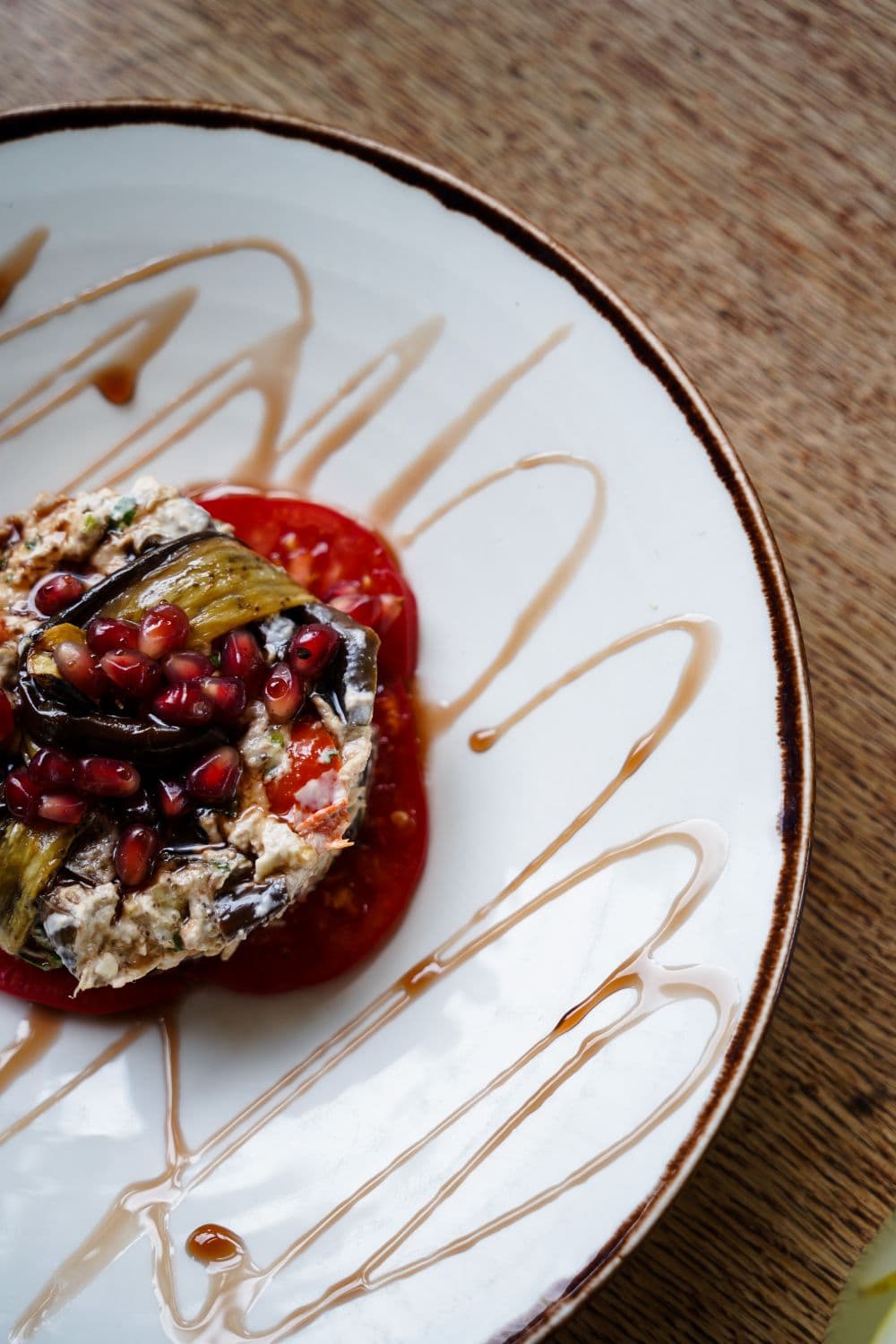
Badrijani Nigvzit
Fried aubergine slices rolled around a savoury walnut-garlic-pomegranate filling — Georgia's most iconic vegetarian dish.
About This Recipe
Badrijani are slices of fried aubergine wrapped around a paste of walnuts, garlic, coriander and Georgian spices — a dish that captures, in one bite, the walnut-forward character that defines so much of Georgian cooking. Topped with jewel-bright pomegranate seeds, they are served at every Georgian feast (supra) as part of the cold mezze spread, arranged in careful rows that are as much about presentation as flavour, since a supra table is judged by its abundance and colour as much as its taste. The walnut paste is the heart of Georgian cuisine — found in beans (lobio), chicken (satsivi) and many other dishes — and its texture matters as much as its seasoning: ground fine enough to spread like a thick paste, but not so smooth that it loses all bite, since a little texture is what keeps the filling from sliding out of the rolled aubergine. Salting the aubergine slices before frying and pressing out the bitter liquid is a small step that makes a real difference, both for flavour and for how well the slices hold together once rolled around the filling. Served at room temperature rather than hot, badrijani are traditionally made well ahead of a gathering, giving the walnut paste time to soften into the fried aubergine.
Ingredients
Serves 6
- 3 largeaubergines(long, sliced lengthwise 5mm thick)
- 1 tbspsalt(for sweating)
- 100 mlvegetable oil(for frying)
- 200 gwalnuts(shelled)
- 5 clovesgarlic
- 1 small bunchfresh coriander
- 1 tspblue fenugreek (utskho suneli)(or use 1/2 tsp ground fenugreek)
- 1 tspmarigold powder(or paprika as substitute)
- 1 tspground coriander
- 1/2 tspsalt
- 1/2 tspfreshly ground black pepper
- 2 tbspwhite wine vinegar
- 60 mlcold water
- 100 gpomegranate seeds
- Extra coriander leaves, to serve
Instructions
- 1
Prepare aubergines
Lay sliced aubergines on a tray, salt both sides. Rest 20 min — they will release brown bitter liquid.
- 2
Pat dry
Wipe each slice dry with paper towel — important or they absorb too much oil.
- 3
Fry
Heat oil in a large frying pan. Fry aubergine slices 2 min per side until golden. Drain on paper towel and cool.
- 4
Make walnut paste
Blend walnuts, garlic, coriander, fenugreek, marigold, ground coriander, salt, pepper, vinegar and water in a food processor to a thick paste — it should hold its shape but spread easily.
- 5
Adjust
Taste — should be intensely savoury, slightly tangy. Add salt if needed.
- 6
Assemble
Lay an aubergine slice flat. Place 1 tablespoon of walnut paste on the wider end. Roll up.
- 7
Garnish
Arrange rolls on a platter. Top with pomegranate seeds and coriander leaves.
- 8
Serve
Serve at room temperature, ideally after 1 hour rest for flavours to meld.
Did you make this?
Rate it and help other cooks find the recipes that actually work.
One tap to sign in, and we'll save the rating you just picked.
Everything you need to plan your week — free
- Meal calendar
- Grocery list
- AI recipe ideas
Track what you eat
Snap your meal to log calories and macros, run fasting timers and track water in the free SnapCal app.
Pro Tips
- →
The walnut paste consistency is critical — it should be spreadable but not runny.
- →
Always salt the aubergines first — non-negotiable for proper texture.
Variations
- •
Use grilled instead of fried aubergine for a lighter version
- •
Add 1 tbsp pomegranate molasses to the paste for deeper sweetness
- •
Spread paste on toasted sourdough as a dip
Storage
Refrigerate up to 4 days — flavours improve overnight. Bring to room temperature before serving.
History & Origin
Walnut paste (nigvzis pasta) is the cornerstone of Georgian cuisine, particularly in the western regions of Imereti and Samegrelo. Badrijani is part of the supra (feast) tradition, where dozens of cold dishes cover the table before the hot courses arrive.
Frequently Asked Questions
Where to find blue fenugreek?
Eastern European or Georgian specialty shops, or online. Substitute: 1/2 tsp ground fenugreek + 1/2 tsp ground coriander.
Can I make in advance?
Yes, ideal — they taste better after a few hours. Make the day before for guests.
No walnuts — can I substitute?
Pecans are the closest substitute in texture and fat content. Avoid almonds — the paste needs walnut's natural oiliness to bind smoothly.
Is this dish vegan?
Yes as written — just double-check any store-bought marigold or spice blend hasn't been cut with dairy powder.
Nutrition Facts
Per serving · 6 servings total
Time Summary
Have Questions?
Ask our AI cooking assistant anything about this recipe — substitutions, techniques, scaling.
Chat with AI Chef →More Georgian Recipes
You Might Also Like
Similar dishes from other cuisines around the world.
Browse by Ingredient
More recipes built around the same core ingredients.
Free Kitchen Tools
Calculators and converters that pair with this page — no signup needed.
Put This Into a Plan
Schedule it, shop for it, and track what you already have.
Read Next
Longer reads that go deeper on the ideas behind this dish.
Community
Join the conversation
Sign in to leave a comment and save your favourite recipes