
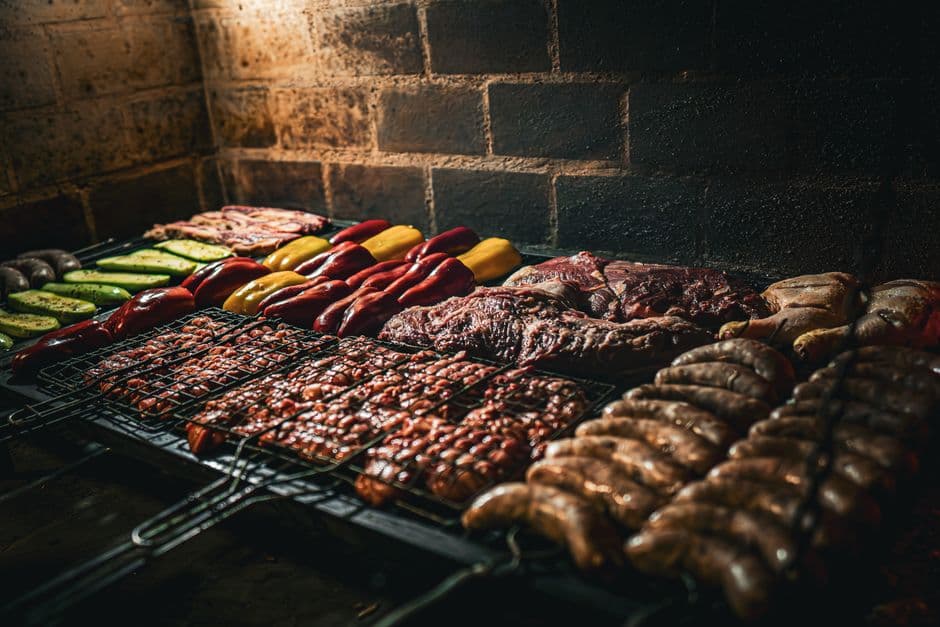
Bandeja Paisa
Colombia's most legendary meal — a monumental platter from the Antioquia region featuring red beans, chicharrón, minced beef, chorizo, fried egg, sweet plantain, avocado, hogao sauce and rice.
About This Recipe
Bandeja paisa is a meal of epic proportions, rooted in the agricultural traditions of Colombia's Antioquia region — the 'paisas'. Historically, it provided the caloric sustenance needed by fieldworkers, miners and muleteers to fuel a hard day's labour. Today it is considered Colombia's national dish — both a source of intense regional pride among Antioquians and a somewhat overwhelmed reaction from the uninitiated who encounter it for the first time. Eating a full bandeja paisa is a rite of passage. The dish is less a recipe than an assembly of carefully prepared components, each one delicious in its own right.
Ingredients
Serves 4
- 400 gdried red kidney beans(soaked overnight)
- 400 glong-grain white rice
- 400 glean ground beef
- 400 gpork belly(skin-on, cut into 4cm cubes)
- 4Colombian chorizo links(or spiced pork sausages)
- 4eggs
- 2 largeripe plantains(sliced diagonally, fried)
- 2ripe avocados(sliced)
- 4 largeripe tomatoes(finely diced, for hogao)
- 1 largeonion(finely diced, for hogao)
- 4 clovesgarlic(minced)
- 1 teaspoonground cumin
- 3 tablespoonsvegetable oil
Instructions
- 1
Cook the red beans
Drain the soaked beans and place in a pot with fresh cold water to cover by 5 cm. Add half the diced onion and 2 cloves of smashed garlic. Bring to a boil, skim, then simmer for 60–75 minutes until beans are completely tender. Season generously with salt and cumin. Keep warm.
- 2
Make the hogao (creole sauce)
In a frying pan, heat 1 tablespoon of oil over medium heat. Cook the remaining diced onion for 8 minutes until soft. Add the minced garlic and diced tomatoes. Cook, stirring often, for 15–20 minutes until the tomatoes have completely broken down into a thick, fragrant sauce. Season with cumin and salt. This is the hogao — set aside.
- 3
Make the chicharrón
Score the skin of the pork belly cubes in a crosshatch pattern. Season with salt. Place in a heavy pan with 2 tablespoons of water over medium-high heat. Cook, turning regularly, for 30–40 minutes until the skin is crackled, golden and very crispy and the fat has rendered. Drain on kitchen paper.
Patience is key — chicharrón requires time and steady heat. Do not rush or the skin will not crackle.
- 4
Cook the ground beef
In a separate frying pan, heat 1 tablespoon of oil over high heat. Add the ground beef and cook, breaking it up, until browned and any liquid has evaporated. Season with salt, cumin and a spoonful of hogao stirred in. Keep warm.
- 5
Cook the chorizo and fry the plantains
Grill or pan-fry the chorizo links until cooked through and charred at the edges. In a separate pan with oil, fry the diagonal plantain slices for 2–3 minutes per side until golden and caramelised. Cook the eggs sunny-side up to order.
- 6
Assemble
On each large plate, arrange a mound of rice, a generous portion of red beans (with some of their liquid), a piece of chicharrón, a mound of seasoned ground beef, a chorizo link, a fried egg, slices of fried plantain, half an avocado and a spoonful of hogao. Serve immediately.
Did you make this?
Rate it and help other cooks find the recipes that actually work.
One tap to sign in, and we'll save the rating you just picked.
Everything you need to plan your week — free
- Meal calendar
- Grocery list
- AI recipe ideas
Cook this hands-free
Get AI meal plans, step-by-step cooking mode, and your saved recipes in the free Bento app.
Pro Tips
- →
The hogao sauce is the binding element of bandeja paisa — make extra and use it as a condiment throughout the week.
- →
Each component can be made ahead and assembled to order, making this practical for entertaining.
- →
In Medellín, bandeja paisa is traditionally served on a round wooden board (bandeja means 'tray').
- →
Taste and adjust salt at the very end — flavors concentrate as liquids reduce, and a final pinch of flaky salt sharpens the whole dish.
Variations
- •
Some versions add morcilla (blood sausage) and a corn arepa alongside the other components.
- •
A lighter bandeja ejecutiva (executive tray) omits the chicharrón and reduces the number of components for a weekday version.
- •
Vegetarian: swap the protein for roasted king oyster mushrooms, smoked tofu or cooked chickpeas — adjust seasoning slightly upward to compensate.
- •
Spicier: add a finely chopped fresh chile or a teaspoon of crushed Aleppo/Urfa pepper to the aromatics for warm, layered heat instead of a single sharp hit.
Storage
Store each component separately in the fridge. Beans and beef keep for 3 days; chicharrón is best fresh but can be re-crisped in the oven. Assemble and reheat components individually.
History & Origin
Bandeja paisa evolved in Antioquia in the 19th century to fuel the hard-working arrieros (muleteers) who transported coffee and goods through the Andes. The calorie-dense combination reflected what was available in the region — beans, plantain, pork, corn and rice — and the need for sustaining energy over long mountain journeys. Today it is Colombia's most emblematic dish and the source of enormous paisa pride.
Frequently Asked Questions
Is bandeja paisa really eaten as one dish?
Yes — in its full traditional form, all components are served together on one large tray. It is an enormous amount of food by modern standards. Restaurants offer half-portions and smaller versions for less hungry diners.
Can I make this ahead of time?
Yes — most of the components can be prepared up to a day in advance and refrigerated separately. Reheat gently and assemble just before serving so textures stay distinct.
What can I substitute if I don't have all the ingredients?
Stay close to the role each ingredient plays: swap aromatics for similar ones (shallot for onion, lime for lemon), and keep the fat-acid-salt balance intact. Spice blends can usually be approximated with what's in the cupboard.
How do I know it's authentic?
Authenticity sits on a spectrum — what matters more is honoring the technique and balance of flavors. If the dish tastes harmonious and respects how cooks in its home region would build it, you're on solid ground.
Nutrition Facts
Per serving (850g / 30.0 oz) · 4 servings total
Time Summary
Have Questions?
Ask our AI cooking assistant anything about this recipe — substitutions, techniques, scaling.
Chat with AI Chef →Featured in Guides
This recipe is featured in the following curated guides:
More Colombian Recipes
You Might Also Like
Similar dishes from other cuisines around the world.
Browse by Ingredient
More recipes built around the same core ingredients.
Free Kitchen Tools
Calculators and converters that pair with this page — no signup needed.
Put This Into a Plan
Schedule it, shop for it, and track what you already have.
Read Next
Longer reads that go deeper on the ideas behind this dish.
Community
Join the conversation
Sign in to leave a comment and save your favourite recipes