
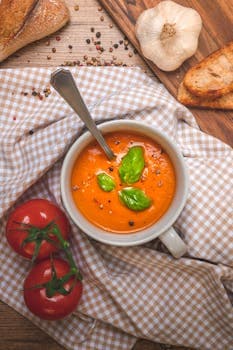
Creamy Roasted Tomato Soup
Slow-roasted tomatoes blended into a silky, deeply concentrated soup with a swirl of basil oil — comfort food that tastes restaurant-grade.
About This Recipe
The secret to great tomato soup is to roast the tomatoes first — concentrating their flavour, caramelising their sugars and burning off the watery character that defines mediocre tomato soup. The whole dish is built on this single technique. The result is silky, deeply flavoured, and worthy of a dinner party — yet just as fast as opening a tin.
Ingredients
Serves 4
- 1.5 kgripe Roma or vine tomatoes(halved)
- 1 headgarlic(top sliced off)
- 2 mediumonions(quartered)
- 60 mlolive oil
- 1 tbspbalsamic vinegar
- 1 tspsalt(for the tomatoes)
- 0.5 tspblack pepper
- 1 Lvegetable stock(warm)
- 150 mldouble cream
- 1 tspsugar(to balance acidity)
- 0.5 tspsmoked paprika(optional)
- 1 bunchfresh basil(leaves only)
- 60 mlextra-virgin olive oil(for basil oil)
- salt and pepper(to finish)
Instructions
- 1
Prep for roasting
Place tomatoes cut-side up on a tray. Add the quartered onions and the garlic head (whole, top sliced off to expose cloves). Drizzle with olive oil and balsamic. Sprinkle with salt and pepper.
- 2
Roast slow
Roast at 200°C / 400°F for 40-45 minutes — until the tomatoes are deeply caramelised at the edges and the garlic is soft and golden when squeezed. The smell is intoxicating.
- 3
Make the basil oil (optional but lovely)
Blanch the basil leaves in boiling water for 10 seconds, plunge into ice water. Squeeze dry. Blend with the extra-virgin olive oil and a pinch of salt until smooth and bright green. Strain through a coffee filter for a clean basil-coloured oil.
- 4
Blend the soup
Squeeze the soft garlic cloves out of their skins into a blender. Add the roasted tomatoes (skins and all) and onions. Pour in the warm stock. Blend until completely silky-smooth — about 90 seconds.
- 5
Strain and finish
Pour through a fine sieve into a clean pot for an extra-silky texture (or skip for a more rustic soup). Stir in the cream, sugar, smoked paprika and a generous crack of pepper. Heat gently — DO NOT BOIL. Taste and adjust.
- 6
Plate restaurant-style
Ladle into warm bowls. Drizzle with basil oil and an extra few drops of cream for swirl. Top with fresh basil leaves. Serve with grilled cheese sandwiches or crusty bread.
Did you make this?
Rate it and help other cooks find the recipes that actually work.
One tap to sign in, and we'll save the rating you just picked.
Everything you need to plan your week — free
- Meal calendar
- Grocery list
- AI recipe ideas
Track what you eat
Snap your meal to log calories and macros, run fasting timers and track water in the free SnapCal app.
Pro Tips
- →
Roasting is the entire dish — don't skip or shortcut.
- →
A pinch of sugar balances tomato acidity — non-negotiable.
- →
For dairy-free: substitute coconut cream — slightly different but excellent.
Variations
- •
Tomato Bisque: add 60ml white wine in step 5; double the cream.
- •
Spicy Variation: add 1 tsp red pepper flakes during roasting.
- •
Indian Twist: add 1 tsp ground cumin + 1 tsp coriander; finish with a dollop of yogurt.
- •
Tomato-Red-Pepper Soup: substitute 2 roasted red peppers for half the tomatoes.
Storage
Refrigerate up to 5 days. Freezes excellently for 3 months — freeze before adding cream.
History & Origin
Cream of tomato soup as a category dates back to 19th-century French cuisine and was popularised in mid-20th-century America by Campbell's Soup Company. Roasted-tomato soup is a relatively modern restaurant innovation that highlights the technique's transformative effect on flavour.
Frequently Asked Questions
Why roast the tomatoes?
Roasting concentrates the flavour by removing water, caramelises the natural sugars, and develops umami compounds through Maillard reactions. The difference between roasted-tomato soup and boiled-tomato soup is dramatic — the former tastes restaurant-grade, the latter tastes from a tin.
Can I use canned tomatoes?
Yes in winter — use 2 × 800g cans of good quality whole peeled tomatoes (San Marzano if possible), drained. Roast at the same temperature for 30 minutes. Fresh ripe tomatoes in summer are noticeably better, but canned San Marzanos in winter are excellent.
Why doesn't it taste right?
Most likely under-seasoned. Tomato soup needs more salt than you'd expect — a generous teaspoon at minimum. The pinch of sugar to balance acidity is also non-negotiable; without it, the soup tastes 'sharp.'
Can I make this dairy-free?
Yes — substitute coconut cream (full-fat) for the dairy cream. The soup will be slightly sweeter with a subtle coconut note, but excellent. Cashew cream is another option for a more neutral dairy-free finish.
Nutrition Facts
Per serving (380g / 13.4 oz) · 4 servings total
Time Summary
Have Questions?
Ask our AI cooking assistant anything about this recipe — substitutions, techniques, scaling.
Chat with AI Chef →Featured in Guides
This recipe is featured in the following curated guides:
More American Recipes
You Might Also Like
Similar dishes from other cuisines around the world.
Browse by Ingredient
More recipes built around the same core ingredients.
Free Kitchen Tools
Calculators and converters that pair with this page — no signup needed.
Put This Into a Plan
Schedule it, shop for it, and track what you already have.
Read Next
Longer reads that go deeper on the ideas behind this dish.
Community
Join the conversation
Sign in to leave a comment and save your favourite recipes