
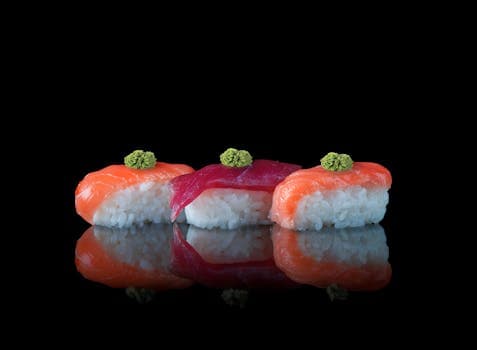
Edomae Tuna Nigiri — Jiro-Inspired
Hand-formed sushi rice topped with marinated tuna and a brush of nikiri soy — the classical Tokyo sushi tradition.
⭐Inspired by Jiro Ono · 🇯🇵 JapanAbout This Recipe
This recipe is inspired by Chef Jiro Ono's lifelong devotion to Edomae sushi — the classical Tokyo style perfected over decades at Sukiyabashi Jiro. Edomae sushi is small, precise, and built on three pillars: perfectly cooked and seasoned rice, the highest quality fish (often briefly aged or marinated), and the chef's nikiri — a reduced soy glaze brushed onto each piece in place of dunking. This is our home interpretation of the technique Jiro has refined over 70+ years. It is not a reproduction of any Sukiyabashi Jiro menu item.
Ingredients
Serves 4
- 300 gsushi-grade tuna(akami (lean) or chutoro (medium-fatty))
- 300 gJapanese short-grain rice
- 60 mlrice vinegar
- 30 gcaster sugar
- 1 tspfine sea salt
- 60 mlsoy sauce(for nikiri)
- 30 mlmirin(for nikiri)
- 30 mlsake(for nikiri)
- 1 tspwasabi paste(freshly grated if possible)
- 2 tbsppickled ginger (gari)(to serve)
Instructions
- 1
Cook the sushi rice
Rinse the rice in cold water until the water runs almost clear. Cook in 360ml water in a rice cooker or covered pot for 20 minutes. Let rest covered 10 more minutes.
- 2
Season the rice (shari)
While the rice cooks, gently warm the vinegar, sugar and salt in a small pan until dissolved. Cool. Spread the cooked rice in a wide non-metallic bowl, drizzle the vinegar mixture evenly, and fold (don't stir) with a wooden spatula to coat each grain. Cool to body temperature.
- 3
Make the nikiri
In a small pan, simmer the soy sauce, mirin and sake for 4 minutes until reduced by a third and glossy. Cool.
- 4
Slice the tuna
Pat the tuna completely dry. Using a long sharp knife, slice into rectangles about 7cm long × 2.5cm wide × 0.6cm thick — angle the knife away from you and slice in a single stroke. Don't saw.
- 5
Form the nigiri
Wet your hands with a vinegar-water mix (3:1). Take about 18g of seasoned rice and form into a loose oval. Place a tiny dab of wasabi on the rice. Lay a slice of tuna on top. Press gently with two fingers — firm enough to hold, loose enough to fall apart in the mouth. Brush the tuna lightly with nikiri.
The rice should hold together when picked up but break apart in the mouth. This balance is the soul of nigiri.
- 6
Serve immediately
Arrange on a wooden board with pickled ginger. Eat fish-side down — the nikiri side should hit the tongue first. No need to dip in extra soy sauce.
Did you make this?
Rate it and help other cooks find the recipes that actually work.
One tap to sign in, and we'll save the rating you just picked.
Everything you need to plan your week — free
- Meal calendar
- Grocery list
- AI recipe ideas
Cook this hands-free
Get AI meal plans, step-by-step cooking mode, and your saved recipes in the free Bento app.
Pro Tips
- →
Use the freshest sushi-grade tuna — supermarket fish will not work for raw preparations.
- →
Don't make rice too tight — Edomae nigiri should fall apart in the mouth.
- →
Wet your hands constantly — dry hands tear the rice.
Variations
- •
Salmon Nigiri: substitute fresh salmon — slice and form the same way.
- •
Aged Tuna (Zuke): marinate the tuna slices in nikiri for 5 minutes before forming — a traditional Edomae preservation technique.
Storage
Sushi cannot be stored — eat within 30 minutes of forming.
History & Origin
Edomae ('in front of Edo,' the old name for Tokyo) is the classical Tokyo sushi tradition that emerged in the early 19th century. Originally a fast-food street snack made from Tokyo Bay fish, it was refined over generations into the precise art seen today at top sushiyas. Jiro Ono's Sukiyabashi Jiro is the most internationally famous Edomae restaurant in the world.
Frequently Asked Questions
What is nikiri?
Nikiri is a soy sauce reduction (soy + mirin + sake, simmered together) brushed onto each piece of nigiri by the sushi chef. It eliminates the need for diners to dip into soy sauce themselves and ensures perfect seasoning. It is a hallmark of high-end Edomae sushi.
Is it safe to eat raw tuna at home?
Yes, IF you buy genuinely sushi-grade fish from a quality fishmonger or Japanese market. Sushi-grade fish has been frozen to specific FDA / EU temperatures to kill parasites. Never use supermarket tuna for raw preparations.
What is 'shokunin'?
A Japanese concept central to Jiro Ono's career — the lifelong, obsessive pursuit of mastery in a single craft. Ono trained for years before being allowed to even touch the rice; he spent decades refining single elements. The shokunin philosophy distinguishes Edomae sushi from modern fusion sushi.
Why is the rice cooled to body temperature?
Sushi rice (shari) is meant to match the temperature of the human hand, both for moulding and so the fish-rice contrast in the mouth is subtle. Hotter rice 'cooks' the fish slightly; colder rice clumps and breaks.
What sake pairs with sushi?
A clean junmai or junmai daiginjo — slightly chilled. Avoid overly fruity or aged sakes; they compete with the fish. Many Japanese diners drink sushi with green tea (gyokuro) instead of alcohol.
Nutrition Facts
Per serving (220g / 7.8 oz) · 4 servings total
Time Summary
Have Questions?
Ask our AI cooking assistant anything about this recipe — substitutions, techniques, scaling.
Chat with AI Chef →Featured in Guides
This recipe is featured in the following curated guides:
More Japanese Recipes
You Might Also Like
Similar dishes from other cuisines around the world.
Browse by Ingredient
More recipes built around the same core ingredients.
Free Kitchen Tools
Calculators and converters that pair with this page — no signup needed.
Put This Into a Plan
Schedule it, shop for it, and track what you already have.
Read Next
Longer reads that go deeper on the ideas behind this dish.
Community
Join the conversation
Sign in to leave a comment and save your favourite recipes