
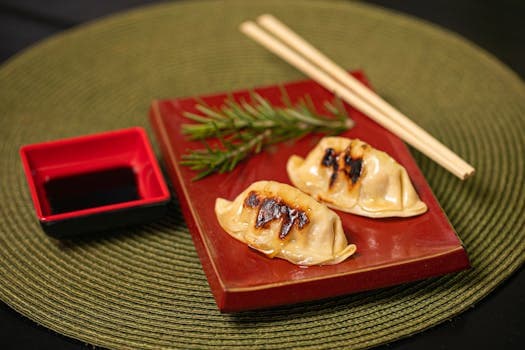
Pan-Fried Gyoza (Japanese Dumplings)
Crispy-bottomed, juicy pork and cabbage dumplings, pan-fried Japanese style and served with a soy-vinegar dipping sauce.
About This Recipe
Gyoza are Japan's answer to Chinese jiaozi — thinner-skinned, more garlicky, and always pan-fried to create the iconic crispy bottom. The technique of adding water to the pan mid-cook (steam-fry) ensures the filling cooks through while the bottoms caramelise into a golden crust. They're one of the most ordered dishes in Japanese restaurants worldwide.
Ingredients
Serves 4
- 300 gminced pork (fatty)
- 200 gnapa cabbage(finely shredded)
- 2 tbspsoy sauce
- 1 tbspsesame oil
- 1 tbspsake or dry sherry
- 1 tbspfresh ginger(grated)
- 3garlic cloves(minced)
- 2spring onions(finely chopped)
- 1 tspwhite pepper
- 30gyoza wrappers(store-bought or homemade)
- 2 tbspvegetable oil(for frying)
- 80 mlwater(for steaming)
- 3 tbspsoy sauce(dipping sauce)
- 1 tbsprice vinegar(dipping sauce)
- 1 tspchilli oil(dipping sauce)
Instructions
- 1
Prepare the cabbage
Salt shredded cabbage, rest 10 minutes, then squeeze out all moisture with your hands. This prevents the filling from becoming waterlogged.
- 2
Mix the filling
Combine pork, squeezed cabbage, soy sauce, sesame oil, sake, ginger, garlic, spring onions and white pepper. Mix vigorously in one direction until sticky and cohesive.
Mixing in one direction aligns the proteins and creates a better texture — this is the Japanese technique.
- 3
Pleat and seal
Place 1 tsp filling in the centre of a wrapper. Dampen the edge with water. Fold in half and pleat one side 5–6 times, pressing to seal. Place on a floured board.
- 4
Steam-fry method
Heat oil in a non-stick skillet over high heat. Add gyoza flat-side down. Cook 2 minutes until bases are golden. Add water, immediately cover with a lid. Steam 4–5 minutes until water evaporates.
- 5
Crisp the bottoms
Uncover, drizzle a little more oil around the edges. Cook 1 more minute until bases are deeply crispy and golden. Serve immediately, bottom-side up.
Did you make this?
Rate it and help other cooks find the recipes that actually work.
One tap to sign in, and we'll save the rating you just picked.
Everything you need to plan your week — free
- Meal calendar
- Grocery list
- AI recipe ideas
Track what you eat
Snap your meal to log calories and macros, run fasting timers and track water in the free SnapCal app.
Pro Tips
- →
Squeeze the cabbage bone-dry — any residual moisture steams the filling from inside and makes it rubbery.
- →
Use a non-stick pan — the crispy bottom will tear if it sticks.
- →
Make in bulk and freeze raw on a tray, then transfer to bags. Cook from frozen with an extra 2 minutes steam.
Variations
- •
Vegetarian: replace pork with tofu, shiitake mushrooms and edamame.
- •
Shrimp gyoza: use minced prawn instead of pork.
Storage
Raw gyoza freeze for 3 months. Cooked gyoza keep 2 days but lose their crispy bottom.
History & Origin
Gyoza were introduced to Japan by soldiers returning from China after WWII. Japanese cooks adapted the thicker Chinese jiaozi into thinner-skinned, more garlicky dumplings that were pan-fried rather than boiled. Today gyoza are one of Japan's most beloved foods.
Frequently Asked Questions
Why are my gyoza sticking to the pan?
The pan wasn't hot enough when you added the gyoza, or you lifted them too early. Let them cook undisturbed until the crust releases naturally.
Can I boil or steam gyoza instead of pan-frying?
Yes — boiling for 4–5 minutes gives you soft, tender dumplings similar to Chinese jiaozi. You'll lose the signature crispy bottom, but the filling cooks the same way.
Can I make the filling ahead of time?
Yes — mix the filling and refrigerate up to a day ahead, or wrap the dumplings and freeze them raw on a tray before transferring to a bag. Cook straight from frozen, adding a couple of extra minutes to the steaming step.
Nutrition Facts
Per serving (250g / 8.8 oz) · 4 servings total
Time Summary
Have Questions?
Ask our AI cooking assistant anything about this recipe — substitutions, techniques, scaling.
Chat with AI Chef →Featured in Guides
This recipe is featured in the following curated guides:
More Japanese Recipes
You Might Also Like
Similar dishes from other cuisines around the world.
Browse by Ingredient
More recipes built around the same core ingredients.
Free Kitchen Tools
Calculators and converters that pair with this page — no signup needed.
Put This Into a Plan
Schedule it, shop for it, and track what you already have.
Read Next
Longer reads that go deeper on the ideas behind this dish.
Community
Join the conversation
Sign in to leave a comment and save your favourite recipes