
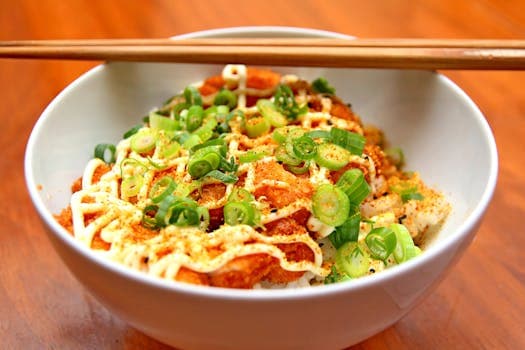
Katsudon (Pork Cutlet and Egg Rice Bowl)
Japan's ultimate comfort food — crispy tonkatsu pork cutlet simmered briefly in a dashi-soy-mirin sauce with egg, served over steamed rice. Pure weeknight satisfaction.
About This Recipe
Katsudon is one of Japan's most beloved donburi (rice bowl) dishes and a fixture of yoshoku — Western-influenced Japanese cooking. A pre-fried tonkatsu pork cutlet is briefly simmered in a sweet-savoury dashi sauce with sliced onion, then finished with egg poured over the top in the final 30 seconds. The egg barely sets — just curdled but still custardy — before the whole thing is turned out over hot steamed rice. The result is layers of texture and flavour: crispy breaded pork that softens slightly in the sauce, sweet-savoury onion, silky half-set egg, and fluffy rice that absorbs all the cooking juices. Katsudon is traditionally eaten before exams in Japan — 'katsu' is a homophone of the word meaning 'to win' or 'to overcome'. Rooted in the everyday cooking of Japanese kitchens, Katsudon (Pork Cutlet and Egg Rice Bowl) balances technique and tradition: the pork loin chops (about 150g each), fat trimmed is treated with care, drawing on time-honoured ratios that locals have refined across generations. The dish carries an unmistakable sensory signature — aromas that fill the kitchen as it cooks, layered textures that reveal themselves bite by bite, and a depth of flavour that comes from patient seasoning rather than shortcuts. Whether served as a weeknight dinner or as the centrepiece of a celebratory table, it reflects a regional pantry where local produce, seasoning habits and cooking vessels shape the final result. Home cooks who make this dish often note how forgiving it is once the core method is understood, and how a few small choices — the freshness of the pork loin chops (about 150g each), fat trimmed, the order of additions, the resting time at the end — separate a good version from a memorable one. This recipe walks through those choices so the dish arrives with the character it has on its home turf.
Ingredients
Serves 2
- 2pork loin chops (about 150g each), fat trimmed
- 30 gplain flour
- 1egg, beaten (for coating)
- 80 gpanko breadcrumbs
- 300 mlvegetable oil, for frying
- 1medium onion, thinly sliced
- Sauce
- 200 mldashi stock
- 3 tbspsoy sauce
- 3 tbspmirin
- 1 tbspcaster sugar
- 4eggs, lightly beaten (for the katsudon)
- 400 gcooked short-grain Japanese rice, hot
- 2 tbspthinly sliced spring onion, to garnish
Instructions
- 1
Prepare the tonkatsu
Score the fat edge of each pork chop with a knife (prevents curling). Pound gently to even thickness. Season with salt and pepper. Dust in flour, dip in beaten egg, then press firmly into panko breadcrumbs.
- 2
Fry the cutlets
Heat oil to 170°C in a deep pan. Fry cutlets for 4–5 minutes per side until deep golden brown and cooked through (72°C internal temperature). Drain on a wire rack. Cut into 2 cm slices — keep the cutlet together as a unit.
- 3
Make the katsudon
In a small (20cm) frying pan, combine dashi, soy, mirin and sugar. Bring to a simmer over medium heat. Add onion slices and simmer 3–4 minutes until softened.
- 4
Add the cutlet
Lay the sliced tonkatsu over the simmering onions. Pour beaten egg in a circular motion over the cutlet. Cover the pan immediately.
- 5
Set the egg
Cook covered for exactly 30–45 seconds. The egg should be just set on top but still custardy. Do not over-cook — the egg continues cooking from the residual heat when placed on rice.
- 6
Serve
Tip the whole contents of the pan over a bowl of hot rice. Garnish with spring onion.
Did you make this?
Rate it and help other cooks find the recipes that actually work.
One tap to sign in, and we'll save the rating you just picked.
Everything you need to plan your week — free
- Meal calendar
- Grocery list
- AI recipe ideas
Track what you eat
Snap your meal to log calories and macros, run fasting timers and track water in the free SnapCal app.
Pro Tips
- →
The small pan size matters — you want the egg to pool around the cutlet and set evenly, not spread thin across a large surface.
- →
Remove from heat while the egg is still slightly underdone — it sets further on the hot rice.
- →
If you don't have dashi, use 200ml water + 1 tsp dashi powder (hondashi) as a shortcut.
- →
Source the freshest pork loin chops (about 150g each), fat trimmed you can find — it is the flavour anchor of the dish.
- →
Season in layers as you go; tasting at each stage prevents a flat or over-salted final result.
Variations
- •
Chicken katsudon: substitute chicken breast for pork — equally delicious and slightly lighter.
- •
Oyakodon: omit the tonkatsu entirely — simmer chicken pieces with onion in the same sauce, add egg to finish. Japan's other iconic donburi.
- •
Cheese katsudon: place a slice of mild cheese on the cutlet before adding the egg.
- •
Vegetarian: replace the main protein with mushrooms, paneer, tofu or hearty beans for a meat-free version.
- •
Spicier: add fresh chilli, a chilli paste or a pinch of cayenne with the aromatics for a warmer profile.
Storage
Best eaten immediately. If prepping ahead, keep the fried tonkatsu and sauce components separate and assemble per serving.
History & Origin
Katsudon was created in the early 20th century, combining the newly popular tonkatsu (a yoshoku/Western-influenced dish) with the Japanese donburi tradition. The Waseda University area of Tokyo claims origin, and university culture spread the dish as affordable student food. Its name's association with 'katsu' (to win) made it traditional pre-exam meal.
Frequently Asked Questions
Can I make Katsudon (Pork Cutlet and Egg Rice Bowl) ahead of time?
Yes — most components hold well in the fridge for a day or two. Reheat gently with a splash of liquid to bring it back to life.
What can I substitute for pork loin chops (about 150g each), fat trimmed?
If pork loin chops (about 150g each), fat trimmed is hard to find, the closest substitutes share its texture and water content. Adjust seasoning slightly since substitutes often carry less character of their own.
Is this recipe authentic to Japanese cooking?
It follows the most widely accepted home-cook template. Regional variants exist and we note the main ones in the variations section.
Why did my version turn out bland?
Usually under-seasoning or rushing the aromatic stage. Build flavour in layers, taste as you go, and finish with a touch of acid or salt to brighten the dish.
Nutrition Facts
Per serving · 2 servings total
Time Summary
Have Questions?
Ask our AI cooking assistant anything about this recipe — substitutions, techniques, scaling.
Chat with AI Chef →Featured in Guides
This recipe is featured in the following curated guides:
More Japanese Recipes
You Might Also Like
Similar dishes from other cuisines around the world.
Browse by Ingredient
More recipes built around the same core ingredients.
Free Kitchen Tools
Calculators and converters that pair with this page — no signup needed.
Put This Into a Plan
Schedule it, shop for it, and track what you already have.
Read Next
Longer reads that go deeper on the ideas behind this dish.
Community
Join the conversation
Sign in to leave a comment and save your favourite recipes