
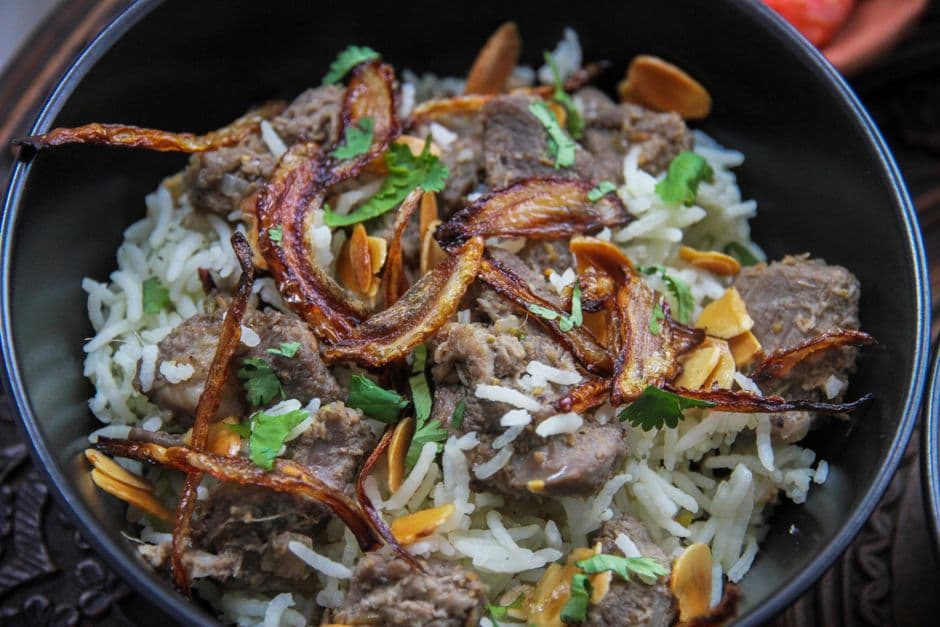
Thiébou Yapp — Senegalese Lamb and Rice
The meat version of Senegal's national dish: fragrant one-pot rice cooked in a rich tomato and onion broth with slow-braised lamb and vegetables.
About This Recipe
Thiébou yapp (literally 'rice with meat' in Wolof) is the meat counterpart to Senegal's most famous dish, thiéboudienne (fish rice). It follows the same principles: a rich tomato and onion base is built by slow-caramelising ceep bu jën (tomato paste and fermented oyster or mussel), the lamb is browned and slow-cooked until tender, and then the rice is cooked directly in the fragrant broth so it absorbs every bit of flavour. Root vegetables — cassava, carrots, turnip, cabbage — are added to cook alongside the lamb, creating a complete one-pot meal of extraordinary depth. Thiébou yapp is cooked on special occasions and Fridays — the Muslim holy day — and the communal eating from a large shared platter is central to Senegalese social life.
Ingredients
Serves 6
- 1 kgbone-in lamb shoulder(cut into large pieces)
- 500 glong-grain parboiled rice
- 4 tablespoonstomato paste
- 3 largetomatoes(blended)
- 2 largeonions(sliced)
- 4 clovesgarlic
- 1 bunchflat parsley
- 100 mlvegetable oil
- 2 mediumcarrots(halved)
- 200 gcabbage(cut into wedges)
- 1 mediumturnip(quartered)
- 2stock cubes
- 1 teaspoonsalt
- 1 litrewater
Instructions
- 1
Brown the lamb
Heat oil in a large pot over high heat. Brown lamb pieces all over, about 5 minutes per batch. Remove and set aside.
- 2
Build the tomato base
In the same pot, fry onions for 8 minutes until golden. Add garlic, parsley, tomato paste and blended tomatoes. Cook over medium heat for 15 minutes, stirring often, until the oil surfaces and the raw tomato smell has gone.
- 3
Braise lamb and vegetables
Return lamb to pot. Add stock cubes, salt and water. Bring to a boil, then simmer for 45 minutes. Add carrots, turnip and cabbage. Cook for 20 more minutes. Remove all solids and set aside.
- 4
Cook the rice
Measure the remaining broth — you need about 750ml for 500g rice. Adjust water. Rinse rice and add to the broth. Bring to a boil, reduce heat, cover and cook for 20 minutes until rice is cooked and broth is absorbed. Serve rice on a platter topped with the lamb and vegetables.
Did you make this?
Rate it and help other cooks find the recipes that actually work.
One tap to sign in, and we'll save the rating you just picked.
Everything you need to plan your week — free
- Meal calendar
- Grocery list
- AI recipe ideas
Cook this hands-free
Get AI meal plans, step-by-step cooking mode, and your saved recipes in the free Bento app.
Pro Tips
- →
The long frying of the tomato base is the foundation — do not rush it.
- →
Traditional Senegalese cooking uses a heavy cast-iron pot (caldero) for even heat distribution.
- →
Serve from a large communal platter — this is a dish for sharing.
- →
Taste and adjust salt at the very end — flavors concentrate as liquids reduce, and a final pinch of flaky salt sharpens the whole dish.
Variations
- •
Thiéboudienne uses fish instead of lamb and is the more famous version.
- •
Chicken can substitute for lamb — reduce braising time to 30 minutes.
- •
Vegetarian: swap the protein for roasted king oyster mushrooms, smoked tofu or cooked chickpeas — adjust seasoning slightly upward to compensate.
- •
Spicier: add a finely chopped fresh chile or a teaspoon of crushed Aleppo/Urfa pepper to the aromatics for warm, layered heat instead of a single sharp hit.
Storage
Refrigerate for up to 3 days. Reheat rice with a splash of water.
History & Origin
Thiébou yapp and its famous fish counterpart thiéboudienne are considered the national dishes of Senegal, and both were awarded UNESCO Intangible Cultural Heritage status in 2021 — the first West African foods to receive this recognition. The dishes are attributed to the 19th-century cook Penda Mbaye of Saint-Louis, who is credited with developing the technique of cooking rice in the cooking liquid of the protein. The communal eating tradition (sharing from one large bowl) is an important social ritual in Senegalese culture.
Frequently Asked Questions
What makes this different from jollof rice?
While both are West African rice dishes cooked in tomato-based broth, thiébou yapp and thiéboudienne are distinct in technique and flavour. Thiébou dishes use more vegetables, have a more complex broth, and are cooked differently — the protein is cooked first and the rice is added to the resulting stock.
Can I make this ahead of time?
Yes — most of the components can be prepared up to a day in advance and refrigerated separately. Reheat gently and assemble just before serving so textures stay distinct.
What can I substitute if I don't have all the ingredients?
Stay close to the role each ingredient plays: swap aromatics for similar ones (shallot for onion, lime for lemon), and keep the fat-acid-salt balance intact. Spice blends can usually be approximated with what's in the cupboard.
How do I know it's authentic?
Authenticity sits on a spectrum — what matters more is honoring the technique and balance of flavors. If the dish tastes harmonious and respects how cooks in its home region would build it, you're on solid ground.
Nutrition Facts
Per serving (480g / 16.9 oz) · 6 servings total
Time Summary
Have Questions?
Ask our AI cooking assistant anything about this recipe — substitutions, techniques, scaling.
Chat with AI Chef →Featured in Guides
This recipe is featured in the following curated guides:
More Senegalese Recipes
You Might Also Like
Similar dishes from other cuisines around the world.
Browse by Ingredient
More recipes built around the same core ingredients.
Free Kitchen Tools
Calculators and converters that pair with this page — no signup needed.
Put This Into a Plan
Schedule it, shop for it, and track what you already have.
Read Next
Longer reads that go deeper on the ideas behind this dish.
Community
Join the conversation
Sign in to leave a comment and save your favourite recipes