
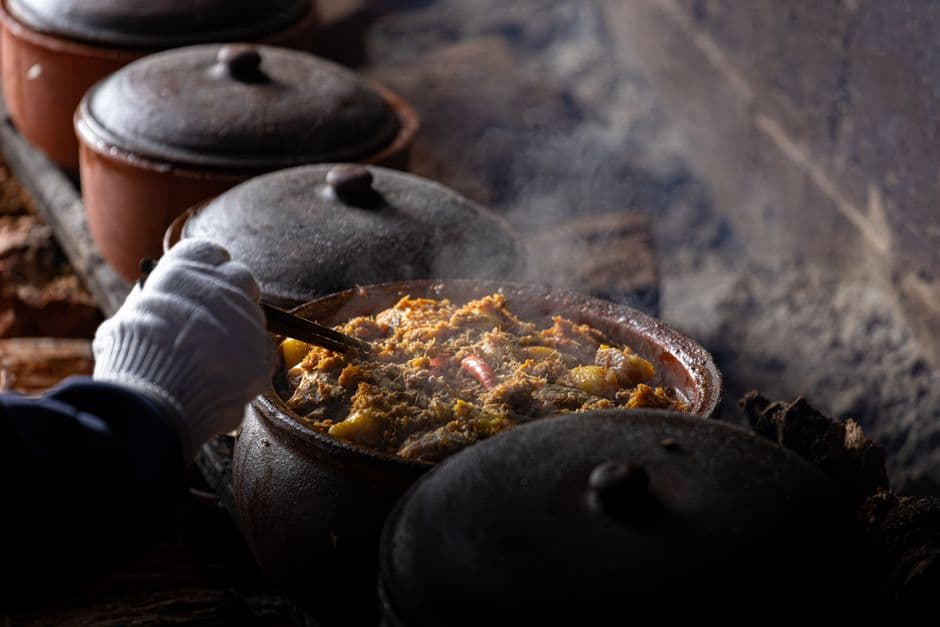
Mafé — Senegalese Peanut Stew
Rich, deeply savoury West African peanut stew with beef or lamb, sweet potato and aubergine — one of the great stews of the world.
About This Recipe
Mafé is West Africa's greatest stew: a rich, complex sauce built on a base of roasted peanut paste with tomato, onion and often fermented dried shellfish (yetu), slow-cooked with beef, lamb or chicken and root vegetables until everything melds into something extraordinarily deep and satisfying. The peanut base gives the sauce a creamy, nutty richness that is unique to West African cooking, different from peanut sauces elsewhere in the world. Mafé is found in various forms from Senegal to Mali, Guinea and Gambia, with each country and family having their own variation. It is served over white rice or with fonio (an ancient West African grain) and is one of the greatest comfort foods on earth.
Ingredients
Serves 6
- 700 gbeef chuck or lamb shoulder(diced)
- 200 gsmooth peanut butter
- 4 tablespoonstomato paste
- 2 largeonions(diced)
- 4 clovesgarlic(minced)
- 2 mediumsweet potatoes(peeled and diced)
- 1 mediumaubergine(diced)
- 2 mediumcarrots(chunked)
- 1scotch bonnet pepper(pierced)
- 2stock cubes
- 800 mlwater
- 3 tablespoonsvegetable oil
- 1 teaspoonsalt
Instructions
- 1
Brown the meat
Heat oil in a large pot over high heat. Brown beef in batches, about 4 minutes per batch. Remove and set aside.
- 2
Build the base
Fry onion for 5 minutes. Add garlic and tomato paste. Cook 3 minutes. Dilute peanut butter with 200ml of the water until smooth, then add to the pot. Stir well.
- 3
Braise
Return meat to pot. Add remaining water, stock cubes, salt and the whole scotch bonnet. Bring to a boil, reduce heat and simmer for 45 minutes.
- 4
Add vegetables and finish
Add sweet potatoes, aubergine and carrots. Simmer for 25–30 minutes until vegetables are tender and sauce has thickened to a rich, creamy consistency. Taste and adjust seasoning. Serve over white rice.
Did you make this?
Rate it and help other cooks find the recipes that actually work.
One tap to sign in, and we'll save the rating you just picked.
Everything you need to plan your week — free
- Meal calendar
- Grocery list
- AI recipe ideas
Cook this hands-free
Get AI meal plans, step-by-step cooking mode, and your saved recipes in the free Bento app.
Pro Tips
- →
Good quality smooth peanut butter makes a significant difference — use natural peanut butter without sugar.
- →
The scotch bonnet should stay whole — it adds gentle background heat without making the stew fiery.
- →
Mafé improves enormously the next day — make it ahead whenever possible.
- →
Taste and adjust salt at the very end — flavors concentrate as liquids reduce, and a final pinch of flaky salt sharpens the whole dish.
Variations
- •
Chicken mafé is lighter and faster — use bone-in chicken thighs.
- •
Some recipes add fresh tomato alongside the paste for extra brightness.
- •
Vegetarian mafé with just root vegetables and extra pumpkin is outstanding.
- •
Spicier: add a finely chopped fresh chile or a teaspoon of crushed Aleppo/Urfa pepper to the aromatics for warm, layered heat instead of a single sharp hit.
Storage
Refrigerate for up to 5 days. Reheat gently on the stove with a splash of water. Freezes very well for up to 3 months.
History & Origin
Mafé (also known as groundnut stew or tigadèguèna in Mali) is one of West Africa's most ancient dishes, with roots in the pre-colonial period when peanuts (groundnuts) were a fundamental crop across the Sahel region. The dish spread with West African migrations and the transatlantic slave trade, with descendants in the African-American tradition of 'groundnut stew'. In Senegal it remains one of the most important dishes of the cultural repertoire.
Frequently Asked Questions
Can I use peanut butter instead of raw peanut paste?
Yes — natural, unsweetened peanut butter is an excellent substitute. Avoid sweetened peanut butter, which throws off the savoury balance of the stew.
Can I make this ahead of time?
Yes — most of the components can be prepared up to a day in advance and refrigerated separately. Reheat gently and assemble just before serving so textures stay distinct.
What can I substitute if I don't have all the ingredients?
Stay close to the role each ingredient plays: swap aromatics for similar ones (shallot for onion, lime for lemon), and keep the fat-acid-salt balance intact. Spice blends can usually be approximated with what's in the cupboard.
How do I know it's authentic?
Authenticity sits on a spectrum — what matters more is honoring the technique and balance of flavors. If the dish tastes harmonious and respects how cooks in its home region would build it, you're on solid ground.
Nutrition Facts
Per serving (420g / 14.8 oz) · 6 servings total
Time Summary
Have Questions?
Ask our AI cooking assistant anything about this recipe — substitutions, techniques, scaling.
Chat with AI Chef →Featured in Guides
This recipe is featured in the following curated guides:
More Senegalese Recipes
You Might Also Like
Similar dishes from other cuisines around the world.
Browse by Ingredient
More recipes built around the same core ingredients.
Free Kitchen Tools
Calculators and converters that pair with this page — no signup needed.
Put This Into a Plan
Schedule it, shop for it, and track what you already have.
Read Next
Longer reads that go deeper on the ideas behind this dish.
Community
Join the conversation
Sign in to leave a comment and save your favourite recipes