
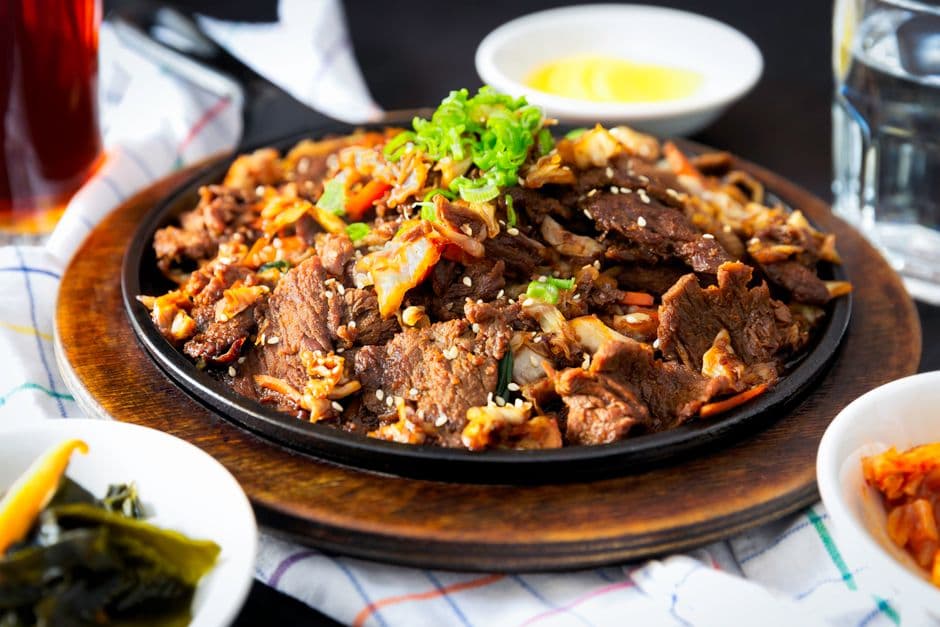
Бульгоги из говядины
Тонко нарезанная говядина, маринованная в пикантно-сладком соевом и грушевом соусе, а затем быстро приготовленная на гриле или на сковороде до дымного совершенства.
Об этом рецепте
Пульгоги, что в переводе с корейского буквально означает «огненное мясо», — одно из самых знаменитых блюд Кореи во всем мире. Тонкие ломтики говядины маринуются в смеси соевого соуса, кунжутного масла и азиатской груши, которая действует как естественный тендеризатор благодаря ферменту бромелин. Блюдо исторически ассоциировалось с корейской королевской семьей и знатью, прежде чем оно стало любимым ежедневным блюдом. Традиционно бульгоги готовят на угольном гриле за столом, но он прекрасно адаптируется к очень горячей чугунной сковороде или сковороде дома, обеспечивая характерные карамелизированные края и сочную внутреннюю часть, которые определяют блюдо. Основанный на повседневной кулинарии корейской кухни, Beef Bulgogi сочетает в себе технику и традиции: к говяжьему рибайу или вырезке относятся с осторожностью, опираясь на проверенные временем пропорции, которые местные жители совершенствовали на протяжении поколений. Блюдо несет в себе безошибочную чувственную подпись — ароматы, которые наполняют кухню во время приготовления, многослойные текстуры, раскрывающиеся шаг за шагом, и глубина вкуса, которая возникает благодаря терпеливым приправам, а не ярлыкам. Независимо от того, подается ли он в качестве ужина в будний день или в качестве центрального элемента праздничного стола, он отражает региональную кладовую, где местные продукты, приправы и посуда для приготовления пищи формируют конечный результат. Домашние повара, готовящие это блюдо, часто отмечают, насколько оно простительно, если понять основной метод, и как несколько небольших вариантов — свежесть говяжьего рибай или вырезки, порядок добавок, время отдыха в конце — отделяют хорошую версию от запоминающейся. В этом рецепте учитываются все эти варианты, поэтому блюдо получается с тем характером, которое оно имеет на родине.
Ингредиенты
Служит 4
- 600 гговяжий рибай или вырезка(нарезано очень тонко (2–3 мм))
- 0.5Азиатская груша или киви(тертый)
- 4 ст. л.соевый соус
- 2 ст. л.кунжутное масло
- 1.5 ст. л.коричневый сахар
- 4 зубчикачеснок(фарш)
- 1 ч. л.свежий имбирь(тертый)
- 2зеленый лук(мелко нарезанный)
- 1 ст. л.семена кунжута(поджаренный)
- 1средний лук(тонко нарезанный)
- 1 ст. л.растительное масло(для приготовления пищи)
- 2зеленый лук(для украшения)
Инструкции
- 1
Нарезать говядину
Если мясник не нарезал говядину ломтиками, частично заморозьте ее на 1 час, пока она не станет твердой, но не твердой. Нарежьте поперек волокон как можно тоньше — 2–3 мм. Тонкие ломтики — самый важный фактор для создания подлинной текстуры бульгоги.
- 2
Сделать маринад
Смешайте в миске тертую грушу (или киви), соевый соус, кунжутное масло, коричневый сахар, чеснок и имбирь. Перемешивайте, пока сахар не растворится. Груша содержит натуральные ферменты, смягчающие мясо, и придает ему легкую сладость.
Азиатская груша традиционна и наиболее эффективна. Киви более широко доступен и хорошо работает. Избегайте ананаса — он слишком агрессивен и может сделать мясо мягким, если его мариновать слишком долго.
- 3
Мариновать
Добавьте в маринад нарезанную говядину и нарезанный лук. Хорошо перемешайте, чтобы каждый кусочек был покрыт. Маринуйте не менее 30 минут при комнатной температуре или до 4 часов в холодильнике.
- 4
Готовьте партиями
Нагрейте чугунную сковороду, сковороду-гриль или широкую сковороду на самом сильном огне до образования дыма. Добавьте растительное масло и готовьте говядину тонкими, незаполненными порциями. Оставьте в покое на 60 секунд для карамелизации, затем перемешайте и готовьте еще 30–60 секунд. Говядина должна иметь обугленные края и полностью прожариться.
Переполненность — враг бульгоги: слишком много ломтиков выделяют влагу, и мясо пропаривается, а не карамелизируется. Работайте 3–4 небольшими партиями.
- 5
Украсьте и подавайте
Перекладываем на сервировочное блюдо. Сверху разбросайте поджаренные семена кунжута и нарезанный зеленый лук. Подавайте сразу с отварным рисом, кимчи и листьями салата для заворачивания.
Вы готовили это блюдо?
Поставьте оценку и помогите другим найти рецепты, которые действительно работают.
Войдите в одно касание, и мы сохраним только что выбранную оценку.
Всё для планирования недели — бесплатно
- Календарь питания
- Список покупок
- Идеи рецептов с ИИ
Следите за питанием
Фотографируйте еду, чтобы записывать калории и макросы, запускайте таймеры голодания и отслеживайте воду в бесплатном приложении SnapCal.
Советы профессионалов
- →
Чем тоньше говядина, тем лучше — при нарезке дома необходимы кратковременная заморозка и очень острый нож.
- →
Попросите мясника нарезать рибай для бульгоги тонкими ломтиками — многие корейские мясники предлагают это как стандартную услугу.
- →
Подавайте с ссамом — листьями салата, листьями периллы, рисом, кимчи и пастой гочуджанг, чтобы каждый посетитель мог собрать свои собственные роллы за столом.
- →
Из остатков бульгоги на следующий день получится исключительный жареный рис — добавьте его в жареный рис с кимчи и жареным яйцом сверху.
- →
Возьмите самый свежий говяжий рибай или вырезку, какую только сможете найти — это основа вкуса блюда.
Вариации
- •
Дваэджи бульгоги: замените свиную лопатку, нарезанную тонкими ломтиками, и добавьте в маринад 1 столовую ложку пасты гочуджанг, чтобы получить острый вариант свинины.
- •
Куриные бульгоги: используйте тонко нарезанные куриные бедра и маринуйте всего 30 минут, так как курица размягчается быстрее, чем говядина.
- •
Грибные бульгоги: замените мясо королевскими вешенками и грибами шиитаке, нарезанными соломкой. Сократите время маринования до 15 минут.
- •
Вегетарианство: замените основной белок грибами, паниром, тофу или сытными бобами, чтобы получить вариант без мяса.
- •
Острее: добавьте свежий перец чили, пасту чили или щепотку кайенского перца с ароматическими веществами для более теплого вкуса.
Хранение
Сырые маринованные бульгоги хранятся в холодильнике до 24 часов — кислотность груши продолжает расщеплять белок. Приготовленные бульгоги хранятся 3 дня; разогрейте на горячей сковороде, чтобы восстановить карамелизацию.
История и происхождение
Происхождение Пульгоги восходит к королевству Когурё (37 г. до н. э. – 668 г. н. э.), где в исторических текстах упоминается блюдо под названием макджок — мясо с пряностями, приготовленное на гриле на шампурах. Во времена династии Чосон он превратился в необиаби и, в конечном итоге, в современные бульгоги на основе маринада. Исторически это королевское и аристократическое блюдо из-за дороговизны говядины, оно стало доступным для всех корейцев в ходе экономического развития 20-го века и теперь является самым признанным блюдом Кореи во всем мире.
Часто задаваемые вопросы
Могу ли я приготовить булгоги из говядины заранее?
Да, большинство компонентов хорошо хранятся в холодильнике день или два. Аккуратно разогрейте, добавив немного жидкости, чтобы вернуть его к жизни.
Чем можно заменить говяжий рибай или вырезку?
Если говяжий рибай или вырезку трудно найти, ближайшие заменители имеют такую же текстуру и содержание воды. Немного отрегулируйте приправу, поскольку заменители часто несут меньший характер.
Этот рецепт аутентичен корейской кухне?
Он соответствует наиболее распространенному шаблону домашней кухни. Региональные варианты существуют, основные из них мы отмечаем в разделе «Вариации».
Почему моя версия оказалась пресной?
Обычно недостаточно приправ или спешат на ароматическую стадию. Создавайте вкус слоями, пробуйте по ходу дела и в завершение добавьте немного кислоты или соли, чтобы сделать блюдо ярче.
Факты о питании
За порцию (250g) · 4 общее количество порций
Сводка времени
Есть вопросы?
Спросите нашего помощника по кулинарии с искусственным интеллектом что-нибудь об этом рецепте — о заменах, методах, масштабировании.
Чат с AI Chef →Избранное в руководствах
Этот рецепт представлен в следующих руководствах:
Больше рецептов Корейские
Вам также может понравиться
Похожие блюда из кухонь других стран.
Поиск по ингредиенту
Другие рецепты с теми же основными ингредиентами.
Бесплатные кухонные инструменты
Калькуляторы и конвертеры к этой странице — без регистрации.
Превратить в план
Поставьте в календарь, соберите список покупок и следите за запасами.
Календарь планирования питания
Поставьте этот рецепт на нужный день и спланируйте неделю вокруг него.
Приложение для списка покупок
Превратите этот список ингредиентов в список покупок, сгруппированный по отделам.
Импорт рецептов
Сохраните этот рецепт — и любую ссылку на рецепт — в одной упорядоченной библиотеке.
Читать далее
Развёрнутые материалы об идеях, стоящих за этим блюдом.
Сообщество
Присоединяйтесь к разговору
Войдите, чтобы оставить комментарий и сохранить любимые рецепты.