
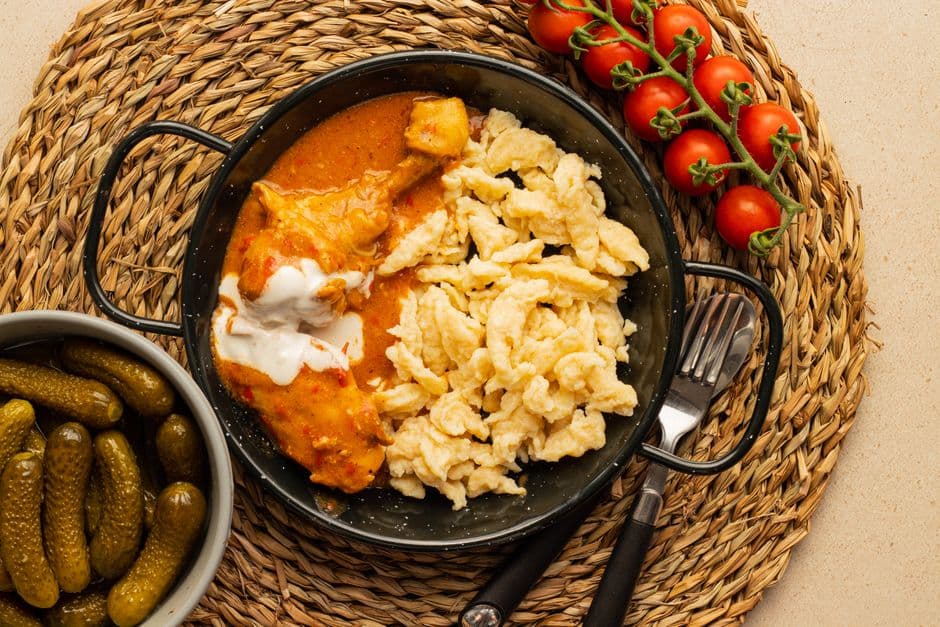
Венгерский гуляш
Знаменитое венгерское рагу из говядины и картофеля с красной паприкой — очень пикантное, остро приправленное и приготовленное на медленном огне, пока говядина не станет нежнейшей.
Об этом рецепте
Гуляш — национальное блюдо Венгрии и одно из величайших тушеных блюд в мире, родившееся на обширных лугах пусты, где венгерские пастухи (гулясок) готовили сушеную говядину в котле (бограч) на открытом огне. Определяющим ингредиентом является сладкая венгерская паприка, которую используют в необычайном количестве, чтобы придать тушеному блюду яркий кирпично-красный цвет и придать ему теплую, сложную сладость. Настоящий венгерский гуляш — это тушеный суп, более жидкий, чем многие западные версии, приготовленный из говяжьей голени или лопатки, лука, помидоров, зеленого перца, тмина и майорана. Картофель добавляют в конце, чтобы бульон загустел естественным путем. Его подают в глубоких тарелках с хрустящим белым хлебом для мытья полов.
Ингредиенты
Служит 6
- 1 кгговяжья голень или патрон(нарезать кубиками 3 см.)
- 3 крупныйлук(мелко нарезанный кубиками)
- 4 столовые ложкисладкая венгерская паприка
- 1 чайная ложкаострая венгерская паприка или кайенский перец
- 3 среднийкартофель(очистить, нарезать кусочками толщиной 2 см.)
- 2 среднийпомидоры(грубо нарезанный)
- 2зеленый перец(очищенный от семян, грубо нарезанный)
- 4 зубчикачеснок(фарш)
- 1 чайная ложкасемена тмина
- 1 чайная ложкасушеный майоран
- 2 столовые ложкисало или растительное масло
- 1.5 литрыговяжий бульон или вода
- salt and black pepper(to taste)
Инструкции
- 1
Обжарить лук
Нагрейте сало или масло в большой тяжелой кастрюле на среднем огне. Добавьте лук и готовьте на медленном огне в течение 20 минут, часто помешивая, пока он не станет темно-золотистым и не станет очень мягким. Эта терпеливая карамелизация является вкусовой основой блюда.
- 2
Добавьте паприку
Снимите кастрюлю с огня на мгновение (это важно — перец при сильном огне подгорает и горчит). Добавьте всю паприку и тмин, перемешайте с луком, затем верните на средний огонь. Жарьте 30 секунд, постоянно помешивая.
- 3
Обжарить говядину
Добавьте в кастрюлю кубики говядины, хорошо приправьте солью и перемешайте, чтобы они покрылись паприко-луковой основой. Готовьте на среднем огне, время от времени помешивая, в течение 8 минут, пока говядина не подрумянится со всей поверхности.
- 4
Добавьте ароматизаторы и жидкость.
Добавьте чеснок, зеленый перец, помидоры и майоран. Перемешайте, затем влейте бульон или воду. Доведите до кипения, затем уменьшите до слабого кипения. Частично накройте крышкой и готовьте 1 час 30 минут, пока говядина не станет очень мягкой.
- 5
Добавьте картофель
Добавьте кусочки картофеля в рагу и готовьте без крышки еще 20–25 минут, пока картофель не станет мягким, а бульон слегка не загустеет. Тушеное мясо должно быть на бульоне — это не густая европейская похлебка, а наваристый, паприко-красный суп.
- 6
Дегустируйте и подавайте
Попробуйте и отрегулируйте приправу. Гуляш должен иметь насыщенный вкус сладкой паприки, пикантной говядины и нежной теплоты. Разлейте по глубоким тарелкам и подавайте с толстым хрустящим белым хлебом. Сметана не обязательна, но традиционна во многих семьях.
Вы готовили это блюдо?
Поставьте оценку и помогите другим найти рецепты, которые действительно работают.
Войдите в одно касание, и мы сохраним только что выбранную оценку.
Всё для планирования недели — бесплатно
- Календарь питания
- Список покупок
- Идеи рецептов с ИИ
Готовьте, не касаясь экрана
Получите ИИ-планы питания, пошаговый режим готовки и сохранённые рецепты в бесплатном приложении Bento.
Советы профессионалов
- →
Используйте самую качественную сладкую венгерскую паприку, которую только можете найти — это душа этого блюда.
- →
Никогда не жарьте перец на сильном огне; он обжигается за считанные секунды и становится едким.
- →
Говяжья голень дает более насыщенный студенистый бульон, чем окорочок — его стоит поискать.
- →
В самом конце попробуйте и отрегулируйте соль — вкусы концентрируются по мере уменьшения количества жидкости, а последняя щепотка чешуйчатой соли придает остроту всему блюду.
Вариации
- •
Бограчгуляш — традиционная версия, приготовленная на открытом воздухе в котле на открытом дровяном огне.
- •
Добавьте яичную лапшу (чипетке), приготовленную из крутого мучно-яичного теста, зажатого в рагу на последние 10 минут.
- •
Вегетарианцы: замените белок жареными королевскими вешенками, копченым тофу или приготовленным нутом — для компенсации слегка отрегулируйте приправу.
- •
Острее: добавьте к ароматике мелко нарезанный свежий перец чили или чайную ложку измельченного перца Алеппо/Урфа для получения теплого, многослойного остроты вместо одного острого удара.
Хранение
Гуляш значительно улучшается за ночь. Храните в холодильнике до 4 дней или заморозьте до 3 месяцев.
История и происхождение
Гуляш восходит, по крайней мере, к мадьярским пастухам 9-го века, которые сушили говядину на солнце, чтобы сохранить ее. Восстановленный в воде с луком и паприкой, он стал самым бессмертным кулинарным символом Венгрии.
Часто задаваемые вопросы
Это то же самое, что и «гуляш», который подают в других странах Европы?
Во многих странах есть своя версия. Австрийский Риндсгуляс и чешский гуляш более толстые и часто подаются с кнедликами. Венгерский оригинал более бульонный и легкий.
Могу ли я сделать это заранее?
Да, большинство компонентов можно приготовить заранее и хранить в холодильнике отдельно. Аккуратно разогрейте и соберите непосредственно перед подачей на стол, чтобы текстура оставалась четкой.
Чем можно заменить, если у меня нет всех ингредиентов?
Будьте внимательны к роли каждого ингредиента: замените ароматические вещества на аналогичные (шалот на лук, лайм на лимон) и сохраните жирно-кислотно-солевой баланс. Смеси специй обычно можно сравнить с тем, что есть в шкафу.
Как я узнаю, что оно подлинное?
Подлинность зависит от спектра: важнее всего соблюдение техники и баланса вкусов. Если блюдо имеет гармоничный вкус и соответствует тому, как его готовят повара в его родном регионе, вы на твердой почве.
Факты о питании
За порцию · 6 общее количество порций
Сводка времени
Есть вопросы?
Спросите нашего помощника по кулинарии с искусственным интеллектом что-нибудь об этом рецепте — о заменах, методах, масштабировании.
Чат с AI Chef →Больше рецептов Венгерские
Вам также может понравиться
Похожие блюда из кухонь других стран.
Поиск по ингредиенту
Другие рецепты с теми же основными ингредиентами.
Бесплатные кухонные инструменты
Калькуляторы и конвертеры к этой странице — без регистрации.
Превратить в план
Поставьте в календарь, соберите список покупок и следите за запасами.
Читать далее
Развёрнутые материалы об идеях, стоящих за этим блюдом.
MyCookingCalendar против Paprika 3: органайзер рецептов или полный планировщик еды с искусственным интеллектом?
9 мин
Связь кишечника и мозга: полное описание того, как глютен влияет на вашу концентрацию
13 мин
Диета для здоровья кишечника: полноценные продукты, пребиотики, пробиотики и ось кишечник-мозг
13 мин
Сообщество
Присоединяйтесь к разговору
Войдите, чтобы оставить комментарий и сохранить любимые рецепты.