
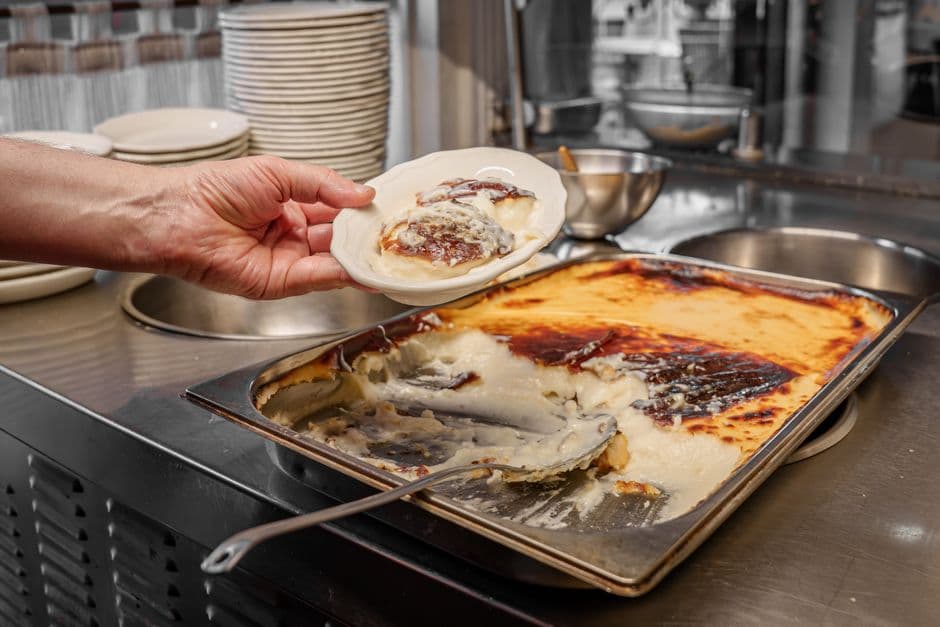
Kazandibi
Türkisches außergewöhnliches gebranntes Milchpudding — ein cremige, rosenduftende Reismehl-Creme mit charakteristischer karamellisierter, fast verkohlter Unterseite.
Über dieses Rezept
Kazandibi — wörtlich 'Kessel-Boden' — ist eine der fasziniendsten und charaktervollsten Süßspeisen der türkischen Küche. Es ist ein Mitglied der Muhallebi-Familie von Milchpuddings, die sich durch einen absichtlich gebrannten, karamellisierten Boden auszeichnet, der der Süßspeise ihren Namen und ihre bestimmende Eigenschaft gibt. Der Pudding selbst ist eine glatte, stärkehaltige Creme aus Milch, Reismehl und Zucker, subtil mit Rosenwasser aromatisiert. Er wird in einem Topf gekocht, bis er dick ist, dann in eine gut gefettete Backform gepresst und unter einem sehr heißen Grill platziert, um den geschwärzten Boden zu entwickeln. Wenn umgekehrt, wird die verkohlte Oberfläche zur dramatischen, toffeebraun gefärbten Oberseite jeder Portion. Die Bitterkeit des Karamels kontrastiert wunderschön mit dem süßen, cremigen Pudding.
Zutaten
Dient 8
- 1 LiterVollmilch
- 120 gPuderzucker
- 80 gReismehl
- 30 gMaisstärke
- 1 EsslöffelRosenwasser
- 40 gungesalzene Butter(zum Fetten der Form)
- 4 EsslöffelPuderzucker(für die Karamellisierung)
Anleitung
- 1
Bereiten Sie die Pudding-Basis vor
Verquirlen Sie Reismehl und Maisstärke mit 200 ml kalter Milch, bis es völlig glatt ist. Gießen Sie die verbleibende Milch in einen schweren Topf mit 120 g Zucker. Über mittlerer Hitze rühren, bis sich der Zucker auflöst und die Milch warm ist. Geben Sie die Reismehlmischung in einem dünnen Strahl hinzu und schlagen Sie ständig mit einem Schneebesen.
- 2
Kochen Sie, bis es dick wird
Rühren Sie kontinuierlich mit einem Holzlöffel oder hitzebeständigen Spatel über mittlerer Hitze 15–20 Minuten, bis der Pudding zu einer Konsistenz verdickt, die den Löffel dick bedeckt und sich leicht von den Seiten des Topfes zurückzieht. Vom Herd nehmen und Rosenwasser einrühren.
- 3
Bereiten Sie die Karamell-Basis vor
Fetten Sie eine 30 x 20 cm Backform großzügig mit Butter ein. Streuen Sie 4 Esslöffel Zucker gleichmäßig auf dem Boden. Stellen Sie die Form direkt über mittlerer bis hoher Hitze auf den Herd oder unter einen sehr heißen Grill, bis der Zucker schmilzt und zu einer dunkelbraun-bernsteinfarbenen, sogar leicht geschwärzten Karamelle wird — das ist beabsichtigt und traditionell.
Beobachten Sie den Zucker sorgfältig — der Unterschied zwischen idealer Karamellisierung und einem zu scharf gebrannten ist nur Sekunden. Sie wollen Dunkelbraun, nicht verkohltes Schwarz.
- 4
Geben Sie den Pudding hinzu
Gießen Sie den heißen Pudding sofort über die karamellisierte Zuckerbasis in der Form und verteilen Sie ihn eben. Lassen Sie bis zur Raumtemperatur abkühlen.
- 5
Kühlen und umkehren
Kühlen Sie mindestens 3 Stunden, bis vollständig fest und kalt. Um zu servieren, fahren Sie sorgfältig mit einem Spatel um die Kanten. Umkehren der Portionen auf Tellern, damit die karamellisierte Basis zur Oberseite wird. Die dunkle Karamell-Oberfläche ist die Besonderheit des Gerichts.
Haben Sie das gekocht?
Bewerte es und hilf anderen, die Rezepte zu finden, die wirklich funktionieren.
Einmal anmelden, und wir speichern die Bewertung, die Sie gerade gewählt haben.
Alles, was Sie für Ihre Wochenplanung brauchen — kostenlos
- Essensplaner
- Einkaufsliste
- KI-Rezeptideen
Behalten Sie im Blick, was Sie essen
Fotografieren Sie Ihre Mahlzeit, um Kalorien und Makros zu erfassen, nutzen Sie Fasten-Timer und tracken Sie Ihr Wasser – in der kostenlosen SnapCal-App.
Profi-Tipps
- →
Rühren Sie den Pudding ständig, während er verdickt, um zu verhindern, dass er am Topfboden kleben bleibt und anbrennt.
- →
Die karamellisierte Basis sollte wirklich dunkel sein — seien Sie nicht zaghaft. Die Bitterkeit ist Teil des Geschmacks.
- →
Rosenwasser kann durch ein kleines Stück aufgelöste Mastix-Paste in der warmen Milch für einen traditionelleren Geschmack ersetzt werden.
- →
Kazandibi wird traditionell kalt serviert und hält gekühlt bis zu 3 Tage.
Variationen
- •
Hähnchenbrust-Kazandibi (Tavuk Göğsü-Stil): Geben Sie 80 g sehr fein geschreddertes, pochiertes Hähnchenfleisch zum Pudding — eine klassische und überraschende türkische Kombination.
- •
Mastix-Kazandibi: Geben Sie 2–3 gemahlene Mastix-Harzkörner zur warmen Milch für ein kieferiges, harzig-würziges Aroma.
- •
Zimtvariante: Bestreuen Sie den fertigen Pudding großzügig mit gemahlener Zimts vor dem Servieren.
- •
Vegetarisch: Ersetzen Sie das Protein durch geröstete Austernpilze, Räucher-Tofu oder gekochte Kichererbsen — passen Sie die Würzung leicht an.
Lagerung
Gekühlt lagern, abgedeckt, bis zu 3 Tage. Kazandibi wird immer kalt serviert.
Geschichte und Herkunft
Kazandibi ist eine Variante von Muhallebi, Türkeis antike Milchpudding-Tradition, die bis zu den ottomanischen Hofküchen zurückreicht. Der absichtlich verkohlte Boden war wahrscheinlich das Ergebnis eines glücklichen Zufalls — ein Pudding, der zu lange auf der Hitze war — der sich als so lecker erwies, dass es zu einem eigenständigen Gericht wurde.
Häufig gestellte Fragen
Soll die verkohlte Basis wirklich bitter schmecken?
Ja — die leichte Bitterkeit der karamellisierten Basis ist ein beabsichtigter und wesentlicher Geschmackskontrast. Es sollte dunkel sein, aber nicht scharf verkohltes Schwarz.
Kann ich das in einzelnen Förmchen machen?
Ja — verteilen Sie das Karamell auf einzelne Förmchen und geben Sie den Pudding darauf. Die Kochzeit für das Karamell bleibt gleich; der Pudding setzt in kleineren Portionen schneller.
Kann ich dies im Voraus zubereiten?
Ja — die meisten Komponenten können bis zu einem Tag im Voraus zubereitet und separat gekühlt werden. Leicht erwärmen und kurz vor dem Servieren zusammensetzen, um unterschiedliche Texturen zu bewahren.
Was kann ich ersetzen, wenn ich nicht alle Zutaten habe?
Bleiben Sie nah an der Rolle jeder Zutat dran: Ersetzen Sie Aromaten durch ähnliche (Schalotte für Zwiebel, Limette für Zitrone) und bewahren Sie das Fett-Säure-Salz-Gleichgewicht. Gewürzmischungen können normalerweise mit dem angenähert werden, was in der Küche ist.
Nährwertangaben
Pro Portion · 8 Portionen insgesamt
Zeitzusammenfassung
Haben Sie Fragen?
Fragen Sie unseren KI-Kochassistenten zu diesem Rezept – Ersetzungen, Techniken, Skalierung.
Chatten Sie mit AI Chef →In Reiseführern vorgestellt
Dieses Rezept ist in den folgenden kuratierten Leitfäden enthalten:
Weitere Türkische Rezepte
Das könnte Ihnen auch gefallen
Ähnliche Gerichte aus anderen Küchen der Welt.
Nach Zutat stöbern
Weitere Rezepte rund um dieselben Hauptzutaten.
Kostenlose Küchen-Tools
Rechner und Umrechner, die zu dieser Seite passen — ohne Anmeldung.
Rezept-Umrechner
Halbieren oder verdoppeln Sie jede Menge in diesem Rezept – ganz ohne Kopfrechnen.
Maßeinheiten-Umrechner
Rechnen Sie Cups, Gramm, Unzen und Milliliter in beide Richtungen um.
Heißluftfritteusen-Umrechner
Rechnen Sie Backofenzeit und -temperatur in Einstellungen für die Heißluftfritteuse um.
Daraus einen Plan machen
Einplanen, einkaufen und im Blick behalten, was schon da ist.
Essensplaner-Kalender
Legen Sie dieses Rezept auf einen Tag und planen Sie die Woche darum herum.
Einkaufslisten-App
Machen Sie aus dieser Zutatenliste eine nach Regalen sortierte Einkaufsliste.
Kalorienanalyse per Foto
Fotografieren Sie den fertigen Teller und erhalten Sie eine Schätzung von Kalorien und Makros.
Weiterlesen
Ausführliche Artikel zu den Ideen hinter diesem Gericht.
Gemeinschaft
Beteiligen Sie sich an der Unterhaltung
Melden Sie sich an, um einen Kommentar zu hinterlassen und Ihre Lieblingsrezepte zu speichern