
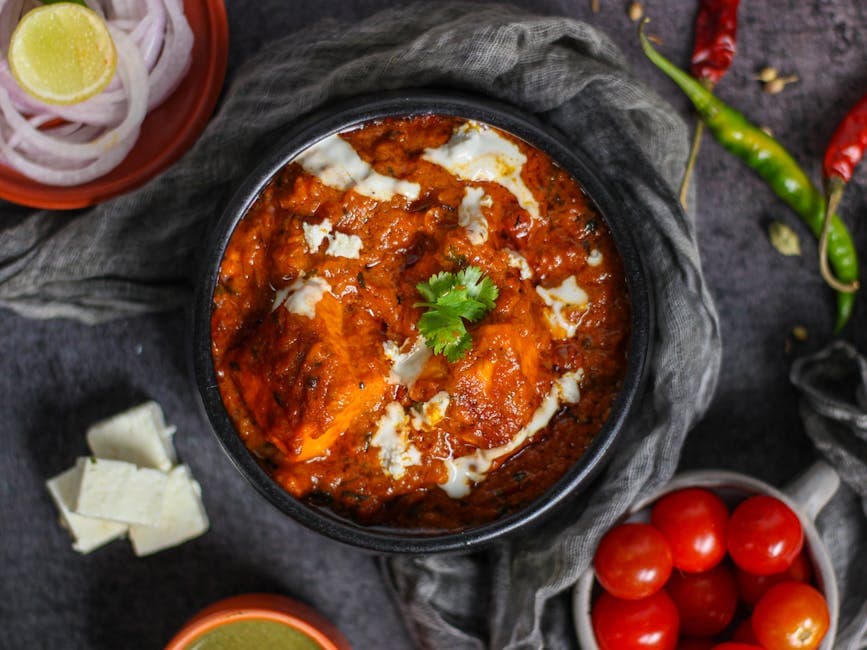
Paneer Makhani (Butter Paneer in Tomaten-Creme-Sauce)
Indiens köstlichstes vegetarisches Curry – frischer Paneer in einer samtigen, mild gewürzten Tomaten-Sahne-Sauce. Reichhaltiger und delikater als Tikka Masala ist dies das vegetarische Herzstück jedes indischen Festmahls.
Über dieses Rezept
Paneer Makhani (auch Paneer Butter Masala genannt) ist der vegetarische Bruder des berühmten Murg Makhana (Butterhuhn) – mit seiner charakteristischen reichhaltigen, mild gewürzten Tomaten-Sahne-Sauce. Das wichtigste Unterscheidungsmerkmal der Makhani-Sauce ist ihre Kochmethode: Ganze Zwiebeln, Tomaten, Cashewnüsse und Gewürze werden zusammen geköchelt, dann zu einer völlig glatten, samtigen Konsistenz vermengt und anschließend mit Sahne und Butter angereichert. Das Ergebnis ist seidiger und zarter als herkömmliche Currysoßen, die mit fein gewürfelten, sautierten Zwiebeln beginnen. Paneer – frischer indischer Käse mit fester, knuspriger Konsistenz – wird in der Pfanne sanft goldbraun gebraten, bevor er zur Soße gegeben wird. Dadurch erhält er eine leichte Kruste, die in der reichhaltigen Soße wunderbar hält. Paneer Makhani (Butter-Paneer in Tomaten-Sahnesauce) ist in der alltäglichen Küche indischer Küchen verwurzelt und vereint Technik und Tradition: Der in 2,5 cm große Würfel geschnittene Paneer wird mit Sorgfalt behandelt und basiert auf altbewährten Verhältnissen, die die Einheimischen über Generationen hinweg verfeinert haben. Das Gericht trägt eine unverwechselbare sensorische Signatur – Aromen, die die Küche beim Kochen erfüllen, vielschichtige Texturen, die sich Stück für Stück offenbaren, und eine Geschmackstiefe, die eher durch geduldiges Würzen als durch Abkürzungen entsteht. Ob als Abendessen unter der Woche oder als Herzstück einer festlichen Tafel serviert, es spiegelt eine regionale Speisekammer wider, in der lokale Produkte, Gewürzgewohnheiten und Kochgefäße das Endergebnis prägen. Hobbyköche, die dieses Gericht zubereiten, merken oft an, wie nachsichtig es ist, wenn man erst einmal die Kernmethode verstanden hat, und wie ein paar kleine Entscheidungen – die Frische des in 2,5 cm große Würfel geschnittenen Paneers, die Reihenfolge der Zugaben, die Ruhezeit am Ende – eine gute Version von einer unvergesslichen unterscheiden. Dieses Rezept geht diese Auswahl durch, damit das Gericht den Charakter erhält, den es auf heimischem Boden hat.
Zutaten
Dient 4
- 400 gPaneer, in 2,5 cm große Würfel schneiden
- 2 ELGhee oder neutrales Öl(zum Braten von Paneer)
- Makhani Sauce
- 2 ELGhee oder ungesalzene Butter
- 2mittelgroße Zwiebeln, grob gehackt
- 6 ZehenKnoblauch, grob gehackt
- 3 cmIngwer, grob gehackt
- 600 greife Tomaten, grob gehackt (oder 400g Dose gehackte Tomaten)
- 30 graw cashews
- 3grüne Kardamomkapseln
- 1schwarze Kardamomkapsel
- 2Nelken
- 1Lorbeerblatt
- 1 TLKaschmir-Chilipulver
- 1 TLgaram masala
- 1 TLZucker
- 1 TLSalz
- 120 mlDoppelcreme
- 2 ELkalte ungesalzene Butter, gewürfelt
- 1 TLKasuri Methi (getrocknete Bockshornkleeblätter)
Anleitung
- 1
Die Soßenbasis köcheln lassen
In einem mittelgroßen Topf Ghee bei mittlerer Hitze erhitzen. Zwiebeln, Knoblauch, Ingwer, ganze Gewürze und Cashewnüsse hinzufügen. Unter Rühren 5 Minuten kochen lassen. Tomaten und Kashmiri-Chilipulver hinzufügen. Zugedeckt bei schwacher Hitze 20 Minuten köcheln lassen, bis alles sehr weich ist.
- 2
Zu einer glatten Soße mixen
Lorbeerblatt und Kardamomkapseln entfernen. Etwas abkühlen lassen und dann zu einer vollkommen glatten Masse pürieren (Stabmixer oder Standmixer). Für zusätzliche Geschmeidigkeit durch ein feines Sieb passieren (optional, lohnt sich aber für Ergebnisse in Restaurantqualität).
- 3
Die Sauce kochen
Die abgesiebte Soße wieder in die Pfanne geben. Zucker, Salz und Garam Masala hinzufügen. Bei mittlerer bis niedriger Hitze 10 Minuten köcheln lassen, bis die Sauce leicht dunkler wird und der rohe Gewürzgeruch verschwunden ist.
- 4
Den Paneer braten
Ghee in einer beschichteten Pfanne bei starker Hitze erhitzen. Paneerwürfel auf mindestens zwei Seiten goldbraun braten. Herausnehmen und kurz trocken tupfen.
- 5
Fertigstellen und servieren
Sahne zur Soße geben, vorsichtig umrühren und 2 Minuten köcheln lassen. Schalten Sie den Herd aus, fügen Sie kalte Butterwürfel (das ergibt den glänzenden Restaurant-Finish) und Kasuri-Methi hinzu. Rühren, bis die Butter schmilzt. Gebratenes Paneer dazugeben und vorsichtig falten, um es zu bedecken. Sofort mit Naan- oder Basmatireis servieren.
Haben Sie das gekocht?
Bewerte es und hilf anderen, die Rezepte zu finden, die wirklich funktionieren.
Einmal anmelden, und wir speichern die Bewertung, die Sie gerade gewählt haben.
Alles, was Sie für Ihre Wochenplanung brauchen — kostenlos
- Essensplaner
- Einkaufsliste
- KI-Rezeptideen
Behalten Sie im Blick, was Sie essen
Fotografieren Sie Ihre Mahlzeit, um Kalorien und Makros zu erfassen, nutzen Sie Fasten-Timer und tracken Sie Ihr Wasser – in der kostenlosen SnapCal-App.
Profi-Tipps
- →
Das Passieren der gemischten Sauce durch ein Sieb dauert 2 Minuten und verwandelt die Konsistenz vollständig in Restaurantqualität.
- →
Lassen Sie den Paneer beim Braten nicht zu lange kochen – er wird schnell zäh. Von beiden Seiten goldbraun braten, dann herausnehmen.
- →
Kalte Butter, die zum Schluss hinzugefügt wird (Beurre-Monté-Technik), sorgt für den glänzenden, köstlichen Abgang, den Sie in Restaurantversionen sehen.
- →
Besorgen Sie sich den frischesten Paneer, geschnitten in 2,5 cm große Würfel, den Sie finden können – er ist der Geschmacksanker des Gerichts.
- →
Nach und nach schichtweise würzen; Die Verkostung in jeder Phase verhindert ein flaches oder übermäßig gesalzenes Endergebnis.
Variationen
- •
Chicken Makhani (Butterhuhn): Ersetzen Sie Paneer durch mariniertes, gegrilltes Chicken Tikka. Die Soße ist identisch.
- •
Veganes Makhani: Paneer weglassen, im Ofen geröstete Blumenkohlröschen hinzufügen. Ersetzen Sie die Sahne durch Kokoscreme und die Butter durch vegane Butter.
- •
Makhani mit Tofu: Fester Tofu, gepresst und in der Pfanne goldbraun gebraten, passt hervorragend zu dieser Soße.
- •
Vegetarisch: Ersetzen Sie das Hauptprotein durch Pilze, Paneer, Tofu oder herzhafte Bohnen für eine fleischfreie Variante.
- •
Würziger: Fügen Sie frischen Chili, eine Chilipaste oder eine Prise Cayennepfeffer mit den Aromen hinzu, um ein wärmeres Profil zu erhalten.
Lagerung
Soße (ohne Paneer) lässt sich 3 Monate lang perfekt einfrieren. Frisch hinzugefügtes Paneer behält beim Aufwärmen seine Konsistenz besser. Mit Paneer: 3 Tage gekühlt.
Geschichte und Herkunft
Die Makhani-Sauce wurde in den 1950er Jahren im Restaurant Moti Mahal in Delhi von Chefkoch Kundan Lal Gujral kreiert, der auch für die Popularisierung der Tandoori-Küche verantwortlich war. Berichten zufolge wurde die Soße erfunden, um übriggebliebenes Tandoori-Hühnchen mit einer Soße aus Tomaten, Butter und Sahne zu verwenden – das resultierende Gericht war Butterhähnchen, und die gleiche Soße, die auf Paneer aufgetragen wurde, wurde zu Paneer Makhani.
Häufig gestellte Fragen
Kann ich Paneer Makhani (Butter-Paneer in Tomaten-Sahnesauce) im Voraus zubereiten?
Ja – die meisten Komponenten halten sich im Kühlschrank ein bis zwei Tage. Erhitzen Sie es vorsichtig mit einem Spritzer Flüssigkeit, um es wieder zum Leben zu erwecken.
Wodurch kann ich in 2,5 cm große Würfel geschnittenes Paneer ersetzen?
Wenn Paneer, in 2,5 cm große Würfel geschnitten, schwer zu finden ist, haben die ähnlichsten Ersatzstoffe die gleiche Textur und den gleichen Wassergehalt. Passen Sie die Gewürze leicht an, da Ersatzstoffe oft weniger Eigencharakter haben.
Ist dieses Rezept authentisch für die indische Küche?
Es folgt der am weitesten verbreiteten Vorlage für Hausmannskost. Es gibt regionale Varianten, die wichtigsten werden im Abschnitt „Variationen“ aufgeführt.
Warum ist meine Version langweilig geworden?
In der Regel zu wenig gewürzt oder die Aromastufe beschleunigt. Bauen Sie den Geschmack schichtweise auf, schmecken Sie nach und nach ab und geben Sie zum Abschluss einen Hauch Säure oder Salz hinzu, um das Gericht aufzuhellen.
Nährwertangaben
Pro Portion · 4 Portionen insgesamt
Zeitzusammenfassung
Haben Sie Fragen?
Fragen Sie unseren KI-Kochassistenten zu diesem Rezept – Ersetzungen, Techniken, Skalierung.
Chatten Sie mit AI Chef →In Reiseführern vorgestellt
Dieses Rezept ist in den folgenden kuratierten Leitfäden enthalten:
Weitere Indische Rezepte
Das könnte Ihnen auch gefallen
Ähnliche Gerichte aus anderen Küchen der Welt.
Nach Zutat stöbern
Weitere Rezepte rund um dieselben Hauptzutaten.
Kostenlose Küchen-Tools
Rechner und Umrechner, die zu dieser Seite passen — ohne Anmeldung.
Daraus einen Plan machen
Einplanen, einkaufen und im Blick behalten, was schon da ist.
Essensplaner-Kalender
Legen Sie dieses Rezept auf einen Tag und planen Sie die Woche darum herum.
Einkaufslisten-App
Machen Sie aus dieser Zutatenliste eine nach Regalen sortierte Einkaufsliste.
KI-Ernährungsberater
Fragen Sie in einfacher Sprache nach Alternativen, Makros und Portionen für dieses Gericht.
Weiterlesen
Ausführliche Artikel zu den Ideen hinter diesem Gericht.
Gemeinschaft
Beteiligen Sie sich an der Unterhaltung
Melden Sie sich an, um einen Kommentar zu hinterlassen und Ihre Lieblingsrezepte zu speichern